Retirement Tax Savings (How to Stop Overpaying for Decades)

Picture this: you've spent decades contributing to your 401(k), faithfully saving for retirement, only to watch a significant chunk disappear to taxes when you finally need that money. Most people approaching retirement discover too late that they've been overpaying Uncle Sam for years because they never learned the strategies that make up a tax-efficient retirement. This article will show you how to keep more of your hard-earned savings by understanding retirement tax savings and the specific moves that can reduce your tax burden both now and throughout your golden years.
Smart Financial Lifestyle's approach to retirement financial planning focuses on helping you identify where you're losing money unnecessarily and how to redirect those dollars back into your pocket. Through practical strategies around IRA conversions, withdrawal sequencing, and income timing, you'll learn actionable ways to minimize taxes on Social Security benefits, investment gains, and required distributions. These aren't complicated financial tricks reserved for the wealthy.
Summary
Retirement typically involves multiple income streams that stack together, not a single low-income phase. Social Security, retirement account withdrawals, and investment income combine to create higher taxable income than many people expect, often pushing retirees into tax brackets similar to, or higher than, those in their working years.
Tax-deferred growth increases the size of the balance that will eventually be taxed, not the amount you keep. U.S. retirement assets have surpassed $49 trillion according to the Investment Company Institute and the Federal Reserve, representing a massive future tax liability that grows alongside market performance.
Strategy execution, not strategy awareness, determines retirement tax outcomes. The 2025 State of Strategy Execution Report found that 67% of organizations struggle with strategy execution, and retirement planning follows the same pattern. Most people understand the concept of tax diversification in principle, but fail to execute timing-specific moves, such as Roth conversions during lower-income windows or coordinating withdrawals before Social Security starts.
Required Minimum Distributions force taxable withdrawals beginning at age 73, whether you need the income or not. These mandatory distributions increase each year based on account balance and life expectancy, often pushing retirees into higher tax brackets than they faced during working years.
Two retirees with identical $1.2 million portfolios can face completely different tax outcomes based solely on withdrawal timing and sequencing decisions. The difference is not in what accounts they own, but in when they access each bucket, how they coordinate income sources across tax years, and whether they execute conversions before RMD schedules.
Retirement financial planning addresses this by mapping withdrawal sequences across multiple years, identifying specific windows where conversions or strategic distributions reduce future tax liability while current rates remain lower.
The Hidden Cost of Saving for Retirement

Most people believe they are doing the right thing. They contribute consistently, maximize their retirement accounts, and defer taxes for as long as possible. On the surface, this looks like smart planning. But here is the uncomfortable truth: you are not just saving for retirement. You are also building a future tax bill.
Every dollar placed into a tax-deferred account, like a traditional 401(k) or IRA, is not fully yours. It is a shared balance with the IRS. When you withdraw that money, it is taxed as ordinary income, based on whatever tax rates apply at that time. The issue is not the existence of taxes. It is the lack of control over how and when those taxes show up.
The Multi-Income Reality
What many people overlook is that retirement is rarely a low-income phase. It is a multi-income phase. You may be drawing from retirement accounts while also receiving Social Security and generating investment income. These layers do not exist in isolation. They stack, and that stacking effect is what increases your total tax exposure. According to Bankrate's Retirement Savings Report, 27% of workers have no retirement savings at all, but for those who do save aggressively in tax-deferred accounts, the hidden cost becomes clear only when distributions begin.
Required Minimum Distributions force you to withdraw money from tax-deferred accounts whether you need the income or not. Those withdrawals increase your taxable income each year, often pushing you into higher tax brackets. At the same time, higher reported income can cause a larger portion of your Social Security to become taxable. It can also increase your Medicare premiums, creating additional costs that are tied directly to your income level.
Where the Chain Reaction Begins
None of these effects happens in isolation. They reinforce each other. What initially looked like tax savings (deferring taxes during your working years) can turn into a chain reaction of higher taxes, higher premiums, and reduced flexibility in retirement. People close to retirement with significant pre-tax balances face a limited time to implement tax mitigation strategies.
The anxiety is real: "Is there a hidden cost somewhere that I don't know about?" That question surfaces repeatedly because the mechanics of income stacking are not intuitive until you experience them.
Tax Arbitrage and Distribution Control
Without a strategy, you are not minimizing taxes. You are postponing them and potentially increasing the total amount you will pay over your lifetime. This is where retirement financial planning becomes essential. Strategic Roth conversions executed while you are still in lower tax brackets (before RMDs begin) can break the cycle, giving you control over when and how much tax you pay. The goal is not to avoid taxes entirely. It is to pay them on your terms, at rates you choose, rather than rates the IRS imposes later.
Related Reading
Do Retirees Need To File Taxes
Why Most Retirement Advice Gets Taxes Wrong
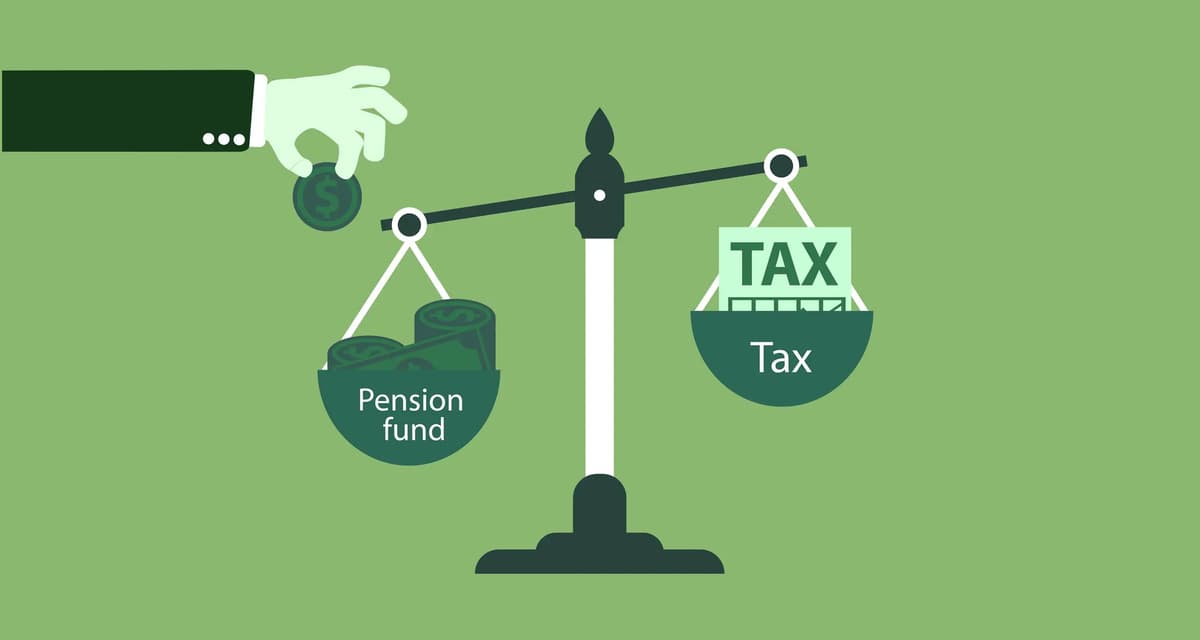
The most common advice in retirement planning sounds simple. Defer taxes now, pay them later when you are in a lower tax bracket. It is repeated so often that it feels like a rule. But it is not a rule. It is an assumption, and for many people, it does not hold.
The Stacking Problem
The idea starts to break down the moment you look at how retirement actually works. Retirement is not a single-income phase; it is a multi-income phase. You may be drawing from retirement accounts while also receiving Social Security and generating investment income. These income streams stack, and that stacking effect often keeps taxable income higher than expected.
The data support this shift. According to the Social Security Administration, up to 85% of Social Security benefits may be taxable depending on total income, and most retirees now pay taxes on at least part of their benefits. This directly contradicts the assumption that retirement income is lightly taxed. There is also the issue of future tax rates. The strategy assumes that tax rates will be lower later, but that is not something you control.
The Compounding Trap
Then there is the effect of compounding itself. Tax-deferred growth does not reduce your tax burden; it increases the size of the balance that will eventually be taxed. According to the Investment Company Institute and the Federal Reserve, U.S. retirement assets have surpassed $49 trillion, representing a massive future tax liability that grows alongside market performance. That represents a structural problem. The strategy that is meant to save you taxes today can quietly increase the total taxes you pay over your lifetime.
Why the Belief Persists
So why does this belief persist? Because it is simple, widely repeated, and immediately rewarding. You see a lower tax bill today, which reinforces the idea that the strategy is working. But it focuses on the wrong metric. Most retirement advice is built around minimizing this year's taxes. Effective planning is about minimizing lifetime tax liability. That distinction changes everything.
But knowing what is wrong with the advice is only half the picture.
What Effective Retirement Tax Savings Actually Look Like

Effective retirement tax savings is not about avoiding taxes. It is about controlling when and how you pay them. That shift in perspective changes everything. Instead of focusing only on growing your portfolio, you focus on how that portfolio will be taxed when you start using it.
The Tax Diversification Gap
Most people diversify across assets:
Stocks
Bonds
Funds
But they concentrate all their savings in a single tax category. That creates exposure. If all your money is taxed the same way, you lose flexibility when it matters most. The same investor who carefully balances growth and value stocks often puts 100% of retirement savings into tax-deferred accounts, creating a future where every withdrawal triggers ordinary income tax.
Tri-Bucket Allocation and Strategic Integration
Tax diversification means intentionally allocating across three distinct buckets.
Tax-deferred accounts like traditional 401(k)s and IRAs delay taxes but create future taxable income.
Tax-free accounts like Roth IRAs allow qualified withdrawals with no additional tax liability.
Taxable accounts provide flexibility, often with more favorable capital gains treatment and fewer restrictions on withdrawals.
Each bucket serves a different purpose. The value is not in choosing one over the others. It is in how they work together.
The Power of Optionality
The key insight is optionality. When you have access to all three buckets, you can decide where to draw income from each year based on your tax situation. In a higher-income year, you rely more on tax-free withdrawals. In a lower-income year, you might intentionally pull from tax-deferred accounts or execute conversions at a lower rate. This level of control is what reduces lifetime taxes.
Many people approaching retirement feel pressure to get the strategy exactly right, building overly complicated structures with dozens of funds when simpler approaches may be more effective. The complexity often comes from confusion about what strategic tax planning actually means. It is not about having more investments. It is about having the right tax structure across those investments.
Tax Exposure Mapping and Strategic Conversion
Retirement financial planning helps families map their current tax exposure across all accounts, then build a multi-year conversion strategy that shifts balances from tax-deferred to tax-free while they are still in lower brackets, creating the optionality that reduces lifetime tax liability.
Without it, withdrawals become reactive. You take income from wherever it is available and accept the tax consequences. With it, withdrawals become strategic. You shape your taxable income year by year, instead of being shaped by it.
But knowing the strategy and executing it are two very different things.
The Strategy Most People Never Execute
Most people have heard of tax diversification. They understand, at least conceptually, that spreading assets across tax-deferred, tax-free, and taxable accounts can reduce future tax exposure. But awareness does not translate into action. The gap is not knowledge; it is execution. Specifically, knowing when to shift income, how much to move, and how different decisions interact over time.
According to the 2025 State of Strategy Execution Report, 67% of organizations struggle with strategy execution, and retirement planning follows the same pattern. The challenge is timing. Most tax-saving strategies require acting in specific windows, not just choosing the right accounts. Miss those windows, and the opportunity is gone.
Where Execution Breaks Down
The strategies that reduce lifetime taxes are not one-time decisions. They are sequencing decisions that play out over decades. Acting before Required Minimum Distributions begin. Using years with a temporarily lower income. Coordinating withdrawals before Social Security starts. Each of these requires precise timing, not just good intentions.
Many people approaching retirement face this coordination challenge directly. They know they should diversify their tax exposure, but managing timing across multiple decisions over a 15- or 20-year horizon feels overwhelming. Without a clear execution framework, even well-structured portfolios can produce inefficient tax outcomes simply because the right moves happened at the wrong time.
The Mechanism That Actually Works
Roth conversions during lower-income years allow you to pay taxes at a reduced rate today instead of a potentially higher rate later. This matters because Required Minimum Distributions can significantly increase taxable income over time. The IRS requires RMDs to begin at age 73 for most retirees, forcing taxable withdrawals regardless of need.
Strategic withdrawals before RMD age reduce the size of future required distributions. This creates more control over your tax brackets and helps avoid sudden spikes in taxable income later in retirement. The timing of Social Security directly affects your tax situation. Up to 85 percent of Social Security benefits can become taxable depending on total income, according to the Social Security Administration. Delaying benefits or sequencing withdrawals before claiming can reduce the amount of those benefits exposed to taxation.
Tax Interdependency and Multi-Year Optimization
These strategies are not isolated. A decision made in one year affects future tax brackets, the size of required withdrawals, the taxation of Social Security, and Medicare premium thresholds tied to income. Higher income can trigger Income-Related Monthly Adjustment Amount (IRMAA) surcharges, increasing Medicare Part B and D premiums based on reported income.
Retirement financial planning helps families map these interactions across multiple years, building a conversion strategy that shifts balances from tax-deferred to tax-free while they are still in lower brackets, creating the optionality that reduces lifetime tax exposure.
But knowing the strategy and executing it are two very different things, and the difference between them often comes down to something most people overlook entirely.
Related Reading
How to Reduce Taxes on RMDs
Why Timing, Not Just Accounts, Determines Your Outcome

Two retirees with identical $1.2 million portfolios can end up with completely different tax outcomes. The difference is not what they own. It is when and how they access it. A portfolio is just a collection of assets until you decide which account to tap, in which year, and for how much. Those timing decisions determine your tax bracket, your Medicare premiums, and ultimately how much of your retirement savings you actually keep.
The Real Variable: When Income Shows Up
Every withdrawal decision creates a ripple effect. Pull $60,000 from a traditional IRA in the same year you claim Social Security, and you might push 85% of those benefits into taxable income. Wait one year, take the IRA withdrawal before benefits start, and you could keep more of that Social Security tax-free. Same portfolio. Different timing. Different tax outcome.
This is why focusing only on account types misses the point. Tax-deferred, tax-free, and taxable accounts each serve a purpose, but their value depends entirely on when you use them. A Roth IRA sitting untouched for 20 years provides no tax benefit during those two decades. A traditional IRA withdrawn strategically during a low-income window can be converted at minimal tax cost. The account itself is neutral. Timing is what creates an advantage or a penalty.
Four Timing Decisions That Shape Everything
When you start withdrawals, it matters more than most people realize. Delaying distributions allows tax-deferred accounts to grow, but it also increases the size of future Required Minimum Distributions. Those forced withdrawals begin at age 73 and increase each year based on your account balance and life expectancy. Wait too long, and RMDs can push you into higher brackets than you faced during your working years.
When you convert assets, it determines how much tax you pay over your lifetime. Roth conversions executed during temporarily lower-income years (after retirement but before RMDs begin, or in years without significant capital gains) allow you to pay taxes at reduced rates. The longer you invest, the greater your chances of a positive outcome, but that principle applies equally to tax planning. Converting balances strategically over multiple years compounds the benefit, creating tax-free growth that never faces RMDs.
Withdrawal Sequencing and Effective Tax Rates
How you sequence income sources changes the math. Drawing from taxable accounts first preserves tax-deferred growth but concentrates future income into fewer buckets. Blending withdrawals across account types each year gives you more control over your reported income, keeping you below thresholds that trigger IRMAA surcharges or increase Social Security taxation. The order matters because each source interacts with the others, and those interactions determine your effective tax rate.
Why This Changes Outcomes
Taxes in retirement are dynamic, not static. Your bracket this year affects your premiums next year. Your income this year affects how much of your Social Security is taxed. Your RMD this year affects the size of next year's required withdrawal. Without a plan, these decisions happen reactively. You take income when you need it, from whatever account is easiest, and accept the consequences.
Proactive Control and Temporal Optimization
Strategic planning reverses that pattern. You decide when income appears, how much shows up in any given year, and which bucket it comes from. That control reduces lifetime tax exposure because you shape the outcome rather than react to it.
Retirement financial planning helps families map withdrawal sequences across multiple years, identifying windows where conversions or strategic distributions reduce future tax liability while current rates remain lower. The goal is not to eliminate taxes. It is paying them on your terms, at rates you choose, rather than rates imposed by RMD schedules or benefit formulas.
How Smart Financial Lifestyle Helps You Build Retirement Tax Savings
Most people stop at awareness. They understand that tax diversification matters, recognize that future RMDs pose problems, and know that conversions exist. But understanding concepts and applying them across a 15-year retirement transition are entirely different challenges. The gap between knowing what to do and executing a coordinated strategy across multiple tax years is where most retirement plans fail.
Smart Financial Lifestyle closes that gap by providing structured frameworks built from 50 years of practitioner experience, not academic theory. You get access to educational resources that translate complex tax concepts into actionable steps, free checklists that map your current tax exposure across all accounts, and personalized Roth IRA conversion consultations that identify your specific windows for strategic income shifts.
This is not generic advice adjusted to fit your situation. It is a system designed around how retirement tax planning actually works, accounting for Social Security timing, Medicare premium thresholds, and RMD schedules that interact differently for every family.
The Allocation Framework That Actually Works
Individuals under 50 can contribute up to $23,500 to their 401(k) in 2025, while those 50 and older can contribute up to $31,000. Those limits matter, but they tell you nothing about how to allocate across tax-deferred, tax-free, and taxable accounts so you are not overexposed to a single tax outcome.
The Smart Financial Lifestyle framework helps you determine how much to allocate to each bucket based on your current tax bracket, projected retirement income sources, and the years remaining before RMDs begin. That allocation decision compounds over time, creating optionality that reduces lifetime tax exposure instead of concentrating it.
When to Shift Income, Not Just Where to Put It
The real value shows up in execution timing. You learn how to identify conversion windows when your income drops temporarily (after retirement but before Social Security starts, or in years without significant capital gains). You understand how much to convert without pushing yourself into the next bracket or triggering IRMAA surcharges that increase Medicare premiums.
You map withdrawal sequences that pull from taxable accounts first to preserve tax-deferred growth, then blend sources strategically as RMDs approach. These decisions are not theoretical. They are the difference between paying taxes at 12% versus 22%, or keeping 50% of your Social Security tax-free versus exposing 85% of it.
Institutional Principles and Executive Confidence
The system applies the same principles that have built over $1 billion in assets under management over five decades. It focuses on controlling income timing rather than reacting to it, which is exactly what families approaching retirement need when tax decisions become time-sensitive and irreversible. You move from guessing about conversions to executing them with confidence, because you understand how each decision affects your future tax brackets, benefit taxation, and premium costs.
But knowing the system exists and actually using it to change your outcome are still two different things.
Related Reading
Kickstart Your Retirement Financial Planning Journey | Subscribe to Our YouTube and Newsletter
Start by applying the tax diversification insight from this article by subscribing to Smart Financial Lifestyle. Through Paul Mauro's books and free YouTube content, you will be guided step by step to map your current retirement accounts into the three tax buckets and identify one immediate opportunity to reduce future taxes. That first step gives you clarity on where you are overexposed and shows you exactly where to act, so you can begin reducing your lifetime tax burden with a proven framework built across five decades of practitioner experience.
That first action changes how you see your retirement accounts. Instead of viewing them as savings waiting to be spent, you see them as tax positions that can be managed. You understand which buckets need rebalancing, which years offer conversion windows, and how your Social Security timing interacts with withdrawal sequences. This is not about perfection. It is about progress you can measure, one decision at a time, with tools that translate complexity into clear next steps.