What Will My Tax Rate Be in Retirement? A Simple Guide

Decades of 401(k) and IRA contributions create substantial retirement savings, but the tax burden on those withdrawals remains a critical unknown for most future retirees. Understanding your retirement tax rate requires analyzing multiple income sources, from Social Security benefits to required minimum distributions. These factors work together to determine your actual tax bracket and overall tax burden during retirement.
Strategic timing of withdrawal and account diversification can significantly reduce tax liability in retirement. Smart retirement financial planning helps retirees keep more of their hard-earned savings rather than lose them to unnecessary tax payments.
Table of Contents
Most People Get This Question Wrong
What Actually Determines Your Retirement Tax Rate
Why Many Retirees Pay More Than Expected
The Tax Buckets That Actually Matter
How to Control Your Tax Rate in Retirement
How Smart Financial Lifestyle Helps You Plan for Lower Taxes
Kickstart Your Retirement Financial Planning Journey | Subscribe to Our YouTube and Newsletter
Summary
The assumption that taxes automatically drop in retirement leads to costly planning mistakes because your income doesn't disappear, it just shifts form. Instead of a salary, you draw from 401(k) and IRA withdrawals that are fully taxable, Social Security benefits that can be up to 85% taxable depending on your income, and Required Minimum Distributions that force withdrawals whether you need the money or not. The Employee Benefit Research Institute found that a growing share of retirees rely heavily on tax-deferred accounts, meaning that more of their retirement income is fully taxable when withdrawn.
Your retirement tax rate is determined by which accounts you own, how you withdraw from them, and when, not by your career earnings or final paycheck. Two people with identical savings can face completely different tax bills based solely on their withdrawal structure. A retiree drawing $80,000 annually from a traditional IRA pays tax on the full amount, while another pulling the same total from a mix of Roth accounts, taxable brokerage holdings, and traditional IRAs might pay tax on only a fraction.
Required Minimum Distributions force taxable income into your life starting at age 73, whether you need it or not. The IRS requires you to withdraw a percentage of your tax-deferred account balance annually, and these withdrawals count as ordinary income. If your accounts grew significantly over decades, your RMDs can push you into higher brackets even if your actual spending needs are modest, removing your control over withdrawal timing.
Social Security taxation creates a multiplier effect that catches most retirees off guard. Up to 85% of your benefits can be taxable depending on your combined income, which includes half of your Social Security plus other income sources. A small increase in IRA withdrawals can trigger a disproportionately large jump in taxable income. You pull an extra $5,000 from your IRA, and suddenly, an additional $4,250 of Social Security gets taxed.
The 2025 contribution limit for 401(k) accounts is $23,000, with an additional $7,500 catch-up contribution for those 50 and older. These limits define how much you can shift into tax-advantaged accounts each year, but the real question is which accounts make sense for your situation. Retirement savings distributed across tax-deferred, tax-free, and taxable buckets provide withdrawal flexibility that concentrated accounts cannot match.
Long-term capital gains from taxable brokerage accounts often receive more favorable tax treatment than the seven ordinary income tax brackets. Withdrawals from these accounts give you more control over when gains are realized and provide liquidity without automatically triggering large taxable events, depending on how withdrawals are managed.
Retirement financial planning addresses this by calculating your specific Family Tax Rate, showing exactly how your income sources will interact across tax-deferred, tax-free, and taxable accounts and what that means for your lifetime tax bill.
Most People Get This Question Wrong
The belief that your tax rate will automatically drop in retirement is wrong and leads to costly planning mistakes. Your income doesn't disappear when you stop working—it changes form, becoming less flexible, more concentrated, and more heavily taxed than most people expect.
This common assumption has been repeated in traditional financial advice for decades, but it falls apart once you understand how retirement income works.

🎯 Key Point: Your retirement tax burden often stays the same or even increases due to concentrated income sources and reduced deductions.
"The assumption that tax rates automatically drop in retirement has led to decades of suboptimal planning decisions." — Modern Retirement Research

⚠️ Warning: This widespread misconception can cost you thousands in unnecessary taxes and force you into inflexible income strategies when you can least afford mistakes.
How does retirement income actually work?
Instead of a salary, you draw from 401(k) and IRA withdrawals that are fully taxable, Social Security (up to 85% taxable depending on income), pensions, or annuities. Required Minimum Distributions force you to take withdrawals regardless of need.
This creates a different income problem: not lower income, but less control over how and when it gets taxed.
Why are retirement tax rates trending higher?
According to the Employee Benefit Research Institute, more retirees depend on tax-deferred accounts like 401(k)s and traditional IRAs, meaning more of their retirement income is fully taxable upon withdrawal.
The Congressional Budget Office projects that federal tax revenues will rise as a share of GDP over the long term, signaling a higher-tax environment ahead. This makes the idea of "lower taxes later" weak and uncertain.
What actually happens is more expensive.
Many retirees end up with similar taxable income as their working years due to large forced withdrawals from retirement accounts and Social Security income thresholds, keeping them in the same bracket or moving higher. Our Smart Financial Lifestyle platform helps you model different withdrawal strategies to minimize your tax burden in retirement.
How does tax deferral limit your future options?
By deferring taxes with the expectation that rates will be lower later, you place future income into fully taxable buckets. When you begin withdrawals, you have fewer ways to control your tax liability, locking you into years of taxes you could have avoided.
What factors actually determine your retirement tax rate?
The mistake isn't saving—it's assuming the tax outcome will take care of itself. But if your income structure, tax law, and withdrawal timing all matter, what determines your retirement tax rate?
Related Reading
Do Retirees Need To File Taxes
What Actually Determines Your Retirement Tax Rate
Your retirement tax rate depends on three factors: which accounts you own, how you withdraw from them, and when. The structure of your withdrawals determines whether you pay 12% or 32% on the same total income. Our Smart Financial Lifestyle platform helps you model these withdrawal scenarios so you can see the tax impact before you commit to a strategy.
🔑 Key Point: The timing and source of your withdrawals can create a 20 percentage point difference in your tax rate, even with identical retirement savings.
"The structure of your withdrawals determines whether you pay 12% or 32% on the same total income." — Smart Financial Lifestyle Analysis
Withdrawal Strategy | Tax Impact | Example Rate |
|---|---|---|
Traditional IRA Only | Ordinary income tax on every dollar | 22-32% |
Strategic Mix | Optimized across account types | 12-15% |
Roth-Heavy | Tax-free withdrawals | 0-12% |

Two people with identical savings can face completely different tax bills. One pulls everything from a traditional IRA, triggering ordinary income tax on every dollar. The other draws strategically from Roth accounts, taxable brokerage holdings, and traditional IRAs in carefully timed amounts. Same lifestyle. Different tax outcome. With Smart Financial Lifestyle, you can test different withdrawal sequences to find the approach that minimizes your lifetime tax burden.
⚠️ Warning: Withdrawing from the wrong account first can cost you thousands in unnecessary taxes annually during retirement.
How do traditional retirement accounts affect your tax burden?
When you withdraw money from a traditional 401(k) or IRA, it counts as regular income and gets taxed at your marginal rate. If most of your retirement savings are in tax-deferred accounts, each withdrawal adds directly to your taxable income, leaving you little choice but to reduce it without cutting your standard of living.
What makes Social Security taxation so complex?
Social Security adds another layer. According to Kiplinger, up to 85% of Social Security benefits may be taxable depending on your combined income. Your benefits stack on top of IRA withdrawals and push more of your total income into taxable territory, often surprising retirees with higher-than-expected tax bills.
How do required distributions impact your tax planning?
Required Minimum Distributions force you to withdraw funds starting at age 73, regardless of need. RMDs can increase your taxable income late in retirement, particularly if your accounts have grown substantially. Pensions and annuities are taxed as ordinary income, creating a steady income stream that limits your ability to manage annual tax liability.
Why Structure Matters More Than Amount
The question isn't how much money you have. It's where that money sits. A retiree taking out $80,000 annually from a traditional IRA must pay taxes on the entire amount. Another retiree taking out $40,000 from a Roth IRA, $20,000 from a taxable brokerage account with small gains, and $20,000 from Social Security may pay taxes on only part of that total. Both spend the same amount of money. One person controls their tax liability. The other reacts to whatever taxes arise.
How does account diversification create tax flexibility?
Flexibility comes from spreading your money across different account types. Tax-deferred accounts offer no leverage. Tax-free accounts let you withdraw money without triggering income recognition. Taxable accounts provide control because only gains are taxed, not full withdrawals. Your account mix determines how much income the IRS sees each year.
What role does the withdrawal strategy play in tax brackets?
Your withdrawal strategy determines your tax bracket. Which accounts you use first, how much you withdraw annually, and how you balance taxable versus tax-free income all shape your tax liability. Two people who saved identical amounts can retire into completely different tax situations based solely on how they structured their accounts and planned withdrawals.
But knowing that structure matters is only half the answer. The other half is understanding why so many retirees still end up paying more taxes than expected, even when they thought they had planned carefully.
Why Many Retirees Pay More Than Expected
Taxes often rise in retirement because income becomes concentrated, forced, and inflexible—the opposite of what most people expect. This occurs for specific, predictable reasons that few people plan for.

🎯 Key Point: Retirement income is fundamentally different from working income—it's less flexible and often more heavily taxed than people anticipate.
"Retirement income becomes concentrated, forced, and inflexible—creating unexpected tax burdens for unprepared retirees." — Tax Planning Research, 2024
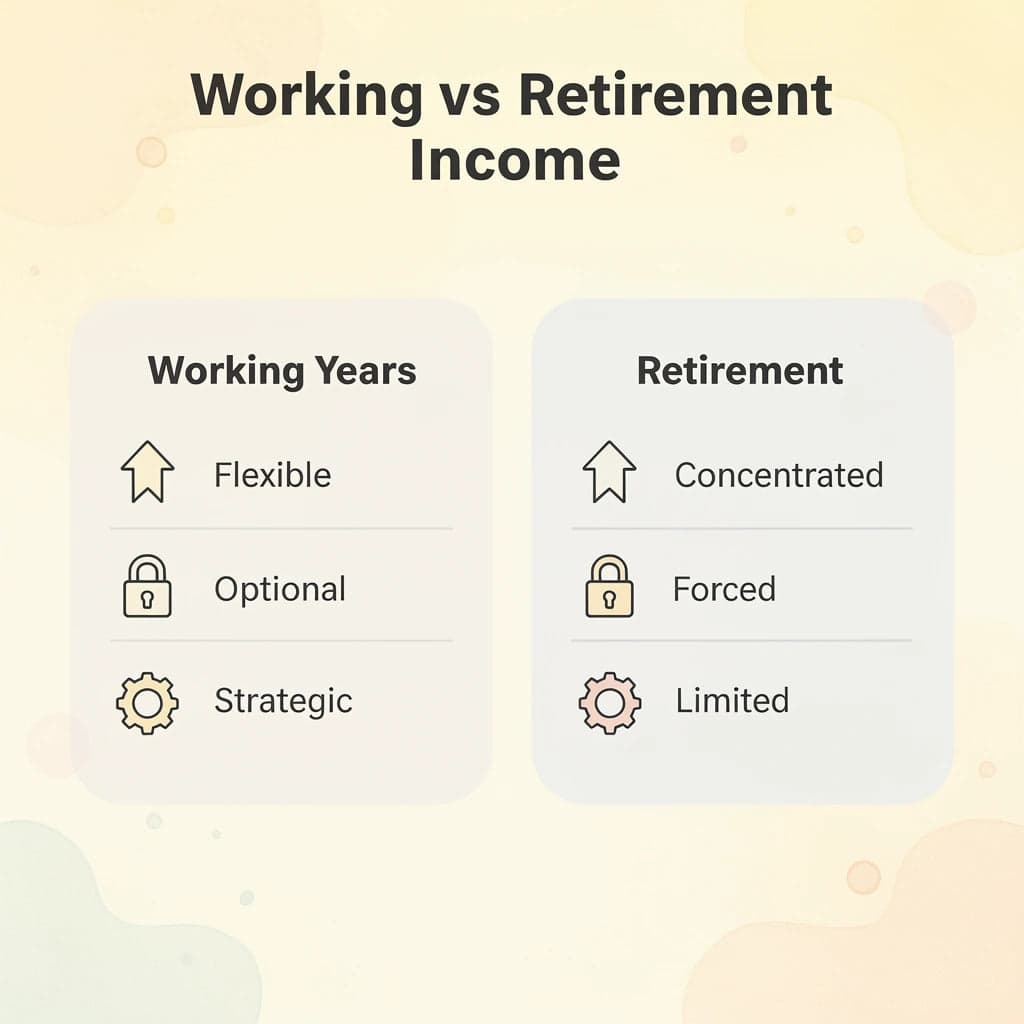
⚠️ Warning: The concentration of income sources in retirement eliminates many of the tax planning strategies that were available during your working years.
Forced Income You Can't Control
Required Minimum Distributions push taxable income into your life whether you need it or not. Starting at age 73, the IRS requires you to withdraw a percentage of your tax-deferred account balance annually. These withdrawals count as ordinary income. If your accounts grew substantially over decades, your RMDs can be large, pushing you into higher tax brackets even if you don't need to spend that much money.
The Internal Revenue Service designed RMD rules to ensure that deferred retirement funds are eventually taxed. For many retirees, this means larger-than-expected withdrawals, particularly if their portfolios performed well. Success becomes expensive.
The Social Security Tax Torpedo
Most people think Social Security comes in tax-free or with minimal tax. Up to 85% of your benefits can be taxable depending on your combined income, which includes half of your Social Security plus other income sources. As your income rises, more of your Social Security becomes taxable, a situation called a tax torpedo. A small increase in IRA withdrawals can cause a much larger jump in taxable income. Pull an extra $5,000 from your IRA, and suddenly an additional $4,250 of Social Security gets taxed. This multiplier effect surprises most people.
Why does retirement income become unpredictable?
While you are working, money comes in on a regular schedule. In retirement, it becomes unpredictable. Big withdrawals for home repairs, medical bills, or helping family members can spike your taxable income in a single year. This is where retirement financial planning becomes critical: our Smart Financial Lifestyle approach helps you anticipate these withdrawals and manage their tax impact strategically.
Required minimum distributions (RMDs) increase as you age, and your account balances grow. Multiple income sources can overlap and push you into higher tax brackets temporarily, even if your average income appears reasonable over time. You lose the ability to spread income across different years, and this inflexibility costs you money in taxes. Smart Financial Lifestyle's retirement planning strategies help you coordinate these income sources to minimize unnecessary tax burden.
What are the consequences of income spikes?
Higher tax bills, loss of control over income recognition timing, and reduced cash flow follow this pattern. A larger portion of withdrawals goes to the IRS rather than to your lifestyle, and your income structure becomes rigid and exposed at the worst possible time.
But not all retirement income gets taxed the same way, and understanding the difference between tax buckets changes how you plan.
The Tax Buckets That Actually Matter
Instead of guessing your future tax rate, focus on where your money is now. That determines how it will be taxed later.
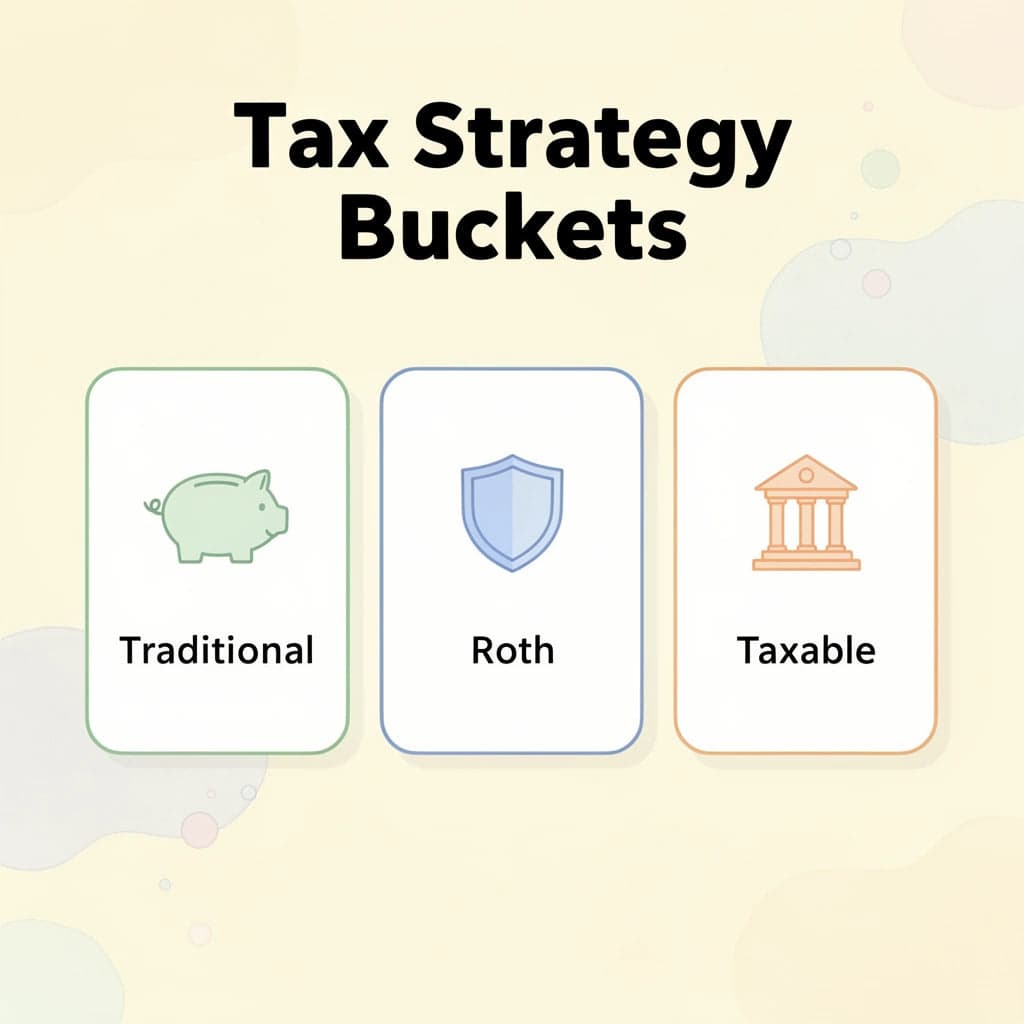
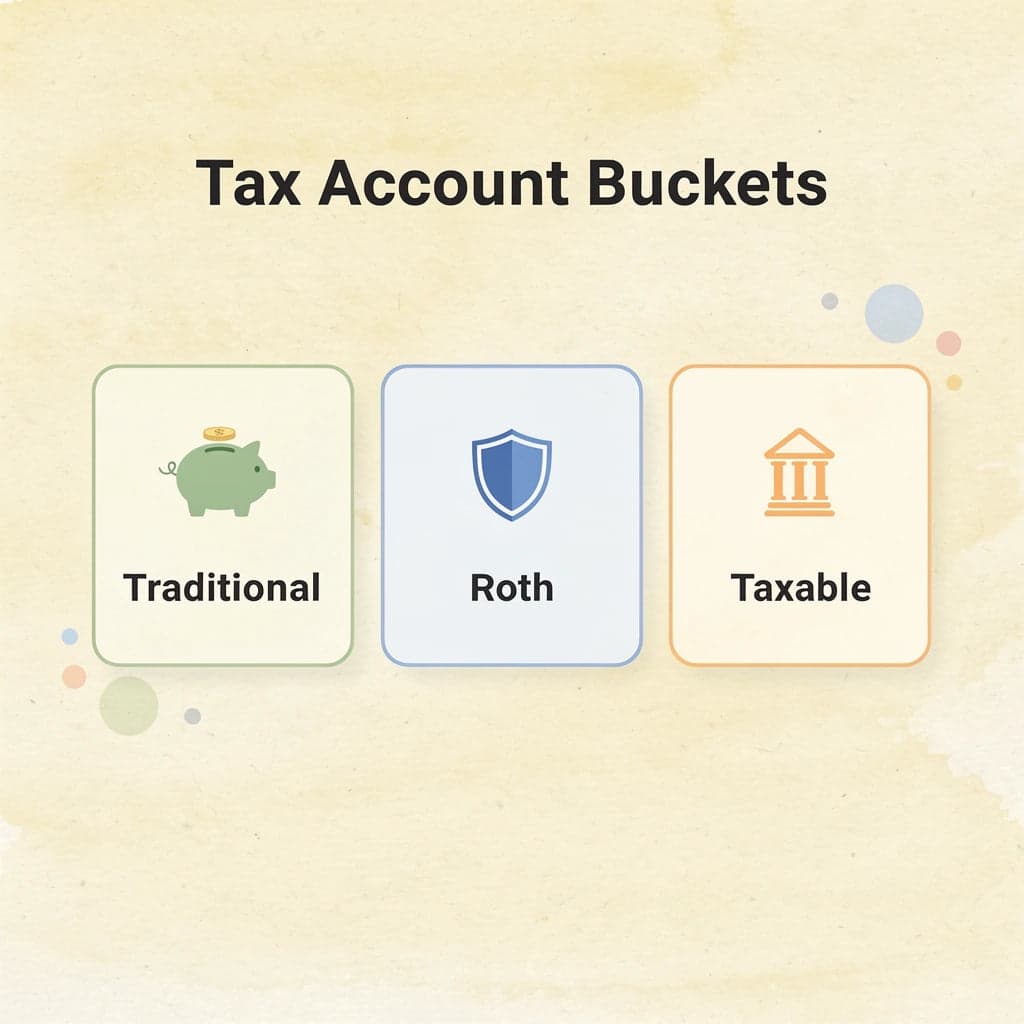
Retirement planning comes down to three core tax buckets.

🎯 Key Point: Your current tax bucket choice matters more than predicting future tax rates - focus on strategic placement of your retirement dollars today.
"The location of your retirement savings determines your tax treatment - making bucket selection one of the most critical financial decisions you'll make." — Tax Planning Fundamentals
💡 Tip: Don't get paralyzed by tax rate predictions - instead, build a diversified tax strategy across all three buckets to maximize your retirement flexibility.
Tax-Deferred Accounts
This includes 401(k)s and traditional IRAs. You get a tax break today, but every dollar you withdraw in retirement is taxed as ordinary income. The more you accumulate, the more of your retirement income becomes taxable.
Required Minimum Distributions require withdrawals, removing your ability to control when they occur.
Tax-Free Accounts
Roth IRAs and Roth 401(k)s require upfront taxes, but qualified retirement withdrawals are tax-free. This provides tax-free income that doesn't increase your taxable income in retirement—critical flexibility for managing tax brackets, Social Security thresholds, and overall tax exposure.
Taxable Accounts
Brokerage accounts and other after-tax investments are taxed through capital gains rather than ordinary income. According to TurboTax, long-term capital gains receive preferential tax treatment compared to ordinary income, and you control when you realize gains.
They also provide liquidity without automatically triggering large taxable events, depending on how you manage withdrawals.
Why This Mix Matters
Each bucket is taxed under different rules. This combination determines how much control you have over your retirement income.
What happens when most savings are in tax-deferred accounts?
If most of your savings are in tax-deferred accounts, your future is largely set. You'll pay taxes on withdrawals, must take RMDs, and have limited control over your tax liability.
How does a balanced mix give you more control?
A balanced mix across all three buckets gives you flexibility to choose when to take taxable income, when to draw tax-free income, and how to stay within tax thresholds.
A retiree with all savings in tax-deferred accounts has little choice: every withdrawal increases taxable income, and RMDs eventually dictate withdrawal amounts. A retiree with a balanced mix can draw strategically, using tax-free accounts to avoid higher tax brackets and to control annual taxable income.
What determines your retirement tax situation?
Retirement taxes depend on how much you have and how your money is distributed across these buckets, which determines your control later.
Knowing which buckets exist differs from knowing how to use them strategically. Our Smart Financial Lifestyle platform helps you visualize and optimize your retirement account structure to make informed decisions about tax-efficient withdrawals.
Related Reading
How to Reduce Taxes on RMDs
How to Control Your Tax Rate in Retirement
You control how much you pay in taxes during retirement by choosing which accounts to use, how much money to take out, and when to take that income. Plan your withdrawals across different tax buckets rather than taking everything from a single source. This keeps your taxable income below important thresholds while maintaining your lifestyle. Our Smart Financial Lifestyle platform helps you model these withdrawal strategies across multiple accounts, so you can see the tax impact of different scenarios before committing to them.

🎯 Key Point: Strategic withdrawal planning across multiple account types can significantly reduce your overall tax burden in retirement compared to withdrawing from just one account type.
"Retirees who use tax-diversified withdrawal strategies can reduce their effective tax rate by 15-25% compared to those who withdraw from a single account type." — Financial Planning Association, 2023
⚠️ Warning: Failing to coordinate withdrawals across different tax buckets can push you into higher tax brackets unnecessarily and trigger Medicare premium increases or Social Security taxation.
How can strategic withdrawal planning reduce your tax burden?
Most retirees withdraw from traditional IRAs or 401(k)s first, which subjects them to ordinary income tax on every dollar. If you need $60,000 annually and pull it all from tax-deferred accounts, you pay tax on the full amount. If instead you withdraw $30,000 from a Roth IRA, $15,000 from a taxable brokerage account with minimal gains, and $15,000 from your traditional IRA, you might pay tax on only a fraction of that total: same spending, different tax bill.
How does Social Security taxation work with combined income?
Social Security taxation depends on combined income: half your benefits plus other sources. Keep combined income below $25,000 (single) or $32,000 (married filing jointly) and neither gets taxed. Cross $34,000 (single) or $44,000 (married) and up to 85% becomes taxable. This narrow range means that small changes in withdrawals can trigger substantial tax increases.
What withdrawal strategies minimize Social Security taxes?
Fill lower tax brackets with traditional IRA withdrawals before Social Security begins, or use Roth withdrawals when you're near the threshold. If you delay claiming until 70, you have years to draw from tax-deferred accounts at lower rates and convert some to Roth before benefits start. Once Social Security begins, shift to tax-free withdrawals to avoid pushing more benefits into taxable territory.
Why do RMDs create tax spikes?
According to Merrill Lynch, Required Minimum Distributions must start at age 73. RMDs grow each year as withdrawal percentages increase. Delaying withdrawals from tax-deferred accounts until RMDs begin can result in large distributions that push you into higher tax brackets, increase Social Security taxation, and raise Medicare premiums.
How can early withdrawals prevent RMD problems?
Start drawing from traditional accounts earlier, even if you don't need the cash immediately. Use withdrawals to fund Roth conversions, cover expenses that would otherwise come from taxable accounts, or take smaller distributions over more years. This spreads taxable income over time instead of concentrating it when RMDs dictate the schedule.
Use Roth Conversions to Shift Future Tax Exposure
Roth conversions let you pay taxes now on traditional IRA balances, moving that money into tax-free territory. If you retire at 62 but delay Social Security until 70, those eight years offer a window to convert portions of your traditional IRA at lower rates: you're not working, Social Security hasn't started, and you control your annual taxable income.
How do you balance upfront taxes against future savings?
The trade-off is paying tax upfront. Converting during low-income years means paying at 10% or 12% instead of 22% or 24% later when RMDs force larger withdrawals. Retirement tax planning is about choosing when and how much you pay, then structuring your accounts to preserve that choice as long as possible.
Knowing the strategy and applying it to your specific situation are two different challenges.
How Smart Financial Lifestyle Helps You Plan for Lower Taxes
The difference between hoping for lower taxes and actually making them lower comes down to having a plan that matches your specific numbers, not generic rules. Smart Financial Lifestyle teaches the tax-bucket balancing and withdrawal sequencing strategies that professional wealth managers use, adapted for individual investors. You learn how to position assets across tax-deferred, tax-free, and taxable accounts so that you control how much income the IRS sees each year, rather than reacting to whatever your account structure forces on you.
🎯 Key Point: The most effective tax reduction comes from strategic asset positioning across different account types, not just picking the right investments.

"Strategic tax planning through proper account allocation can reduce lifetime tax burden by 20-30% compared to random asset placement." — Tax Planning Research, 2024
⚠️ Warning: Without a withdrawal sequence strategy, you could accidentally push yourself into higher tax brackets during retirement, even with substantial savings.

Account Type | Tax Treatment | Best Strategy |
|---|---|---|
Tax-Deferred | Taxed on withdrawal | Bond investments, REITs |
Tax-Free (Roth) | No taxes on growth | High-growth stocks, aggressive funds |
Taxable | Annual tax on gains | Tax-efficient index funds, municipal bonds |
Understanding Your Family Tax Rate
Most retirement tax advice treats everyone the same: pull from your 401(k), delay Social Security, and hope for the best. Your actual tax situation depends on variables unique to you: how much sits in each account type, when you claim Social Security, whether you have pension income, and your spouse's income sources. These details determine your tax exposure, not the average retiree's.
How do contribution limits affect your retirement tax strategy?
According to SageMint Wealth, the 2025 401(k) contribution limit is $23,000, with an additional $7,500 catch-up contribution for those 50 and older. The key question is which accounts suit your situation. Our approach at Smart Financial Lifestyle focuses on calculating your Family Tax Rate: a personalized analysis showing how your income sources interact and their impact on your lifetime tax bill.
Why does generic retirement advice often miss the mark?
Most retirement planning advice is the same for everyone: convert to a Roth, max out your 401(k), and wait until 70 for Social Security. Without examining your specific numbers, these moves might concentrate your taxes at exactly the wrong time.
How can you navigate conflicting retirement tax advice?
Teams often feel stuck between conflicting advice: one expert says convert everything to Roth now, another warns against paying taxes upfront, and a third suggests a blend but offers no clear method for deciding the mix.
The confusion stems from advice that doesn't account for your actual account balances, planned retirement age, spouse's situation, or the specific tax thresholds shaping your withdrawals. Platforms like Smart Financial Lifestyle provide personalized Roth conversion analysis that maps your exact numbers against future RMD schedules, Social Security taxation thresholds, and Medicare premium brackets. Rather than relying on generic rules, you see how different withdrawal sequences change your tax outcome over 20 or 30 years.
How does account diversification change your tax outcome?
Two retirees with $800,000 in savings face different tax futures depending on how that money is distributed. One holds it all in a traditional IRA; the other splits it across a Roth IRA, a taxable brokerage account, and a smaller traditional IRA. The first retiree pays tax on every withdrawal and faces large RMDs later in life. The second can choose which accounts to tap each year, managing taxable income to stay below key thresholds and avoid triggering higher Social Security taxation or Medicare surcharges.
What does personalized analysis reveal about your situation?
Smart Financial Lifestyle's free consultation walks through your specific situation, showing your account balances, projected RMDs, and how different conversion strategies or withdrawal sequences affect your tax bill. After 50 years of managing over $1 billion in assets, the insight is clear: retirement tax planning is individual, and clarity comes from analyzing your exact situation rather than following broad advice.
Understanding the strategy is only the beginning. Applying it requires knowing where to start and what steps to take next.
Kickstart Your Retirement Financial Planning Journey | Subscribe to Our YouTube and Newsletter
Start by understanding how your current accounts will affect your taxes in the future. Smart Financial Lifestyle's free content breaks down your tax buckets and their impact on retirement income: where your money sits, what that means for RMDs, Social Security taxation, Medicare premiums, and structural gaps.

💡 Tip: Most people find out they've put too much money in tax-deferred accounts. They maxed out 401(k) contributions for decades but never built tax-free or taxable buckets to balance future withdrawals. That imbalance doesn't show up until you run your specific numbers and see how forced withdrawals will push you into higher tax brackets. The free resources at Smart Financial Lifestyle show those projections using your actual account balances, not generic assumptions, so you can see whether your current path gives you control or locks you into decades of avoidable tax payments.
🎯 Key Point: Subscribe to the YouTube channel and newsletter for ongoing strategies on Roth conversions, withdrawal sequencing, and tax bracket management. Retirement tax planning changes as tax laws change, account balances grow, and your retirement timeline gets closer. Understanding your Family Tax Rate today shapes every decision you make until RMDs begin.
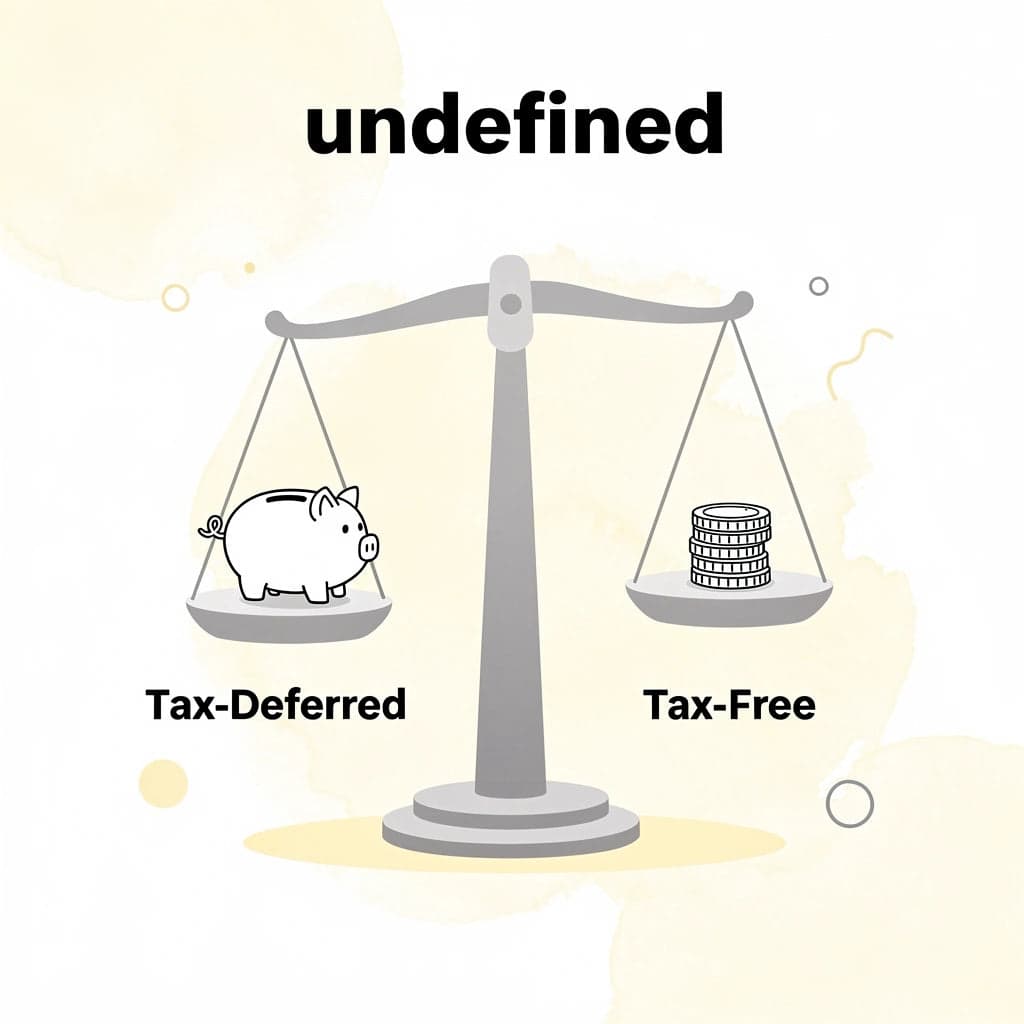
"Understanding your Family Tax Rate today shapes every decision you make until RMDs begin." — Smart Financial Lifestyle
Tax Bucket Type | Impact on Retirement | Key Consideration |
|---|---|---|
Tax-Deferred (401k) | Forced RMDs | Higher tax brackets |
Tax-Free (Roth) | No RMDs | Flexible withdrawals |
Taxable Accounts | Capital gains rates | Withdrawal sequencing |