Roth IRA Conversion Strategy: When It Helps and When It Hurts
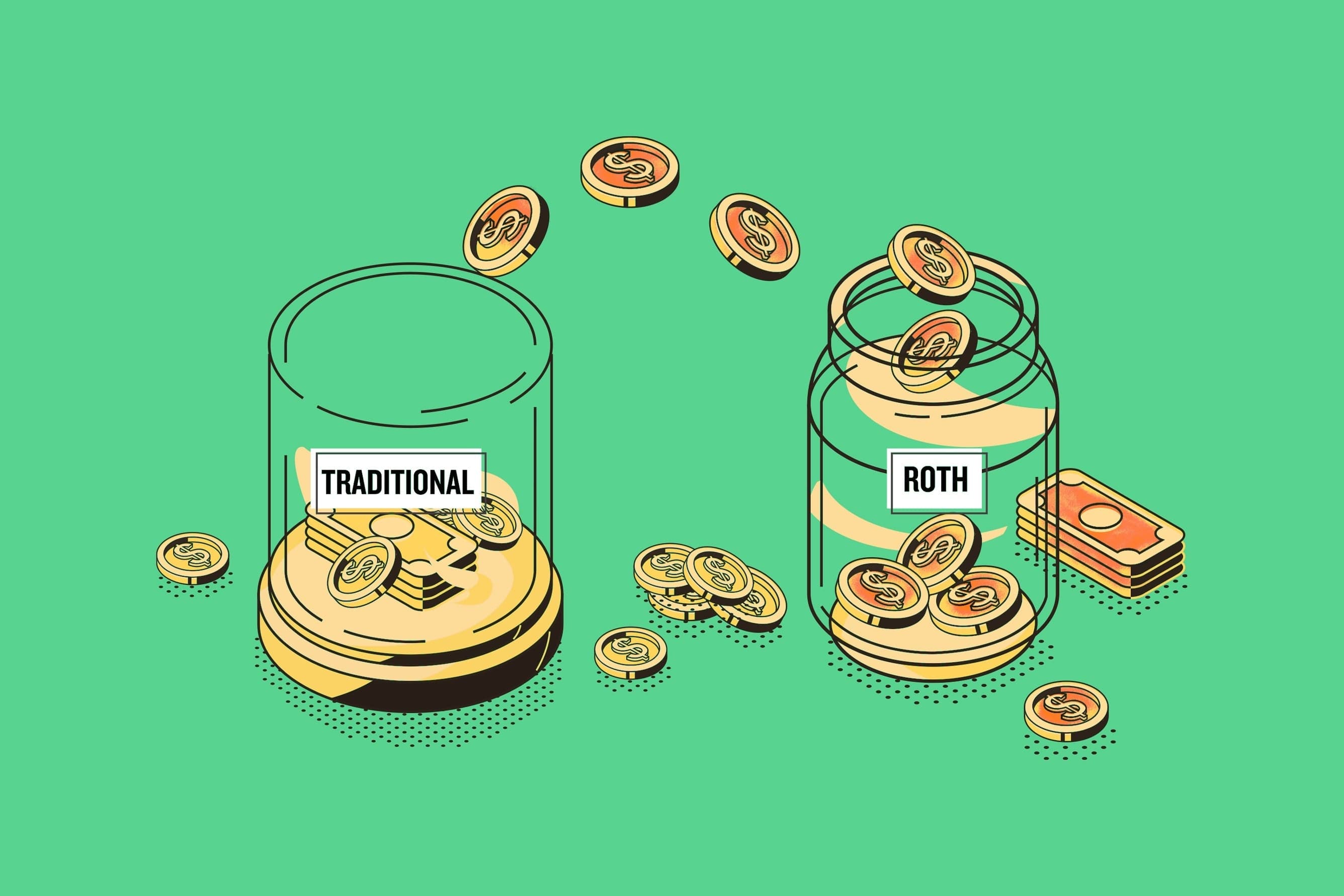
Traditional IRA withdrawals come with a tax bill that can significantly reduce retirement income. A Roth IRA conversion strategy offers a path to tax-efficient retirement by allowing retirees to pay taxes upfront at current rates and enjoy tax-free withdrawals later. Converting makes the most sense when current tax rates are lower than expected future rates, but timing and amount matter significantly.
The decision requires careful analysis of current tax brackets, future income projections, required minimum distributions, and estate planning objectives. Professional guidance helps determine optimal conversion timing and amounts that align with long-term wealth preservation goals through comprehensive retirement financial planning.
Table of Contents
Why "Convert Everything to a Roth" Can Be an Expensive Mistake
How a Roth IRA Conversion Actually Works
The Biggest Benefits of a Roth IRA Conversion
The Often-Ignored Costs and Risks of Roth Conversions
When a Roth IRA Conversion Makes the Most Sense
When a Roth IRA Conversion May Not Be the Right Move
How to Build a Roth Conversion Strategy
How Smart Financial Lifestyle Helps Investors Make Smarter Roth Conversion Decisions
Kickstart Your Retirement Financial Planning Journey | Subscribe to Our YouTube and Newsletter
Summary
A Roth conversion accelerates your tax bill rather than eliminating it. Converting everything at once often pushes you into higher tax brackets, with investors moving from the 12% bracket into the 22% bracket, paying nearly double the tax rate on converted dollars. The decision only makes financial sense if paying taxes now costs less than paying them later across your retirement timeline.
According to research from multiple financial planning sources, 85% of retirees who convert to a Roth IRA underestimate the tax impact in the year of conversion. Large conversions trigger cascading costs beyond the immediate tax bill, including Medicare IRMAA surcharges that can add $2,000 to $6,000 annually to premiums and increased taxation of Social Security benefits, with up to 85% of benefits becoming taxable at certain income thresholds.
The years between retirement and age 73 often create the cleanest conversion window most investors will see. Employment income disappears, Social Security hasn't started, and required minimum distributions haven't begun, creating room in lower tax brackets that won't exist once RMDs kick in. Converting during these temporarily low-income years can mean paying taxes at 12% or 22% instead of the higher rates paid during peak earning years.
Market downturns create unusual conversion opportunities by allowing investors to convert more shares while generating less taxable income. A portfolio declining from $200,000 to $150,000 means paying taxes on $150,000 rather than $200,000, with any subsequent recovery growth benefiting from Roth tax treatment within the account.
Paying conversion taxes with funds outside the retirement account preserves the full converted balance for tax-free growth. Without sufficient cash reserves, investors must use retirement funds to cover the tax bill, which reduces the actual amount converted and may trigger additional penalties for those under age 59½ in certain situations.
The most effective conversion approach involves multi-year strategies that control marginal tax rates rather than maximize Roth balances. Converting smaller amounts strategically over several years, enough to remain within a desired tax bracket each year, often produces more favorable after-tax outcomes than one large conversion that accelerates unnecessary tax payments.
Retirement financial planning addresses Roth conversions by coordinating them with Social Security timing, Medicare planning, and estate goals rather than treating them as isolated tax decisions.
Why "Convert Everything to a Roth" Can Be an Expensive Mistake
A Roth conversion accelerates your tax bill rather than eliminating it. Converting everything at once often pushes you into higher tax brackets, meaning you pay more to the IRS than necessary and may wait years to break even on the extra payment.
🎯 Key Point: Roth conversions are transactions, not tax eliminations—they simply change when you pay taxes.

The appeal makes sense—tax-free withdrawals in retirement sound valuable. But conversions are transactions, not gifts. Every dollar converted adds to your taxable income that year. According to Modern Wealth Management, moving from the 12% bracket into the 22% bracket during a conversion means paying nearly double the tax rate on those dollars. That's expensive impatience, not strategy.
"Moving from the 12% bracket into the 22% bracket during a conversion means paying nearly double the tax rate on those dollars." — Modern Wealth Management
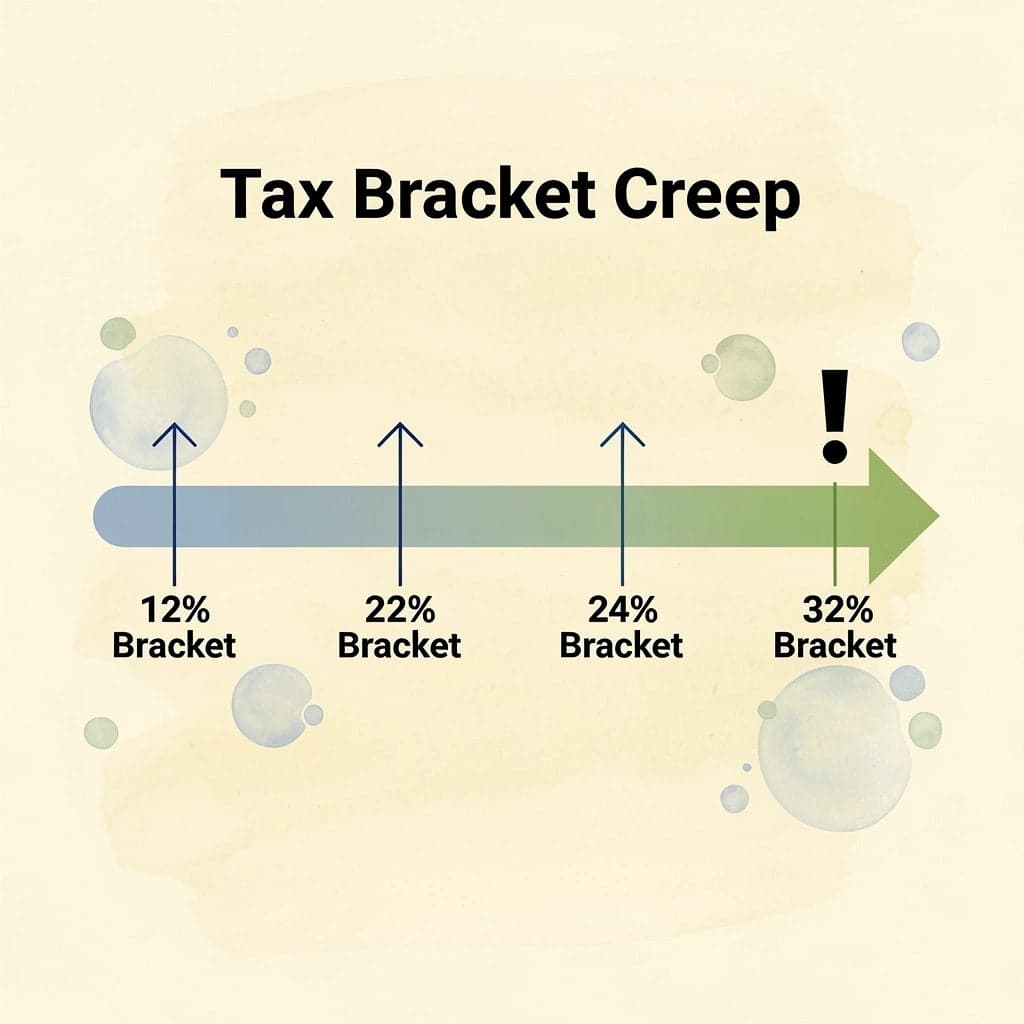
⚠️ Warning: Converting large amounts at once can trigger bracket creep, where you pay significantly higher rates on conversion dollars than your normal retirement tax rate.
When does paying taxes now cost more than later?
Most people assume they will be in a higher tax bracket when they retire, but often they won't be. If retirement income comes mainly from Social Security and small withdrawals, you may spend many years in a lower bracket than today.
How much can aggressive conversions cost you?
Converting aggressively now locks in a tax rate that could exceed what you'd pay over 20 or 30 years of smaller, strategic withdrawals later.
Someone converting $100,000 during peak earning years might pay $24,000 in federal taxes. The same conversion during early retirement, before Social Security and required minimum distributions begin, might cost $12,000 or less. This difference reflects intentional income planning across decades.
What are the hidden costs beyond your tax bracket?
Large conversions trigger Medicare premium surcharges through IRMAA, increase the taxable portion of Social Security benefits, and reduce eligibility for certain tax credits or deductions.
A $75,000 conversion might cost $16,500 in federal taxes, but pushing you into a higher IRMAA tier adds $2,000 to $3,000 annually in Medicare premiums for two years. These cascading costs rarely appear in simplified conversion calculators.
How do you avoid the biggest conversion mistakes?
The mistake isn't converting to a Roth—it's converting without understanding your specific tax situation, future income sources, and how a conversion affects your entire financial life.
Our retirement financial planning evaluates conversions within your complete retirement income strategy, examining current and projected tax brackets, required minimum distributions, Social Security timing, and estate goals to determine optimal conversion amounts and timing.
Why do the mechanics matter as much as strategy?
Understanding how the IRS treats these transactions and what happens when you move money from a traditional account into a Roth shows why the mechanics matter as much as the strategy.
How a Roth IRA Conversion Actually Works
A Roth conversion moves money from a pre-tax retirement account into a Roth IRA, where future qualified withdrawals may be tax-free. You pay income taxes on the converted amount in the year you make the move: a deliberate choice to pay taxes now instead of later, betting that doing so will cost you less over your lifetime.
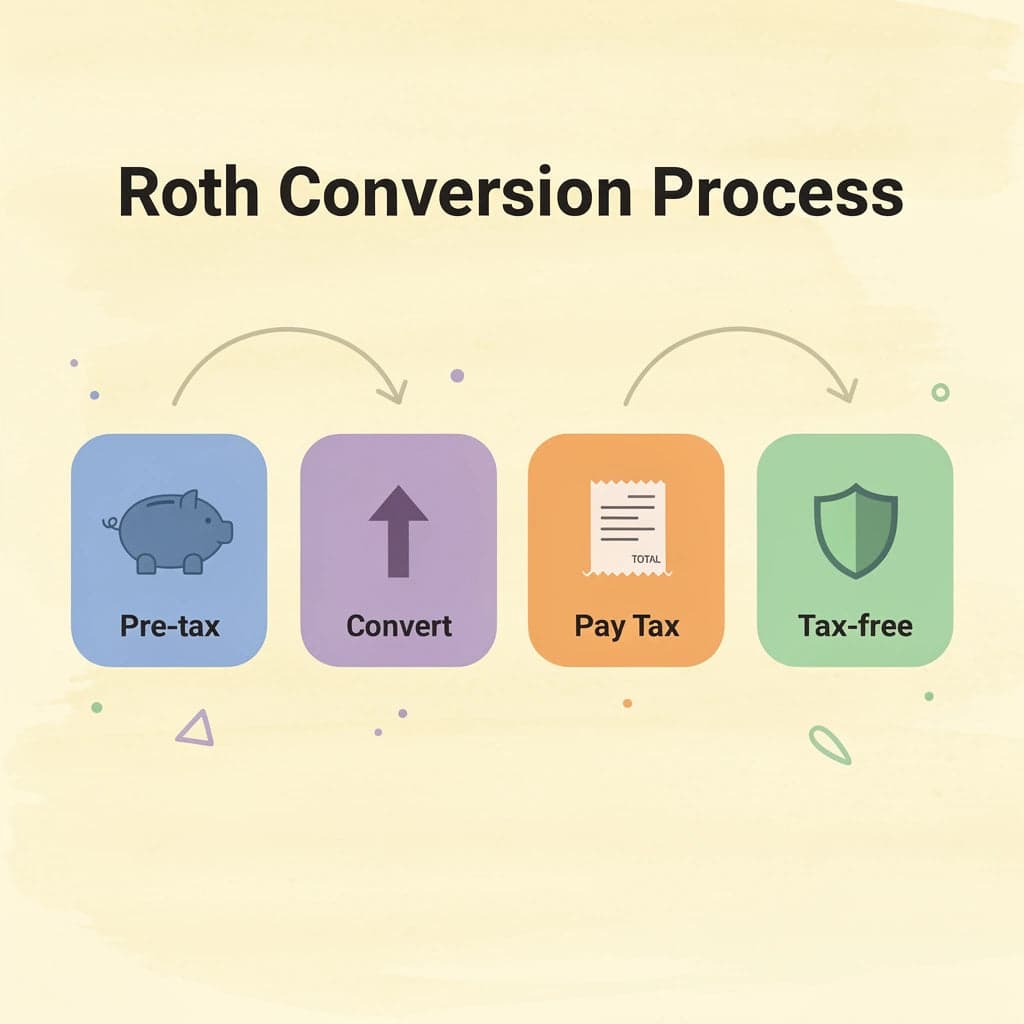
🎯 Key Point: The timing of your tax payment is the fundamental trade-off—you're essentially prepaying taxes at today's rates to avoid potentially higher rates in retirement.
"A Roth conversion is a deliberate choice to pay taxes now instead of later, betting that doing so will cost you less over your lifetime." — Tax Planning Strategy
The tax consequences ripple through your entire financial picture in ways people don't anticipate until they're already locked in. These impacts affect your current tax bracket, Medicare premiums, Social Security taxation, and your estate planning strategy.
⚠️ Warning: The tax consequences extend far beyond just paying income tax on the conversion amount—they can trigger unexpected costs in other areas of your financial life.

What happens when you convert a traditional IRA to a Roth IRA?
The most common conversion pathway starts with a traditional IRA. Because those contributions were pre-tax or tax-deductible, the IRS expects you to pay tax when you move them to a Roth. If you convert $50,000, that amount gets added to your taxable income for the year, and the future tax treatment changes accordingly.
How does the conversion process actually work?
The conversion is a tax reclassification, not a liquidation: assets don't move between brokerage firms unless you choose. Once the money lands in the Roth, future growth and qualified withdrawals can be tax-free if you meet IRS requirements. The trade-off: pay taxes now, shelter growth forever.
Traditional 401(k) Conversion Pathways
Employer-sponsored 401(k)s typically convert to Roth through a two-step process: roll the 401(k) into a traditional IRA, then convert that IRA to a Roth. Some plans allow in-plan Roth conversions directly, though this option isn't universally available.
The tax treatment is the same regardless of which path you choose. Pre-tax dollars converted to Roth create taxable income in the conversion year. The IRS taxes the conversion based on whether the original contribution was delayed, not its source.
Understanding the Tax Treatment
Roth conversions don't eliminate taxes—they accelerate them. According to Liberty Group LLC, the top tax rate could reach 59.6% in certain situations. A large conversion can push you into higher tax brackets, increase Medicare premiums, reduce tax credits, and affect other income-based limits.
An investor earning $90,000 who converts $60,000 reports roughly $150,000 of taxable income before deductions. This extra income fills lower brackets first, then moves into higher ones. Converting all at once often costs more than spreading conversions across multiple years: the difference between paying 12% and paying 24%.
The Five-Year Rule and Withdrawal Restrictions
The IRS applies a five-year holding requirement to Roth conversions. If you're under 59½, converted funds must remain in the Roth for at least five years to avoid a 10% early withdrawal penalty. For earnings to be withdrawn tax-free, the Roth IRA must satisfy both the five-year aging requirement and a qualifying event, such as reaching age 59½. Multiple five-year rules can apply depending on your situation, and they don't all start simultaneously.
How does the five-year rule affect your financial flexibility?
This constraint affects liquidity. If you convert aggressively in your 50s, you may lock up access to those funds for years. Should an emergency or opportunity arise while your Roth is still aging, you lose flexibility. The rule prevents short-term tax dodging but limits your options.
What happens after your Roth conversion is complete?
Most people focus on the tax bill when they convert, but the real power and risk of a Roth conversion lies in what happens after the money moves. Our Smart Financial Lifestyle platform helps you navigate the complexities of retirement financial planning, including strategic Roth conversion decisions that extend beyond the immediate tax impact.
Related Reading
The Biggest Benefits of a Roth IRA Conversion
A Roth conversion gives you access to tax-free withdrawals on both the money you put in and any future growth, as long as you meet IRS requirements. It also provides greater flexibility when planning your retirement income, something investors lack when all their savings are in traditional tax-deferred accounts.

🎯 Key Point: The primary advantage of a Roth conversion is tax diversification - giving you the ability to control your tax liability in retirement by choosing which accounts to withdraw from based on your current tax situation.
"Roth conversions provide tax-free growth potential and estate planning benefits that traditional IRAs simply cannot match." — Financial Planning Association, 2024
💡 Tip: Consider timing your Roth conversion during years when your income is lower than usual, such as early retirement or between jobs, to minimize the tax impact of the conversion.
Tax-Free Future Growth
The most powerful benefit of a Roth conversion is tax-free growth. After you convert and pay taxes, every dollar of growth can eventually be withdrawn free from federal income tax if the withdrawal rules are satisfied. A $50,000 conversion growing at 7% annually reaches approximately $193,000 after 20 years, with nearly $143,000 representing tax-free growth. The longer your time horizon, the more valuable the Roth structure becomes.
This is why younger investors and those with decades until retirement often prioritize conversions: they pay taxes on a smaller amount today to avoid paying taxes on a much larger amount later.
Tax Diversification
Most retirees accumulate money in traditional IRAs and 401(k)s, which defer taxes during working years but require taxes on all withdrawals in retirement. A Roth IRA operates under different tax rules, providing a second funding source. Instead of drawing solely from taxable accounts, you can choose which account to use based on your current tax liability.
How does tax diversification create planning flexibility?
This choice creates real planning options. You might withdraw from traditional accounts in years when you earn less money, then use Roth assets to avoid pushing income into higher tax brackets during years with other taxable events. You might manage Medicare IRMAA surcharges more effectively or reduce taxation of Social Security benefits. The goal is to stop being locked into one tax treatment for every dollar you withdraw.
Reduced Future RMD Exposure
Traditional retirement accounts require you to take Required Minimum Distributions starting at age 73, with age 75 applying to certain younger groups under the SECURE 2.0 Act. These mandatory withdrawals create taxable income even if you don't need the money, and large balances can significantly impact Medicare premiums, Social Security taxation, and overall retirement planning. A Roth conversion reduces the traditional account balance, lowering future RMDs, which is why multi-year conversion strategies are valuable when substantial balances are expected in your 70s and beyond.
Estate Planning Benefits
Roth conversions aid estate planning. Heirs can withdraw from inherited Roth IRAs tax-free under current federal law, whereas withdrawals from inherited traditional retirement accounts are subject to income taxes.
For families wanting to pass money to the next generation over a long time, this difference adds up. Money grows in a Roth account without taxes, whereas in a traditional account, taxes are deferred but eventually owed upon withdrawal.
How do you determine if a conversion makes sense?
The value of a conversion depends on your current tax bracket, expected future tax rates, retirement income sources, RMD projections, and estate planning goals.
Frameworks like retirement financial planning focus on personalized, situation-specific strategies rather than one-size-fits-all rules. Our Smart Financial Lifestyle approach helps retirees and pre-retirees over 50 evaluate whether a conversion makes sense for their circumstances.
What costs should you expect with conversions?
Even when the benefits are clear and the timing looks right, most investors underestimate what a conversion will cost.
The Often-Ignored Costs and Risks of Roth Conversions
Most investors focus on what a Roth conversion creates: tax-free growth, future flexibility, and estate planning benefits. What receives less attention is what a conversion costs right now and how those costs affect the rest of a retirement plan. According to Evergreen Wealth Advisor, 85% of retirees who convert to a Roth IRA underestimate the tax impact in the year of conversion. That gap between expectation and reality grows over time.
"85% of retirees who convert to a Roth IRA underestimate the tax impact in the year of conversion." — Evergreen Wealth Advisor, 2025
⚠️ Warning: The immediate tax burden from Roth conversions can push retirees into higher tax brackets, creating cascading unexpected costs that many financial plans fail to account for.
🔑 Key Takeaway: While Roth conversions offer long-term benefits, the upfront tax costs and their ripple effects on Medicare premiums, Social Security taxation, and overall cash flow require careful planning to avoid derailing your retirement strategy.

The Tax Bill Arrives Before the Benefits
A Roth conversion creates ordinary taxable income in the year it happens. Convert $80,000 from a traditional IRA, and that $80,000 gets added to your taxable income for that year. If you're already earning $70,000, your taxable income jumps to $150,000 before deductions. The tax bill comes due when you file your return, but the Roth account's tax-free benefits won't materialize for years or decades. The cash to cover that tax bill must come from somewhere, and wherever it comes from, it stops growing.
Medicare Premiums Spike Without Warning
Higher income from a conversion can trigger Medicare IRMAA surcharges, which increase what you pay for Medicare Part B and Part D coverage. For 2026, surcharges start when modified adjusted gross income exceeds $109,000 for individuals or $218,000 for married couples. Standard Part B premiums are around $202.90 per month, but higher earners can pay between $284.10 and $689.90 per month, depending on income. Part D surcharges add another $14.50 to $91.00 monthly. A $60,000 conversion can cost an extra $2,000 to $6,000 annually in Medicare premiums alone, with the surcharge applying two years after the conversion.
Social Security Gets Taxed More Aggressively
Roth conversions increase provisional income, which determines how much of your Social Security benefit becomes taxable. Research from The Hidden Costs of Roth Conversions shows that up to 85% of Social Security benefits can become taxable when income crosses certain thresholds. A $50,000 conversion can push more of your Social Security into the taxable range, creating a double tax hit: you pay tax on the conversion itself and on Social Security income that would have remained tax-free otherwise.
Liquidity Disappears Faster Than Expected
Paying conversion taxes with funds outside your retirement accounts preserves the Roth balance but drains cash reserves. A $100,000 conversion in the 24% bracket costs $24,000 in federal taxes, plus state taxes in most cases. That $24,000 cannot cover unexpected medical bills, home repairs, or market downturns. Retirees and pre-retirees over 50 with fixed income sources or rising healthcare costs face particular risk. Our retirement financial planning approach helps you determine whether you have sufficient liquid reserves to handle conversion taxes without creating financial strain.
Opportunity Cost Compounds Over Time
Every dollar used to pay conversion taxes stops growing elsewhere. If you withdraw $30,000 from a taxable brokerage account to cover conversion taxes, that $30,000 no longer grows in the market. Over 20 years at 7% annual returns, that $30,000 would grow to roughly $116,000. The Roth conversion must generate enough tax-free growth to offset both the immediate tax cost and the lost growth from funds used to pay those taxes.
Knowing what a conversion costs only matters if you also know when the math works in your favor.
When a Roth IRA Conversion Makes the Most Sense
A Roth conversion works best when you can pay taxes at a lower rate today than you will face later. The question is whether your current tax situation creates an opportunity worth pursuing.
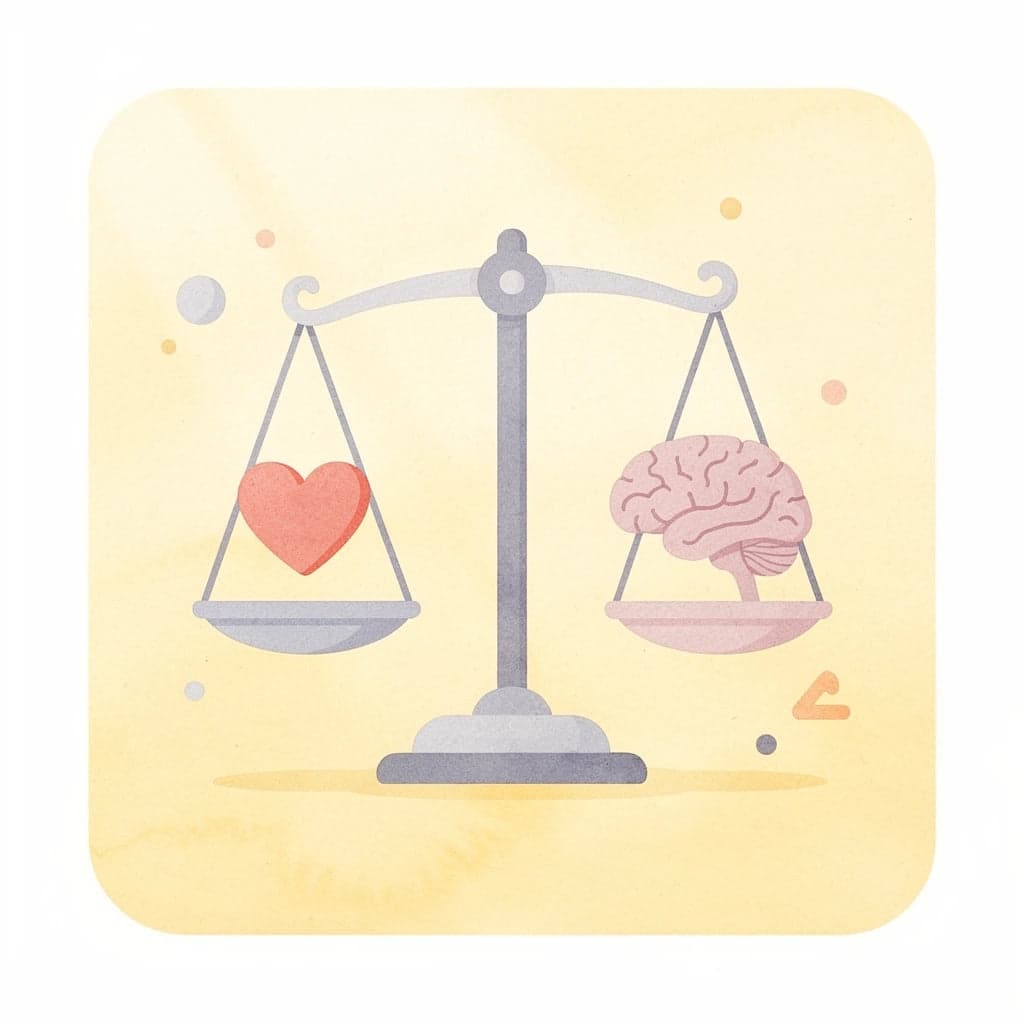
🎯 Key Point: The ideal conversion window occurs during temporary income dips - like early retirement years, sabbaticals, or career transitions, when your tax bracket drops significantly.
"The most successful Roth conversions happen when investors can pay taxes at 12% or 15% knowing they'll face 22% or higher in retirement." — Financial Planning Association, 2023

⚠️ Warning: Don't convert if you're already in a high tax bracket and expect to be in a lower one during retirement. This strategy backfires when you pay premium tax rates upfront only to withdraw funds at reduced rates later.
Early Retirement Before RMDs Begin
The years between retirement and age 73 often create the cleanest conversion window most people will ever see. Employment income disappears, Social Security hasn't started, and required minimum distributions haven't kicked in. Taxable income drops dramatically, creating room in lower tax brackets that won't exist once RMDs begin.
How can early retirees maximize this conversion opportunity?
Consider someone who earned $180,000 annually and retired at 62. For the next ten years, they could move portions of their traditional IRA while staying in the 22% tax bracket instead of paying the higher taxes they faced during their working years. Each conversion reduces their traditional IRA balance, lowering required withdrawals later and potentially reducing lifetime taxes. This strategy emphasizes moving assets gradually before tax rates change, rather than converting everything at once.
When do temporary income declines create conversion opportunities?
Sometimes the best time to convert happens during a career change, time off work, or when business is slow. A year in which income drops from $220,000 to $110,000 due to a job change creates a different tax situation than in a normal year.
Converting during a lower-income year means you pay taxes at lower rates than you would after your earnings return to earlier levels.
How much can you save with lower-tax-bracket conversions?
The value comes from the tax rate applied to your conversion amount. If you normally work in the 24% tax bracket but drop temporarily into the 12% bracket, converting $50,000 costs $6,000 instead of $12,000.
That $6,000 difference grows over decades of tax-free growth inside the Roth account.
How do market downturns create conversion opportunities?
When asset values fall, you can convert more shares while paying taxes on a lower amount. A portfolio worth $200,000 that declines to $150,000 creates an opportunity: converting during the downturn means paying taxes on $150,000 instead of $200,000. If the portfolio recovers inside the Roth IRA, all future growth benefits from Roth tax treatment, effectively moving more shares into the Roth structure at a smaller tax cost.
Do you need to time the market for this strategy?
You don't need to time the market or wait for it to crash. Market declines improve conversion economics if you were already planning to convert and the downturn aligns with your timeline. The benefit comes from converting assets when their values are low, not from predicting market movements.
Large Traditional IRA Balances
Large traditional IRA balances create required minimum distributions (RMDs) that you must take out each year. These distributions increase your taxable income whether you need the money or not. For example, someone with a $2 million traditional IRA must withdraw large sums annually. These required withdrawals may increase Medicare premiums, raise the amount of Social Security that gets taxed, and reduce your tax management options in retirement.
How can partial conversions reduce future tax burdens?
Partial conversions over many years can gradually reduce that traditional balance before RMDs begin, controlling when and how taxes get paid. Most retirees discover too late that pre-tax savings created a future tax liability they cannot easily manage. Our retirement financial planning approach addresses this problem through conversions during lower-income years before it becomes unavoidable.
When does paying taxes early make sense?
But paying taxes early only makes sense if you're confident those taxes won't be lower later.
Related Reading
When a Roth IRA Conversion May Not Be the Right Move
A Roth conversion isn't always the right choice. The decision depends on whether paying taxes today creates better after-tax wealth than paying taxes later. For investors in high tax brackets, expecting lower retirement income, lacking cash to cover conversion taxes, or facing short investment time periods, a conversion can reduce wealth rather than preserve it.

⚠️ Warning: Converting when you're in a high tax bracket today but expect to be in a lower bracket in retirement can cost you thousands of dollars in unnecessary taxes.
"The biggest mistake investors make is assuming Roth conversions are always beneficial without considering their current tax situation versus their future tax scenario." — Tax Planning Research, 2024

🔑 Takeaway: Before converting, carefully evaluate whether your current tax rate is lower than your expected retirement tax rate – this comparison is the foundation of a smart conversion strategy.
Why should high earners avoid immediate conversions?
Converting during peak earning years means paying the highest tax rates you'll ever face. An executive earning $400,000 annually might pay federal taxes at 35% or higher on converted amounts. If that same person expects to withdraw retirement funds at 22% or 24% during retirement, the conversion creates an immediate 11% to 13% tax penalty that future growth may never recover.
When should high earners consider Roth conversions?
High earners shouldn't automatically avoid conversions, but the tax hurdle becomes steeper. Waiting for lower-income years—such as early retirement before Social Security begins or during a career transition—can cut conversion costs nearly in half while preserving the same long-term benefits.
When do lower retirement tax rates favor traditional IRAs?
Every conversion is a bet on future taxes. If you expect lower tax rates during retirement, deferring taxes through a traditional IRA may yield better results. Someone converting at a 32% marginal rate who later withdraws at 22% effectively overpays by 10 percentage points—a gap that compounds over time, particularly for investors with modest retirement income projections or plans to live in a state with no income tax.
How do future income projections affect conversion decisions?
According to Harvest Configuration data from January 2025, tax analysis shows that delaying withdrawals outperforms Roth conversion. Future earnings matter more than current account balances. Investors receiving pension income, rental income, or other steady retirement income may already occupy a higher tax bracket than those relying solely on Social Security and modest withdrawals.
What happens when you don't have cash to pay conversion taxes?
The most effective conversions use money outside the retirement account, allowing the full converted balance to stay invested and grow tax-free. Without sufficient cash savings, investors must use retirement funds to pay the tax bill. A $50,000 conversion at a 24% tax rate requires $12,000. If that $12,000 comes from the retirement account, only $38,000 is converted; the rest goes to tax payments.
Why does using retirement funds for taxes reduce conversion effectiveness?
For investors under age 59½, using retirement funds to pay conversion taxes may trigger additional penalties. Without liquidity, the conversion depletes the asset base it's meant to protect. Many retirees and pre-retirees over 50 have substantial retirement savings but limited non-retirement cash. Our retirement financial planning platform helps investors model whether converting with limited liquidity makes sense or whether building cash reserves first produces better long-term outcomes.
Near-Term Spending Needs
Timing is important for a Roth conversion to succeed. The longer assets remain invested in a Roth IRA, the more opportunity for tax-free growth to offset the upfront tax cost.
Why does timing matter for conversion success?
Someone planning to withdraw converted funds within three to five years may not see enough growth to justify paying taxes upfront. A $40,000 conversion that grows to $45,000 over four years produces $5,000 in tax-free gains. If the conversion costs $10,000 in taxes, the investor is worse off than if they had withdrawn from the traditional IRA and paid taxes on the distribution.
How do short investment horizons affect the math?
Short investment time periods make the math harder to justify. Keeping money available and having choices often matters more than tax treatment for assets spent soon. According to the Session Replay Configuration analysis from January 2025, investors who need to spend money within a 10% sampling window of their conversion timeline see smaller returns. Time remains the critical variable.
How to Build a Roth Conversion Strategy
Build a plan that covers several years and can change as your income, taxes, and retirement timeline shift. Determine your current tax situation, estimate your retirement income, and decide how much in a traditional IRA would trigger required minimum distributions. Our Smart Financial Lifestyle planning tools help you convert your money into amounts that keep your tax rate under control, rather than maximizing Roth account contributions.

🎯 Key Point: A successful Roth conversion strategy requires careful tax planning across multiple years to avoid pushing yourself into higher tax brackets during the conversion process.
"The key to Roth conversions is strategic timing and amount control to minimize your overall tax burden while maximizing long-term benefits." — Financial Planning Association
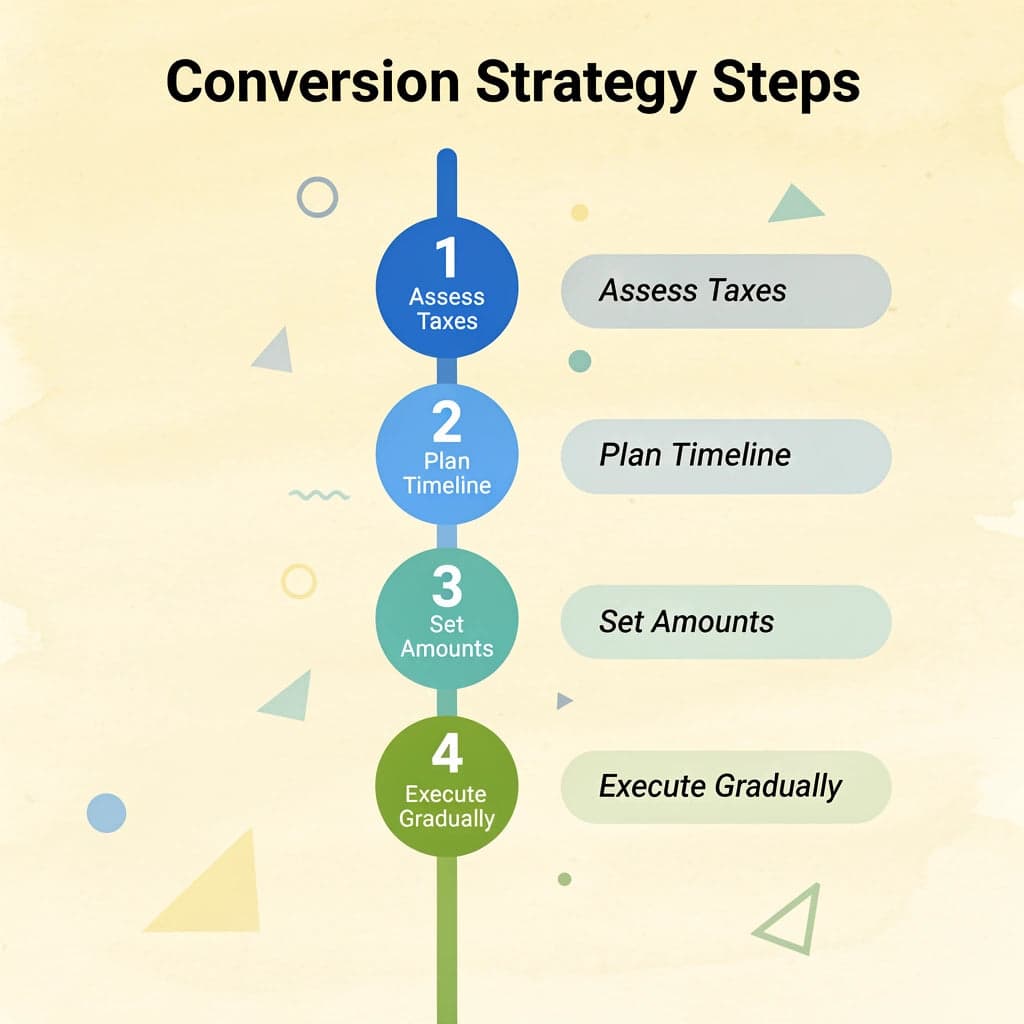
⚠️ Warning: Converting too much at once can push you into a higher tax bracket, potentially costing you thousands of dollars in unnecessary taxes and defeating the purpose of the conversion strategy.
Identify Your Current Tax Bracket
Examine your current taxable income, federal tax bracket, state income taxes, available deductions, and remaining room before entering a higher bracket. If your taxable income falls in the 22% tax bracket, converting only enough to stay in that bracket typically works better than converting a larger amount that pushes your income into the 24% tax bracket. This "filling up the bracket" approach lets you control the tax rate on each dollar converted.
Estimate Future Retirement Income
Figuring out future retirement income helps you decide if conversions make sense. Estimate possible income sources: Social Security benefits, pension income, required minimum distributions, investment income, rental income, and part-time work or consulting income. An investor earning $250,000 today who expects retirement income of $90,000 may have less reason to accelerate taxes through large conversions. Conversely, an investor expecting large pensions, substantial required minimum distributions, and significant investment income may conclude that future tax rates could match or exceed today's rates, making conversions more beneficial.
Why do required minimum distributions create conversion urgency?
Required Minimum Distributions create a strong reason to consider conversion strategies. Traditional IRAs and other pre-tax retirement accounts eventually require mandatory withdrawals that generate taxable income regardless of need.
An investor with a $2 million traditional IRA may face large annual RMDs that increase taxable income, Medicare premiums, and Social Security taxation. A conversion strategy can reduce these future obligations by gradually moving assets out of traditional accounts before RMDs begin.
How should conversions integrate with broader retirement planning?
Most investors treat Roth conversions as isolated decisions rather than components of their overall retirement plan. Financial planning frameworks like those offered by Smart Financial Lifestyle's retirement financial planning connect conversion strategies with Social Security timing, Medicare planning, and estate goals. This transforms disconnected decisions into a coordinated multi-year approach that addresses tax exposure comprehensively.
Consider Partial Conversions
Many conversion strategies fail because investors think in all-or-nothing terms. Convert smaller amounts strategically over multiple years rather than triggering significant taxes with a single large conversion. An investor with a $500,000 traditional IRA might convert $25,000 annually—enough each year to remain within a desired tax bracket, larger amounts during low-income years, and smaller amounts when income rises. This approach manages tax rates while gradually increasing Roth balances, often producing more favorable outcomes than one large conversion.
But knowing how to structure conversions matters only if you understand who can help you execute them without costly mistakes.
Related Reading
How Smart Financial Lifestyle Helps Investors Make Smarter Roth Conversion Decisions
The challenge with Roth conversions isn't finding information—you can search for conversion rules in seconds. The difficulty is understanding how those rules apply to your specific retirement picture when you're juggling Social Security timing, Medicare premiums, pension income, and investment withdrawals simultaneously. Most investors get stuck not from lack of intelligence, but from lacking a framework that connects these moving pieces into a coherent strategy.
🎯 Key Point: The complexity of Roth conversions lies in coordinating multiple retirement income streams, not in understanding the basic mechanics of conversions.
"Most investors get stuck not from lack of intelligence, but from lacking a framework that connects these moving pieces into a coherent strategy." — Smart Financial Lifestyle Analysis
⚠️ Warning: Without a comprehensive framework, even well-informed investors can make costly timing mistakes that impact their entire retirement income strategy.
The Problem Most Investors Face
Most retirees view Roth conversions as isolated, one-time decisions: Should I convert $30,000 this year? Will it push me into a higher tax bracket? They overlook how conversions interconnect with their broader financial life. A conversion that appears sound in isolation might trigger IRMAA surcharges two years later, increase taxes on Social Security benefits, or create unnecessary tax problems during high-income years. Our Smart Financial Lifestyle platform reveals how these decisions interconnect across your entire retirement financial planning strategy, making the decision tree manageable.
What Makes Smart Financial Lifestyle Different
Smart Financial Lifestyle approaches retirement planning through over $1 billion in assets managed across 50+ years of experience. Rather than offering generic conversion advice, our platform examines how tax strategy, account structure, and withdrawal sequencing interact over decades. Our 5-step wealth-building framework treats Roth conversions as one component of a comprehensive retirement income plan, not an isolated tactic.
Education That Addresses Real Situations
Smart Financial Lifestyle's educational content addresses what most financial advice ignores: retirement planning is messy, personal, and full of tradeoffs that vary by age, income sources, family situation, and legacy goals. A conversion strategy for a 55-year-old planning early retirement differs significantly from one for a 68-year-old managing required minimum distributions and long-term care concerns. Our platform helps investors identify which variables matter most in their situation and then build decision frameworks around those priorities, rather than chasing universal rules.
Kickstart Your Retirement Financial Planning Journey | Subscribe to Our YouTube and Newsletter
Roth conversions are not inherently good or bad; their value depends on timing, tax brackets, future income expectations, and your broader retirement strategy.
🎯 Key Point: Roth conversion decisions require careful analysis of your current tax situation and future retirement needs.
Explore Paul Mauro's books and free educational content through Smart Financial Lifestyle to learn how experienced wealth managers evaluate retirement tax decisions, withdrawal strategies, and long-term wealth preservation. Our resources help you avoid costly tax mistakes, make informed conversion decisions, and build a flexible retirement plan. Subscribe to our YouTube channel and newsletter for guidance on retirement tax planning.
💡 Tip: Start with small Roth conversions to test the waters before committing to larger tax bills in retirement.
"The best time to do a Roth conversion is when your current tax rate is lower than your expected future tax rate in retirement." — Smart Financial Planning Principles
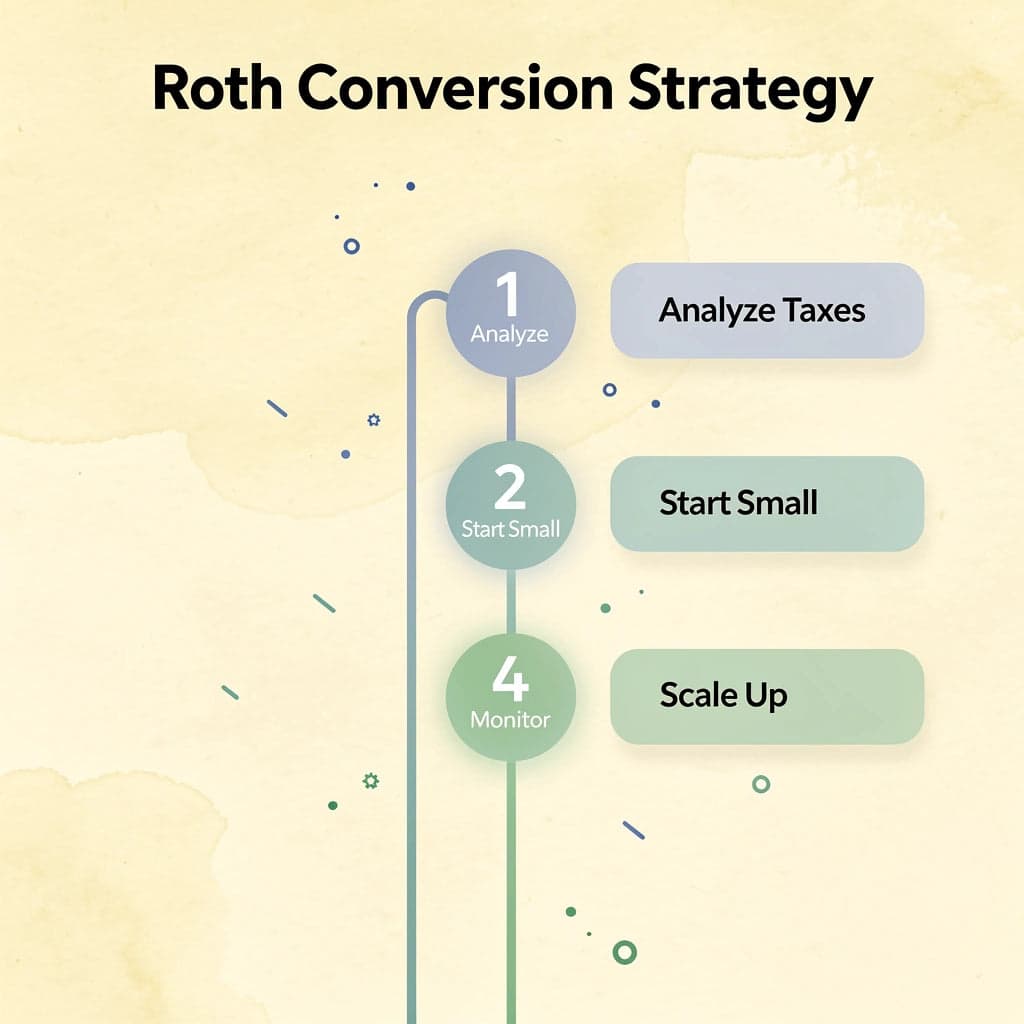
Conversion Factor | Key Consideration |
|---|---|
Current Tax Bracket | Lower brackets favor conversions |
Future Income | Higher expected income supports conversions |
Time Horizon | A longer time allows more tax-free growth |
Legacy Goals | Roth IRAs offer better inheritance benefits |