Traditional IRA Pre or Post-Tax? Avoid Costly Tax Mistakes

Choosing between pre-tax and post-tax contributions for a Traditional IRA significantly impacts both current tax bills and future retirement income. This decision affects taxable income today, withdrawal strategies tomorrow, and the total amount kept versus paid to the IRS over time. Understanding how these contributions fit into a tax-efficient retirement strategy helps avoid costly mistakes that could undermine long-term financial security. The mechanics of tax-deferred growth, contribution limits, and distribution rules determine which approach works best for specific situations.
Pre-tax contributions reduce current taxable income but create future tax obligations on withdrawals, while post-tax contributions use already-taxed dollars but may offer different withdrawal advantages. Each approach serves different income levels, tax brackets, and retirement timelines. Making informed choices requires understanding how contribution strategies align with individual financial circumstances and goals, where professional guidance is invaluable for effective retirement financial planning.
Table of Contents
Why Many Retirement Savers Get Traditional IRA Taxes Wrong
Is a Traditional IRA Pre-Tax or Post-Tax?
How Traditional IRA Taxes Work During Retirement
Traditional IRA vs Roth IRA: Which Tax Treatment Is Better?
What Smart Retirement Savers Do Before Choosing an IRA
How Smart Financial Lifestyle Helps Investors Make Better Retirement Decisions
Kickstart Your Retirement Financial Planning Journey | Subscribe to Our YouTube and Newsletter
Summary
Only 33% of workers correctly answered a basic question about the tax treatment of Traditional IRAs in a 2024 survey by the Employee Benefit Research Institute. This knowledge gap is particularly concerning given that Americans held approximately $15.2 trillion in Individual Retirement Accounts as of year-end 2024. When the majority of retirement savers operate with faulty assumptions about how their contributions work, small mistakes compound over decades and can trigger double taxation in retirement.
Traditional IRA tax treatment depends entirely on whether your contribution qualifies for a deduction, which is determined by your income, participation in a workplace retirement plan, and filing status. For single filers covered by a workplace plan in 2024, deductibility begins phasing out at $77,000 of modified adjusted gross income and disappears completely at $87,000. Many savers don't realize they've crossed into non-deductible territory until they file taxes, by which point the contribution has already been made, and the opportunity to adjust strategy has passed.
Required Minimum Distributions force Traditional IRA owners to begin taking taxable withdrawals at age 73 under current law, regardless of whether they need the income. These mandatory distributions are calculated based on account balance and life expectancy, meaning larger account balances lead to larger RMDs, which can push retirees into higher tax brackets than anticipated. This forced income can also trigger secondary consequences, such as higher Medicare premiums and increased taxation of Social Security benefits.
The comparison between Traditional and Roth IRAs only makes sense when you calculate your current effective tax rate against your expected retirement rate. A $7,000 contribution at a 32% marginal rate saves $2,240 in taxes immediately, but if that same withdrawal happens at a 22% rate decades later, you've effectively arbitraged the difference. Neither account type is universally superior because the value depends on an individual's tax trajectory over decades, not on generic advice.
Early withdrawals from a Traditional IRA before age 59½ generally trigger both ordinary income tax and an additional 10% penalty on top of the regular tax owed. A $20,000 early distribution could result in $2,000 in penalties plus $4,000 to $6,000 in income taxes, depending on the taxpayer's bracket, for a total of $6,000 to $8,000 lost to taxes and penalties on a single withdrawal.
Retirement financial planning addresses these complexities by modeling scenarios using your actual income projections, tax brackets, and retirement timeline rather than relying on hypothetical examples that ignore the details specific to your situation.
Why Many Retirement Savers Get Traditional IRA Taxes Wrong
Most people think Traditional IRAs work one way: you contribute pre-tax money, your money grows tax-deferred, and you pay taxes when you withdraw it. The problem is that this is only sometimes true, and the exceptions matter more than most people realize.

🎯 Key Point: The tax treatment of Traditional IRA contributions isn't always straightforward - your income level and employer retirement plan participation can dramatically change how the tax deduction works.
"Understanding the nuances of Traditional IRA tax rules can mean the difference between maximizing your deduction and missing out on thousands in tax savings." — IRS Publication 590-A
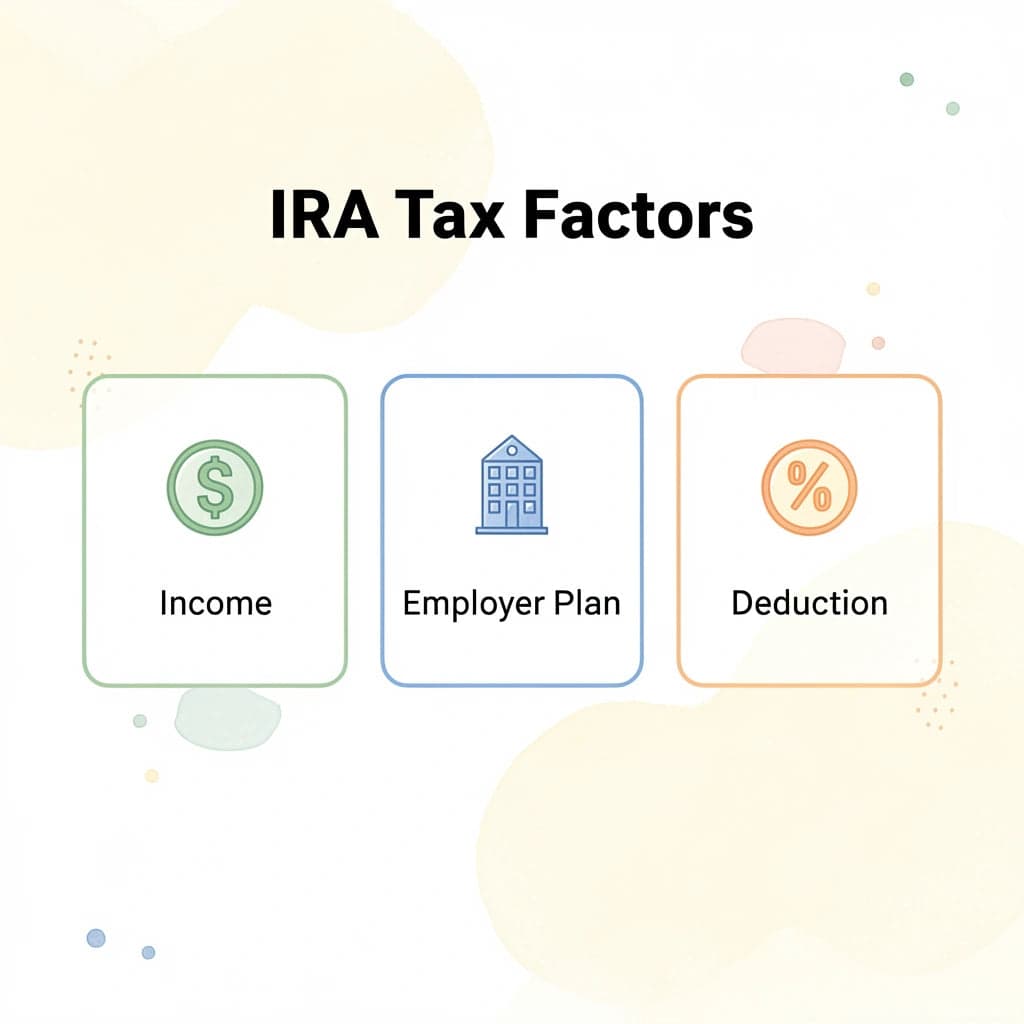
⚠️ Warning: Many high-income earners mistakenly assume they can't benefit from Traditional IRAs at all, when strategic planning around income limits and deduction phases can still provide significant tax advantages.
What causes confusion about Traditional IRA tax treatment?
The confusion starts with the word "traditional" itself, which suggests a single, predictable structure. But Traditional IRA tax treatment depends on whether you're covered by a workplace retirement plan, your income, and whether you qualify for a deduction. Two people contributing $7,000 to a Traditional IRA in the same year might face completely different tax outcomes: one gets a full deduction, lowering their taxable income today, while the other gets no deduction at all, making an after-tax contribution to an account that will still be taxed upon withdrawal.
What is the deduction assumption trap?
Many people believe that every Traditional IRA contribution lowers their current tax bill. According to a 2024 survey by the Employee Benefit Research Institute (EBRI), only 33% of workers answered a basic question about the taxation of Traditional IRAs correctly, suggesting that two-thirds of retirement savers hold misconceptions.
Why do these misconceptions matter for retirement savings?
Americans held approximately $15.2 trillion in Individual Retirement Accounts (IRAs) as of year-end 2024, according to the Investment Company Institute. When trillions of dollars sit in accounts that people don't fully understand, small mistakes compound over years. A non-deductible contribution made without proper documentation can cause double taxation in retirement: you pay taxes when you earn the money and again when you withdraw it.
What happens when you earn too much for Traditional IRA deductions
If you participate in a 401(k) at work and earn above certain income levels, the IRS limits your ability to deduct Traditional IRA contributions. Your contribution still goes into the account and grows, but you don't receive the upfront tax break. This turns your Traditional IRA contribution into an after-tax deposit, similar to a Roth IRA contribution, except without the tax-free growth and withdrawal benefits.
You're left with no deduction now and taxable distributions later on the growth portion.
Why do investors miss the income limit warning signs
Many investors don't realize they've crossed into non-deductible territory until they file their taxes, assuming they'll see a tax benefit only to discover their refund is smaller than expected or their tax bill is higher.
The realization comes too late to adjust strategy, and the confusion often persists for years.
What makes future withdrawals so complicated
But the real complexity lies in what happens decades from now when you start taking money out. Understanding your withdrawal strategy is crucial for retirement financial planning, and our Smart Financial Lifestyle platform helps you model different scenarios to optimize your tax situation across decades.
Is a Traditional IRA Pre-Tax or Post-Tax?
A Traditional IRA can be either pre-tax or post-tax, depending on whether your contribution qualifies for a tax deduction. The IRS determines deductibility based on your income, whether you have a workplace retirement plan, and your filing status. Two people contributing the same amount may have different tax results.

🎯 Key Point: Your Traditional IRA contribution's tax treatment isn't automatic—it depends on your specific financial situation and IRS eligibility rules.
"The deductibility of Traditional IRA contributions varies significantly based on individual circumstances, making it essential to understand your specific tax situation." — IRS Publication 590-A
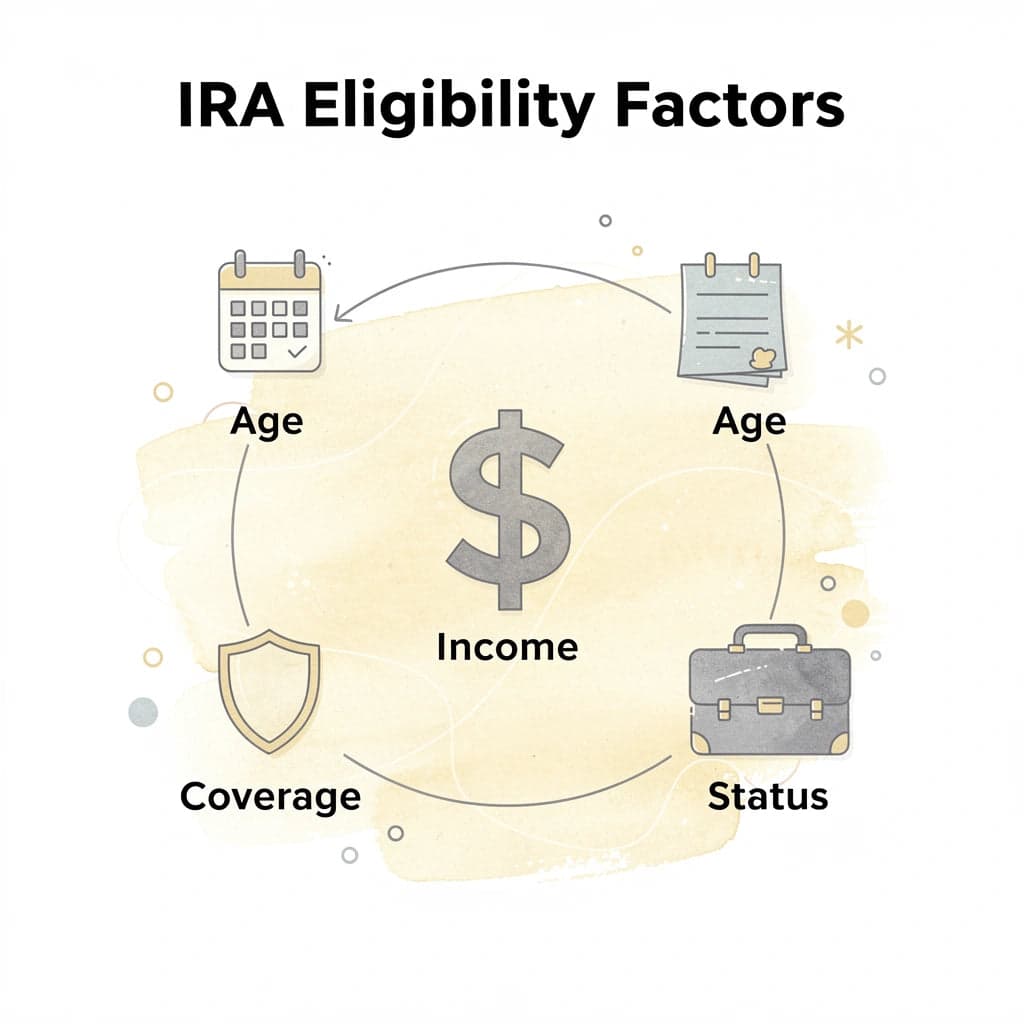
⚠️ Warning: Don't assume your Traditional IRA contribution is automatically tax-deductible—verify your eligibility based on your income limits and retirement plan coverage to avoid tax surprises.
Fully Deductible Contributions Function as Pre-Tax Money
When your contribution qualifies for a full deduction, it reduces your taxable income for the year, deferring your tax bill until you withdraw the money during retirement. According to SmartAsset, the contribution limit for 2024 is $7,000. If you earn $80,000 and contribute the maximum deductible amount, your taxable income drops to $73,000. The contribution counts as pre-tax money because you haven't paid taxes on those dollars.
Partially Deductible Contributions Create a Split Tax Treatment
Some investors fall into IRS phaseout ranges where only part of their contribution qualifies for a deduction. If you contribute $7,000 but only $4,000 qualifies for a deduction, you end up with $4,000 of pre-tax money and $3,000 of post-tax money in the same account. This split creates complexity during retirement because you must track which portion has been taxed and which hasn't. Most people don't realize they've created this mixed tax situation until years later, when they begin taking distributions.
Non-Deductible Contributions Are Post-Tax Money
When you earn too much to qualify for any deduction or IRS rules disqualify you entirely, your contribution is made with after-tax dollars. The money still grows tax-deferred inside the Traditional IRA, but you don't get an immediate tax benefit. The IRS requires you to file Form 8606 to track non-deductible contributions. Without proper records, you risk paying taxes twice on the same money when you take distributions.
How do income limits affect Traditional IRA deductibility?
The IRS sets income limits on the deductibility of Traditional IRA contributions for taxpayers covered by workplace retirement plans such as 401(k)s or 403(b)s. If you're single and covered by a workplace plan, your deduction phases out at $77,000 of modified adjusted gross income in 2024, disappearing entirely at $87,000. Married couples filing jointly face phaseout ranges between $123,000 and $143,000 when the contributing spouse has workplace coverage.
These thresholds shift annually with inflation, and many retirement savers don't realize their income has pushed them into partial or zero deductibility until tax time. Roth IRA income limits differ from Traditional IRA deductibility limits, adding complexity.
What happens when people assume automatic deductibility?
Most people assume Traditional IRA contributions automatically qualify for a tax deduction. They contribute throughout the year, expecting a lower tax bill, only to discover during tax preparation that their income or participation in a workplace plan has eliminated or reduced their deduction. By then, the contribution window has closed.
Our retirement financial planning frameworks clarify qualification rules before contributions are made, preventing assumptions about deductibility until eligibility is verified.
But knowing whether your contribution is pre-tax or post-tax is only half the equation. The real impact emerges decades later when you withdraw the money.
Related Reading
How Traditional IRA Taxes Work During Retirement
When you withdraw money from a Traditional IRA, you pay taxes on it as ordinary income, like wages or salary. Your tax rate in retirement directly determines how much money you keep. This creates a long-term bet that tax rates will be lower in retirement than during your working years.

🎯 Key Point: Your retirement tax bracket determines the actual value of your Traditional IRA withdrawals - not just the account balance.
"Every dollar withdrawn from a Traditional IRA is taxed as ordinary income at your current tax rate." — IRS Publication 590-B

That bet doesn't always work out as expected.
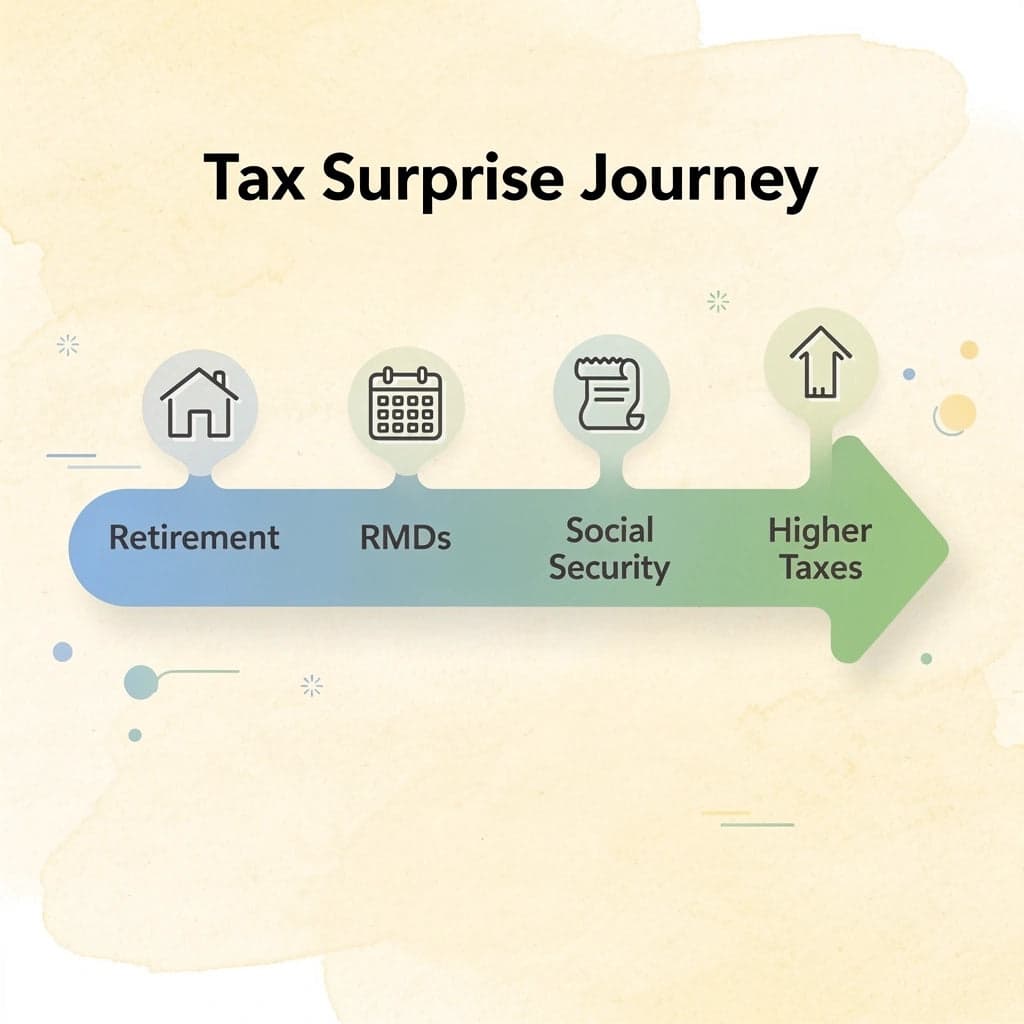
⚠️ Warning: Many retirees find themselves in higher tax brackets than anticipated due to required minimum distributions, Social Security taxation, and rising tax rates over time.
How do deductible contributions affect your tax liability?
When contributions were deductible, every dollar you withdrew got taxed at ordinary income rates, including both the original contribution and all investment growth. This is the tradeoff for getting the upfront tax deduction.
What happens to your entire account balance at withdrawal?
Consider someone who contributed $7,000 annually to an account for 20 years and deducted each contribution. The account grows to $250,000 by retirement. The IRS treats the $140,000 in contributions and $110,000 in growth identically: all $250,000 will be taxed as ordinary income upon withdrawal.
How does your total income affect traditional IRA tax rates?
The tax rate applied to distributions depends on the retiree's total income for the year. If other income sources push the retiree into a higher tax bracket, Traditional IRA withdrawals are taxed at that higher rate.
How do non-deductible contributions affect your tax situation?
Non-deductible contributions result in a different tax outcome because the taxes were already paid on that money. When you withdraw funds, the portion from non-deductible contributions comes out tax-free, but any investment growth on those contributions remains taxable.
Why is proper documentation crucial for non-deductible contributions?
The IRS requires Form 8606 to track cost basis. Without proper documentation, proving that taxes were already paid becomes difficult or impossible. I've seen retirees struggle to reconstruct years of non-deductible contributions because they didn't file the form consistently or lost records during moves or life transitions.
How does the pro-rata method calculate taxable withdrawals?
The calculation uses a pro rata method: each withdrawal includes a mix of taxable and non-taxable amounts proportional to the account's after-tax contributions. If 30% of the account represents money you already paid taxes on, then 30% of each withdrawal is tax-free, and 70% is taxable, continuing until the account is empty.
What are required minimum distributions, and when do they start?
If you own a Traditional IRA, you must start taking Required Minimum Distributions at age 73 under current law, even if you don't need the money. According to Empower, these required withdrawals ensure the IRS eventually collects taxes on money that has grown tax-deferred for many years.
How do RMDs affect your tax bracket and other benefits?
RMDs are calculated based on account balance and life expectancy. As balances grow, RMDs increase, potentially pushing retirees into higher tax brackets. This forced income can also trigger higher Medicare premiums or increased taxes on Social Security benefits.
How can you manage RMDs with multiple income sources?
For retirees with multiple income sources (pensions, rental income, part-time work, Social Security), RMDs can create unexpected tax burdens. Retirement financial planning frameworks help map out distribution strategies that account for RMD requirements, tax bracket management, and coordination with other income sources. Our Smart Financial Lifestyle planning tools transform what feels like a forced tax event into a controlled outcome.
Early Withdrawals Carry Additional Penalties
Taking money out of a Traditional IRA before age 59½ triggers both ordinary income tax and a 10% early withdrawal penalty. Charles Schwab notes this penalty applies to most distributions taken before the specified age, in addition to regular income tax owed.
Certain exceptions exist for first-time home purchases, qualified education expenses, and disability, but most early withdrawals incur both penalties and income tax. A $20,000 early withdrawal could result in $2,000 in penalties plus $4,000 to $6,000 in income taxes, depending on your tax bracket, totaling $6,000 to $8,000 lost on a single distribution.
Traditional IRA vs Roth IRA: Which Tax Treatment Is Better?
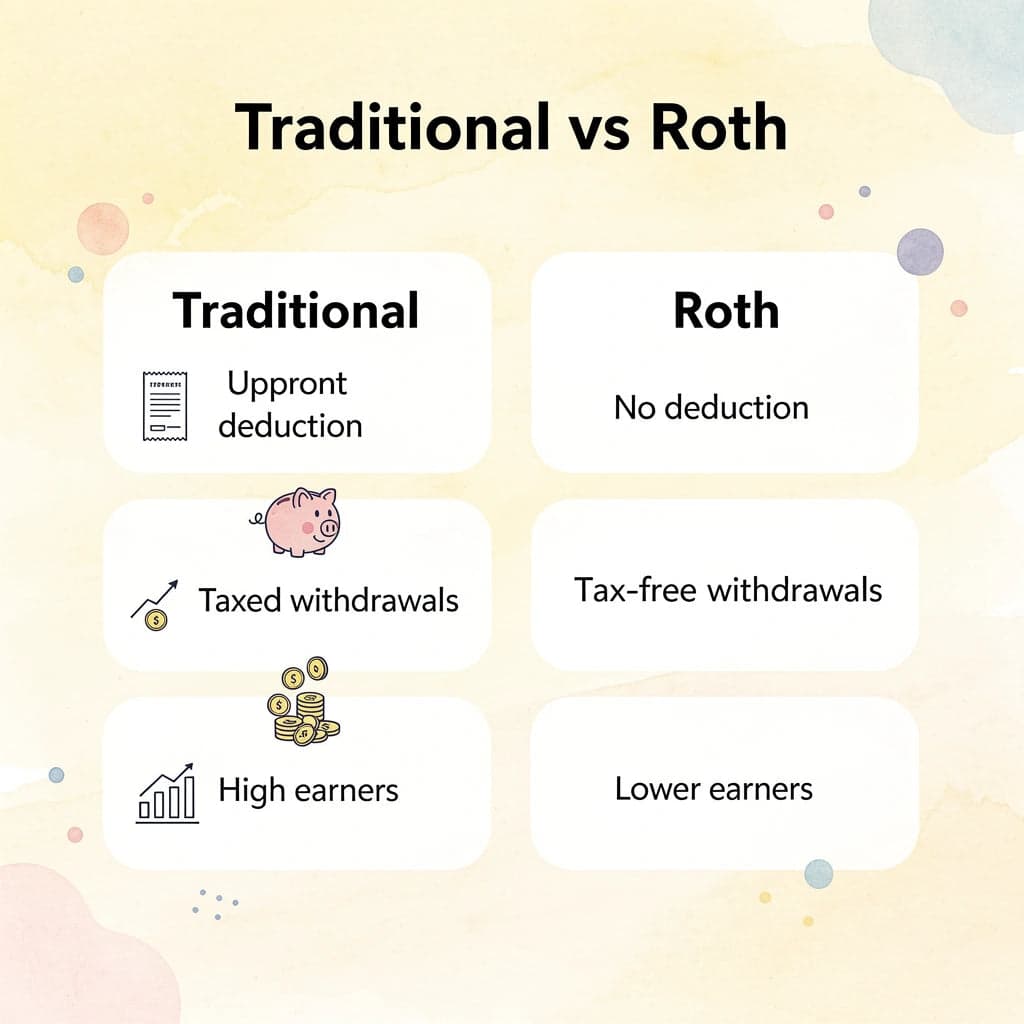
The better choice depends on whether you expect to pay more in taxes today or during retirement. Choose a Traditional IRA if you're in a high tax bracket now and expect lower taxable income after you stop working: the upfront deduction creates immediate value. Choose a Roth IRA if you're earning less today but expect higher income or rising tax rates in the future: tax-free qualified withdrawals become more attractive. Neither account is universally better; the value of each depends on your tax trajectory.

🎯 Key Point: Your current tax bracket versus your expected retirement tax bracket is the most critical factor in choosing between Traditional and Roth IRAs.
"The decision between Traditional and Roth IRAs hinges on tax arbitrage—paying taxes when rates are lowest over your lifetime." — Tax Planning Research, 2024

Factor | Traditional IRA | Roth IRA |
|---|---|---|
Tax Deduction | ✅ Immediate deduction | ❌ No upfront deduction |
Withdrawal Taxes | ❌ Taxed as ordinary income | ✅ Tax-free qualified withdrawals |
Best For | High earners today | Lower earners with growth potential |
RMDs Required | ✅ Starting at age 73 | ❌ No required distributions |
🔑 Takeaway: If you're unsure about future tax rates, consider splitting contributions between both account types to create tax diversification in retirement.
When Traditional IRAs Create Greater Value
Traditional IRAs work best when your current tax rate exceeds what you expect to pay during retirement. A $7,000 contribution at a 32% tax rate saves $2,240 in taxes immediately. If that withdrawal occurs years later at a 22% rate, you've leveraged the difference. According to Empower, the 2024 contribution limit is $7,000 for both traditional and Roth IRAs, with an additional $1,000 catch-up contribution allowed for those 50 and older.
How do peak earning years maximize traditional IRA benefits?
Peak earning years often represent the strongest case for Traditional IRA contributions. A physician earning $350,000 annually faces a 35% federal marginal rate, but after retiring, may draw income in the 24% bracket. That 11-point spread creates meaningful tax savings. The immediate deduction also reduces adjusted gross income, preserving eligibility for certain deductions or credits that phase out at higher income levels.
What makes Roth IRAs attractive for younger investors?
Roth IRAs benefit investors who expect their tax rate to rise. A 25-year-old teacher earning $48,000 pays a 12% tax rate today but may face a 22% or higher tax rate after salary increases, pension income, and Social Security benefits are taken into account.
Paying taxes at 12% now locks in that rate permanently on future growth. A $7,000 contribution growing at 7% annually for 40 years becomes roughly $105,000, all of which is withdrawable tax-free if the qualified distribution rules are met.
How do Roth accounts provide flexibility in retirement?
Roth accounts eliminate required minimum distributions during the original owner's lifetime, allowing indefinite growth without forced taxable withdrawals at age 73.
For those who believe federal tax rates will rise to address national debt, paying today's known rate avoids tomorrow's uncertainty. This hedge against future tax policy changes appeals to investors who prioritize control over current deductions.
Why the Comparison Depends on Individual Circumstances
The mistake isn't choosing one account over the other. The mistake is choosing without comparing your current effective tax rate to your expected retirement rate.
How do age and income affect the decision?
A software engineer at age 30 earning $95,000 faces different math than a 55-year-old executive earning $280,000. The younger worker has decades for Roth contributions to grow tax-free, while the older executive benefits more from immediate deductions during peak earnings, especially if retirement income will drop substantially. Neither investor is wrong; they occupy different points on the income-time curve.
Can you use both account types strategically?
Some households benefit from using both account types simultaneously. Contributing to a Traditional IRA during high-income years and converting portions to a Roth during lower-income years (such as early retirement before Social Security begins) can reduce lifetime taxes. Platforms like Smart Financial Lifestyle help people model these scenarios using their actual income projections, tax brackets, and retirement timelines. Tax diversification across account types creates options that single-account strategies don't provide.
Most people never run the comparison because they assume one account is always better or follow advice designed for someone else's situation.
What Smart Retirement Savers Do Before Choosing an IRA
Smart retirement savers examine their taxes across many years before choosing between a Traditional IRA and a Roth IRA. Understanding your current income and projected income at 70 helps determine which account type suits you best. Our Smart Financial Lifestyle platform lets you model scenarios and compare tax outcomes across different retirement account types, so you can select the strategy that works best for your situation.

🎯 Key Point: Your current tax bracket versus your expected retirement tax bracket is the critical factor in choosing between Traditional and Roth IRAs. If you expect to be in a higher tax bracket in retirement, Roth contributions make more sense today.
"Tax planning for retirement isn't about this year—it's about optimizing your total tax burden across 30+ years of saving and spending." — Financial Planning Association, 2024
⚠️ Warning: Many savers make the mistake of only looking at their current tax situation without considering how tax rates, income levels, and retirement needs might change over the next 20-40 years. This short-term thinking can cost thousands in unnecessary taxes.
Map Your Current Tax Bracket Against Future Expectations
Your marginal tax rate determines how much value a Traditional IRA deduction gives you. A $7,000 contribution saves $2,590 in taxes for someone in the 37% bracket, but only $840 for someone at 12%—a difference that can change your decision.
The real question is whether that deduction creates enough immediate value to justify paying taxes on withdrawals later. If you're in a low bracket now but expect pension income, Social Security, and investment distributions to push you into a higher bracket in retirement, paying taxes today through a Roth might cost less than paying them later on every dollar you withdraw.
Calculate Your Deduction Eligibility Before You Contribute
Many investors assume that their Traditional IRA contributions automatically reduce taxable income. If you or your spouse participates in a workplace retirement plan, the IRS may reduce or eliminate your deduction based on annual income thresholds.
For 2026, single filers covered by a workplace plan face phaseouts starting at $81,000 in modified adjusted gross income. Married couples filing jointly see phaseouts begin at $129,000 if the contributing spouse has workplace coverage. Exceeding these thresholds reduces your $7,000 contribution deduction to $4,000 or eliminates it entirely, requiring you to track Form 8606 indefinitely.
Build a Withdrawal Timeline That Accounts for RMDs
Traditional IRAs require Required Minimum Distributions starting at age 73, meaning you must withdraw funds regardless of need. These distributions count as ordinary income, potentially pushing you into higher tax brackets, increasing Medicare premiums, and triggering taxes on Social Security benefits you might otherwise avoid.
How do RMDs impact your actual tax burden in retirement?
A $500,000 Traditional IRA at age 73 requires roughly $18,868 in withdrawals that year, and all of it is taxable. If that income combines with Social Security and other retirement sources, you might face a higher effective tax rate in retirement than you do now, even if official tax brackets remain unchanged.
What tools help you model your specific retirement tax scenario?
Most people compare Traditional versus Roth by reading articles written for someone else's situation. Smart savers run the actual numbers using their income, timeline, and expected retirement tax exposure. Our Retirement financial planning tools let you model these scenarios using your real data, rather than hypothetical examples that miss the details that matter most.
Knowing the mechanics of tax treatment is only half the equation; the other half is understanding how experienced wealth managers apply that knowledge to build retirement strategies that work over decades.
Related Reading
How Smart Financial Lifestyle Helps Investors Make Better Retirement Decisions
Smart Financial Lifestyle transforms decades of wealth management ideas into educational resources that help everyday investors understand retirement account decisions within their bigger financial picture. Our platform provides frameworks for evaluating tax treatment, income planning, and long-term wealth preservation based on your specific circumstances. It prioritizes helping you make confident decisions through education rather than selling products.

🎯 Key Point: The platform prioritizes financial education over product sales, giving you the knowledge to make informed retirement decisions that align with your personal financial goals.
"Smart Financial Lifestyle transforms complex wealth management concepts into accessible educational frameworks that empower investors to make confident retirement decisions based on their unique circumstances."

💡 Tip: Use the platform's educational frameworks to evaluate your current retirement strategy and identify areas where tax treatment and income planning could be optimized for your specific situation.
Drawing From Real Wealth Management Experience
Paul Mauro's career managing over $1 billion in assets and building retirement strategies for 1,000+ families forms the foundation of Smart Financial Lifestyle. His expertise in complex portfolios, tax planning across account types, and wealth preservation grounds the platform in real-world experience rather than theoretical examples.
How do professional frameworks become accessible to everyday investors?
Most investors learn about Traditional IRA versus Roth IRA decisions through scattered articles that address one narrow question at a time: deductibility limits, contribution rules, and tax treatment of withdrawals. This fragmented approach creates confusion because retirement planning requires understanding how multiple elements work together.
What makes integrated retirement planning systems more effective?
Smart Financial Lifestyle brings these ideas together into clear frameworks, showing how taxes, income projections, withdrawal strategies, and account choices work as one connected system.
The platform's books and resources explain, in accessible language, the decision-making processes that experienced wealth managers use when evaluating retirement account strategies. You learn to ask better questions about your own situation rather than search for universal answers that don't exist.
How does ongoing education support retirement planning decisions?
Retirement planning evolves as your income, tax laws, and financial goals change. Smart Financial Lifestyle's free YouTube content covers Roth conversions, tax-efficient withdrawal sequencing, and legacy planning. These resources let you revisit concepts as your situation changes rather than make one-time decisions based on incomplete information.
Why is understanding principles better than following prescriptive advice?
Confidence in making money decisions comes from understanding basic principles well enough to apply them to your own life, not from following advice designed for someone else. Retirement financial planning becomes less about finding the "right answer" and more about developing the ability to evaluate tradeoffs intelligently. Our Smart Financial Lifestyle approach helps you build this decision-making confidence by focusing on foundational principles you can apply to your unique situation.
Understanding basic ideas matters only if you use them, and that requires something most educational resources never address.
Related Reading
Kickstart Your Retirement Financial Planning Journey | Subscribe to Our YouTube and Newsletter
Understanding retirement rules differs from applying them. You can read every guide on Traditional IRA tax rules and still feel stuck when deciding whether to claim the deduction, convert to a Roth, or track non-deductible contributions. The gap between knowing and doing comes down to accountability and a clear next step.

💡 Tip: The difference between reading about retirement planning and implementing it successfully often comes down to personalized guidance and accountability.
Smart Financial Lifestyle offers free consultations to turn theory into a plan for your specific situation. Whether you need to verify deduction eligibility, model Roth conversion scenarios, or build a tax-efficient withdrawal sequence, that first conversation identifies gaps between where you are and where you need to be.
"Your retirement income depends on choices you make today about tax treatment, account selection, and contribution timing." — Smart Financial Lifestyle
Subscribe to our YouTube channel for practical walkthroughs of tax strategies and retirement planning frameworks. Our newsletter delivers actionable insights on contribution limits, phaseout ranges, and legislative changes affecting IRA decisions, written in plain language. Both resources extend Paul Mauro's 50 years of practitioner experience into formats you can reference as you make real decisions.

🎯 Key Point: Every retirement decision you make today directly impacts your future financial security and tax obligations.
Your retirement income depends on choices you make today about tax treatment, account selection, and contribution timing. The question isn't whether Traditional IRA contributions are pre-tax or post-tax in general, but which treatment applies to you this year and whether that creates opportunity or obligation.