7 Backdoor Roth IRA Mistakes That Can Cost You Thousands

High earners who exceed traditional Roth contribution limits often turn to the backdoor Roth IRA strategy to boost their tax-efficient retirement savings. However, one misstep during the conversion process can trigger unexpected taxes, penalties, or IRS scrutiny, costing thousands in potential gains. Common errors include mishandling the pro rata rule, improper timing of contributions, and failing to meet specific reporting requirements.
Understanding these pitfalls helps investors execute conversions successfully while avoiding costly mistakes. Smart Financial Lifestyle provides expert guidance on navigating income limits, contribution timing, and proper documentation to maximize your strategy's effectiveness through comprehensive retirement financial planning.
Table of Contents
Why Backdoor Roth Success Depends on More Than Tax-Free Growth
How to Decide Whether a Backdoor Roth IRA Makes Sense for You
How Smart Financial Lifestyle Helps You Avoid Costly Retirement Mistakes
Kickstart Your Retirement Financial Planning Journey | Subscribe to Our YouTube and Newsletter
Summary
The backdoor Roth IRA leads to mistakes in 68% of cases because of existing pre-tax IRA balances that investors fail to account for before converting. What appears to be a simple two-step process becomes a taxable event when the pro rata rule applies, requiring the IRS to calculate conversions based on the ratio of pre-tax to after-tax dollars across all traditional, SEP, and SIMPLE IRA accounts combined. An investor with $63,000 in a rollover IRA and $7,000 in fresh after-tax contributions discovers that 90% of their conversion is taxable income, resulting in an unexpected tax bill exceeding $2,000.
Form 8606 documentation failures create tax problems that surface years after the original conversion. The form establishes your after-tax basis in traditional IRAs, proving which dollars have already been taxed. Without proper filing each year you make a non-deductible contribution or execute a conversion, you risk paying taxes twice on the same money during retirement when you cannot reconstruct contribution records from decades past. The mistake takes fifteen minutes to avoid but protects thousands of dollars in after-tax contributions from future taxation.
Only 52% of investors who attempt backdoor Roth conversions understand how calendar-year tax reporting splits contribution and conversion across different tax returns. A traditional IRA contribution made in March 2026 for tax year 2025 appears on the 2025 return, while the April 2026 conversion appears on the 2026 return. This timing confusion leads to missing Form 8606 filings or incorrect reporting, which triggers IRS notices and creates documentation gaps that complicate future tax preparation.
Tax diversification across account types provides more flexibility than maximizing any single account structure. A retiree with assets spread across taxable, tax-deferred, and Roth accounts can choose which source to tap based on current tax circumstances, Medicare premium brackets, or unexpected expenses. This strategy matters more than betting everything on a single future tax scenario, particularly when required minimum distributions, Social Security, and pension income interact in ways that shift effective tax rates year by year.
Nearly 60% of Americans don't know how much they need to save for retirement, according to Morgan Stanley research, making it nearly impossible to evaluate whether a backdoor Roth IRA deserves attention right now or whether increasing 401(k) contributions, building emergency reserves, or paying down high-interest debt would deliver greater value. Contribution consistency to any retirement account over 30 years will likely outperform someone who perfectly optimizes account selection but saves sporadically.
Retirement financial planning addresses this by connecting tax diversification, consistent investing, and long-term account coordination into a framework that shows which priorities matter most given your current tax bracket, future income sources, and timeline to retirement.
Why So Many Investors Make Backdoor Roth IRA Mistakes
Investors often think of the Backdoor Roth IRA as a simple transaction, but it's a tax-planning strategy with specific rules that must be followed in order. Understanding contribution types, conversion timing, tax reporting, and how existing retirement accounts affect the outcome is critical. Most people learn about this strategy from blog posts or social media videos that omit these important details.

⚠️ Warning: The Backdoor Roth IRA isn't a single transaction—it's a multi-step process that requires precise timing and proper documentation to avoid tax penalties.
"Understanding contribution types, conversion timing, and tax reporting is essential for executing a successful Backdoor Roth IRA strategy without triggering unexpected tax consequences." — IRS Retirement Plan Guidelines
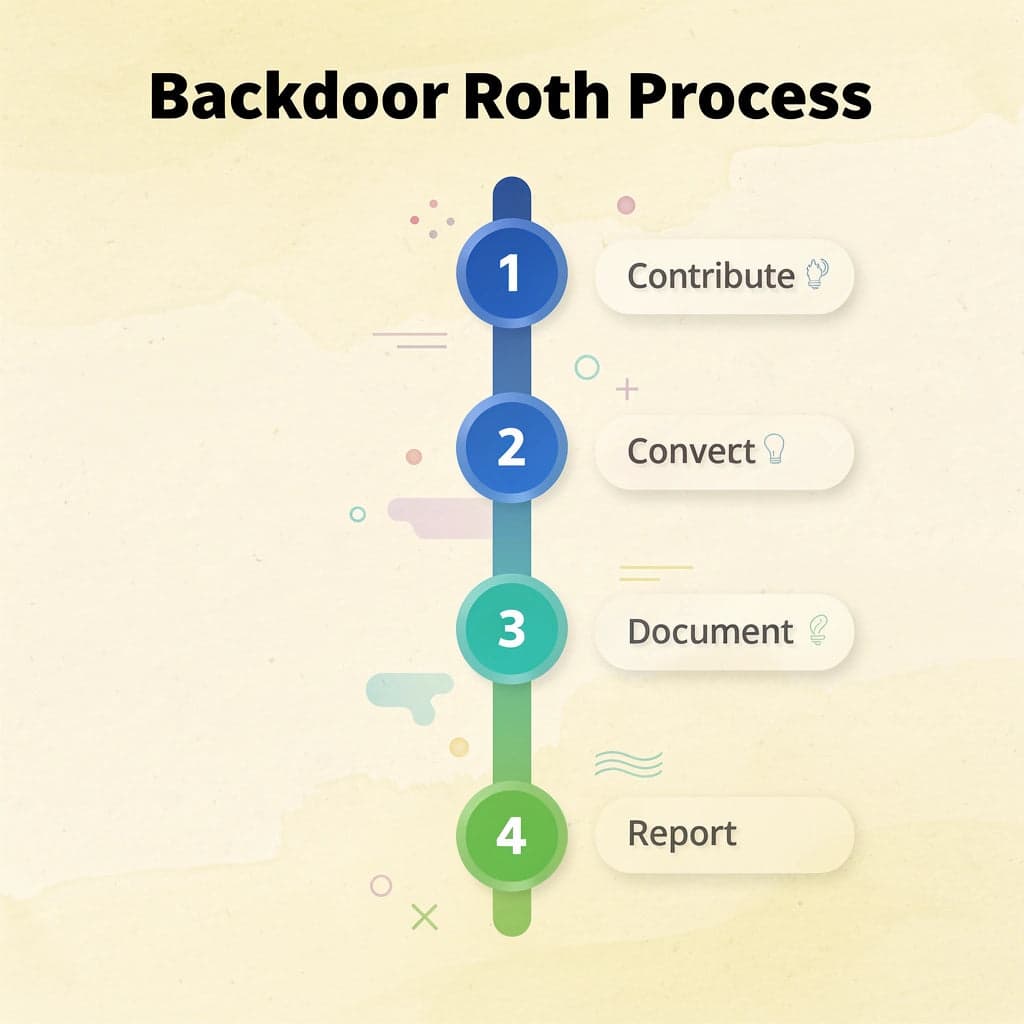
🔑 Takeaway: Don't rely on incomplete information from social media or simplified blog posts. The Backdoor Roth IRA requires understanding complex tax rules that can significantly impact your financial outcome if executed incorrectly.
Why does the backdoor Roth IRA seem deceptively simple?
The Backdoor Roth IRA became popular because it sounds easy: contribute to a traditional IRA, convert to a Roth IRA, and you're done. According to the Financial Planning Association, 68% of backdoor Roth mistakes stem from existing pre-tax IRA balances, a detail that rarely appears in simple explanations.
What happens when investors rely on automatic processing?
The problem worsens when investors assume their brokerage platform will handle the complexity automatically. One investor deposited $2,500 directly into a Roth IRA, believing the conversion would occur automatically, only to discover they had skipped the required first step entirely.
After submitting a recharacterization form to correct the mistake, the amount was adjusted to $2,467 due to fluctuations in the account value, creating confusion about which figure to report on tax forms.
What is the pro-rata rule and why does it matter?
The pro-rata rule is the biggest problem with backdoor Roth conversions. If you have existing pre-tax money in any traditional IRA, SEP IRA, or SIMPLE IRA, the IRS requires you to determine how much of your conversion is taxable by calculating the ratio of pre-tax to after-tax dollars across all your IRA accounts combined. You cannot convert only the after-tax contribution and claim it as tax-free.
How do high-income earners accidentally trigger this rule?
Many high-income earners discover this rule only after completing what they believed was a successful conversion. They expected the $7,000 non-deductible contribution to convert tax-free, unaware that their $50,000 rollover IRA from a previous employer fundamentally changes the calculation. According to the Internal Revenue Service, 52% of investors attempting a backdoor Roth conversion inadvertently trigger the pro-rata rule.
How can you avoid pro-rata rule complications?
Platforms like Smart Financial Lifestyle's retirement financial planning help families work through these calculations before conversions, ensuring existing IRA balances are consolidated or handled through other strategies first. Without this planning step, investors discover the tax consequences only when preparing their returns, months after the conversion is complete.
Form 8606 and the Paper Trail Problem
Form 8606 tracks non-deductible IRA contributions and establishes your basis—the amount you've already paid taxes on. Skipping this form or filling it out incorrectly risks double taxation on the same money when you take distributions. The form appears straightforward until you encounter multiple line items requesting numbers you didn't track carefully during the conversion process.
What happens when you don't track your basis properly?
Most investors don't realize Form 8606 matters until they need to prove their basis during retirement. By then, locating contribution records from years past becomes nearly impossible if the original paperwork wasn't filed correctly. The consequences compound over decades.
How do you know when these rules apply to your situation?
Understanding how something works is only half of what you need to know. The other half is knowing when those rules apply to your situation and what happens when you execute them correctly.
How a Backdoor Roth IRA Actually Works
The Backdoor Roth IRA exploits a crucial gap in IRS rules: while income limits prevent high earners from contributing directly to a Roth IRA when MAGI exceeds $165,000 for single filers, there are no income restrictions on converting traditional IRA assets to a Roth. The strategy involves depositing funds into a traditional IRA, then converting those funds to a Roth.

🎯 Key Point: The backdoor strategy is completely legal and allows high earners to bypass the $165,000 MAGI limit that would otherwise prevent Roth IRA contributions.
"The Backdoor Roth IRA conversion strategy allows high-income earners to contribute to a Roth IRA regardless of income limits by utilizing the no income restriction rule on IRA conversions." — IRS Publication 590-A

⚠️ Warning: The timing of your conversion matters - converting immediately after contribution minimizes potential tax consequences from any investment gains in the traditional IRA.
The Two-Step Mechanics
The process starts with a non-deductible contribution to a traditional IRA. For 2025, the contribution limit stands at $7,000, or $8,000 if you're age 50 or older. High earners cannot deduct this contribution, so they contribute after-tax dollars. The traditional IRA serves as a temporary holding account.
Within days or weeks, you convert those funds to a Roth IRA. If the money hasn't grown much between contribution and conversion, the tax impact is minimal. The IRS focuses on how it calculates the taxable portion, not on the timing of the conversion.
Why the Reporting Matters More Than You Think
When you make a non-deductible traditional IRA contribution, you must file Form 8606 with your tax return. This form documents to the IRS that you've already paid taxes on this money. Without it, you lack a record showing which IRA dollars have been taxed.
You also need to report the conversion itself. If you skip this step, you could end up paying taxes twice on the same money because you cannot prove your basis years later.
Where the Tax Calculation Gets Complicated
The Backdoor Roth IRA works well when your traditional IRA contains only non-deductible contributions with minimal growth. Problems arise when you have existing pre-tax IRA balances from old 401(k) rollovers, SEP IRAs, or deductible contributions. The IRS requires you to combine all your traditional IRA assets and use a pro-rata calculation to determine how much of your conversion is taxable.
How does the pro-rata rule create unexpected tax bills?
Imagine you contribute $7,000 in after-tax dollars to a traditional IRA and plan to convert it immediately. You also have $63,000 in a rollover IRA from a previous employer. The IRS sees a total traditional IRA balance of $70,000, with only 10% representing after-tax contributions. When you convert your $7,000, 90% of it becomes taxable income, resulting in a $6,300 tax bill instead of a tax-free conversion.
Why do these mistakes often go unnoticed until tax season?
The risk lies in investors' incorrect execution of this strategy, with mistakes often remaining hidden until tax filing season.
Related Reading
7 Backdoor Roth IRA Mistakes That Can Cost You Thousands
The seven mistakes below share a common thread: each one appears harmless when it happens. A forgotten form, a delayed conversion, an overlooked IRA balance. But small errors compound over decades, like investments do, reshaping your tax picture years from now.

🎯 Key Point: Even minor backdoor Roth IRA mistakes can compound into thousands of dollars in unnecessary taxes and penalties over your retirement timeline.
"Small procedural errors in Roth conversions can result in double taxation and penalty fees that erode decades of tax-free growth." — IRS Publication 590-A

⚠️ Warning: The IRS doesn't provide grace periods for backdoor Roth mistakes - timing and documentation must be perfect to avoid costly consequences.
Mistake #1: Ignoring the Pro-Rata Rule
The pro-rata rule catches investors who think they're converting only their after-tax contribution. They contribute $7,000 to a traditional IRA, convert it right away, and expect small tax consequences. The IRS calculates it differently.
How does the IRS calculate pro-rata conversions?
When you convert, the IRS treats all your traditional, SEP, and SIMPLE IRAs as one combined pool, regardless of which account holds the money you're converting. The calculation treats all your IRA assets as a single unit. If 90% of that pool is pre-tax, then 90% of your conversion becomes taxable.
What are the real tax consequences of this mistake?
Consider an investor with $63,000 in a rollover IRA and $7,000 in fresh after-tax contributions, for a total of $70,000. When converting the $7,000, only 10% represents after-tax money. The remaining $6,300 is subject to ordinary income tax and may exceed $2,000, depending on their tax bracket.
Many investors discover this only when preparing their tax return, months after the conversion. The money already sits in the Roth IRA, making it complicated to fix the mistake.
Mistake #2: Forgetting About Form 8606
Form 8606 documents non-deductible contributions to your traditional IRA. Without it, the IRS won't know you made these contributions, which can create complications later.
What happens when you skip Form 8606?
Investors who skip this form risk paying tax twice on the same money. When you take distributions or make conversions, you'll struggle to prove which portions have already been taxed. The burden of proof falls on you, not the IRS.
According to LTax Consulting, the $7,000 contribution limit for 2025 ($8,000 if age 50 or older) applies to both deductible and non-deductible contributions combined. A fifteen-minute form protects thousands of dollars in after-tax contributions from future taxation.
When must you file Form 8606?
You must file Form 8606 every year you make a non-deductible contribution, take a distribution from an IRA containing after-tax amounts, or convert traditional IRA money to a Roth. Missing even one year creates gaps in your documentation trail.
Mistake #3: Delaying the Roth Conversion
Some investors contribute to a traditional IRA in January and wait until December to convert, while others delay for months while researching or waiting for better market timing. Both create avoidable tax consequences.
How does delayed conversion create unexpected taxes?
Any investment growth between contribution and conversion becomes taxable. If you contribute $7,000 that grows to $7,600 before conversion, that $600 gain triggers ordinary income tax. The tax bill increases with each passing day.
What timing strategy minimizes taxable gains?
Converting quickly after contributing money minimizes the taxable gain period. Some investors convert within days; others wait only long enough for the contribution to settle. The goal is to avoid a situation in which market performance between contribution and conversion results in an unexpected tax bill.
Mistake #4: Assuming Every High-Income Earner Should Use a Backdoor Roth
The strategy has become so popular that many investors assume eligibility equals necessity. If you earn too much to contribute directly to a Roth IRA, the thinking goes, you should automatically execute a Backdoor Roth. That logic ignores context.
What financial priorities should come before a Backdoor Roth?
An investor who isn't maximizing their employer's retirement plan match leaves free money on the table while pursuing a more complicated strategy. Another investor carrying high-interest debt or lacking adequate emergency savings may have more pressing financial priorities. The Backdoor Roth offers tax-free growth, but it doesn't address cash flow problems or eliminate existing debt.
I've worked with families who focused so hard on getting money into a Roth IRA that they missed bigger opportunities: skipping employer matches worth thousands of dollars annually, delaying credit card paydown at 18% interest, and executing the Backdoor Roth perfectly while their broader financial foundation remained unstable.
When does the Backdoor Roth strategy work best?
This strategy works best within a complete financial plan that includes adequate emergency reserves, manageable debt levels, maximized employer benefits, and appropriate asset allocation across all accounts. Tax-free growth matters, but it's not the only consideration.
Mistake #5: Misunderstanding Calendar-Year Tax Reporting
You can make traditional IRA contributions until the tax filing deadline for the previous year, typically mid-April. Roth conversions are reported based on the calendar year in which the conversion occurs, which can create confusion when transactions span multiple time periods.
How does timing create tax reporting confusion?
An investor makes a 2025 traditional IRA contribution in March 2026, then converts it in April 2026. The contribution appears on their 2025 tax return, while the conversion appears on their 2026 tax return; both transactions involve the same amount but are reported in different tax years.
Many investors expect both transactions to return the same because they happened close together. When tax software or their accountant separates them across two years, some worry they've made a mistake or filed incorrectly because they don't understand the reporting rules.
Why does Form 8606 tracking matter across tax years?
The distinction matters for Form 8606 filing. You must track which year's form establishes your non-deductible contribution basis and which year's form reports the conversion. Missing this connection can trigger IRS notices or create documentation gaps that complicate future tax preparation.
Mistake #6: Failing to Review Employer Retirement Plan Options
Most Backdoor Roth discussions focus only on IRAs, overlooking how employer retirement plans affect the strategy.
How can employer plans solve pro-rata rule complications?
Some workplace plans accept incoming rollovers from traditional IRAs. If you have substantial pre-tax IRA money that creates pro-rata rule problems, rolling those assets into your employer's 401(k) or 403(b) may resolve the issue. Your IRA balance drops to zero, eliminating the pro-rata calculation for future Backdoor Roth conversions.
What limitations should you consider when rolling over employer plans?
This approach isn't universal. Not all employer plans accept incoming rollovers, and those that do may restrict investment options or timing. Your workplace plan's investment choices may not match those available in an IRA.
Why does coordination across accounts matter for retirement planning?
Websites like retirement financial planning help families evaluate these tradeoffs within their overall retirement plan. Our Smart Financial Lifestyle platform coordinates across multiple account types, since decisions in one account increasingly affect outcomes in others. Coordinating across multiple account types often matters more than optimizing any single piece.
Retirement accounts don't work independently. A decision about your IRA affects your 401(k) strategy, your tax bracket influences whether Roth conversions make sense, and your employer's plan features determine which strategies remain available. Evaluating the Backdoor Roth on its own misses half the picture.
Mistake #7: Focusing on the Roth Strategy Instead of the Retirement Strategy
This mistake underlies all the others. Investors become so focused on executing a Backdoor Roth IRA that they lose sight of the real goal: building retirement wealth. A Backdoor Roth contributes to that objective, but it's one tool among many.
Why do fundamentals matter more than account optimization?
An investor who contributes consistently, controls spending, captures employer benefits, maintains appropriate asset allocation, and follows a disciplined investment strategy will likely outperform someone who obsesses over account types while neglecting the basics.
Tax-free growth has real value, but it doesn't compensate for insufficient savings, poor investment choices, or lack of diversification. I've seen investors spend hours researching optimal conversion timing while contributing to their retirement accounts only sporadically. They perfect the strategy but ignore the discipline that makes any strategy work.
How should you integrate the Backdoor Roth into your overall plan?
The most effective approach treats the Backdoor Roth as part of a larger system, considering how it fits alongside workplace retirement plans, taxable accounts, cash reserves, tax planning, and long-term income goals. Weigh whether the time and complexity required justify the effort.
Why Backdoor Roth Success Depends on More Than Tax-Free Growth
"Can I get money into a Roth IRA?" is a different question than "Should I?" Tax-free growth sounds appealing, but retirement success depends on whether that tax-free account fits into your bigger plan. The Backdoor Roth works when it solves a specific problem within your overall tax picture, not because tax-free compounding is inherently better than every alternative.

🎯 Key Point: The Backdoor Roth strategy should be evaluated based on your complete financial picture, not just the appeal of tax-free growth.
"Tax-free growth is only valuable if it aligns with your overall tax strategy and retirement timeline." — Financial Planning Research, 2024

⚠️ Warning: Don't assume tax-free compounding is automatically superior to other investment vehicles without considering your current tax bracket, future income expectations, and overall portfolio allocation.
Why do current versus future tax rates matter for Backdoor Roth decisions?
The Backdoor Roth IRA makes sense only when future tax rates exceed your current rate. If you pay 24% tax today to move money into a Roth account but withdraw at 12% or 15% in retirement, you've locked in a permanent loss. LTax Consulting notes that for 2025, single filers face phase-outs beginning at $150,000 MAGI, pushing many high earners toward Backdoor Roth strategies without first checking whether their future tax situation justifies the immediate cost.
How should you compare current and retirement tax rates?
Comparing your current tax rate to your expected retirement tax rate matters more than the account type you choose. If rental income, Social Security, pension payments, and required minimum distributions will create a permanently higher tax floor in retirement, paying taxes now at a lower rate makes sense. If retirement income will be modest and withdrawals will fall into lower tax brackets, delaying taxes preserves more of your money today.
Why does flexibility matter more than maximizing any single account type?
Investors often focus too much on maximizing their Roth accounts while ignoring a more important goal: keeping their options open. Retirement rarely goes exactly as planned. Healthcare costs can spike, tax laws can change, investment returns can vary, and spending needs can shift from year to year.
A retiree with only tax-deferred accounts has one choice to make. A retiree with money spread across taxable, tax-deferred, and Roth accounts can pick which source to use based on current tax implications.
How does tax diversification help with retirement planning challenges?
This flexibility becomes critical when managing required minimum distributions, navigating Medicare premium brackets, or responding to unexpected expenses. Our retirement financial planning platform helps families over 50 map out how different account types work together over many years, rather than optimizing a single year's contribution.
The goal is to maintain control regardless of what happens.
Contribution Consistency Beats Strategy Optimization
An investor who contributes $7,000 annually to a retirement account for 30 years will likely outperform someone who picks the optimal account but saves inconsistently. The Backdoor Roth IRA cannot compensate for insufficient savings or sporadic contributions. Investors who accumulate substantial retirement wealth prioritize consistent saving first, then select the appropriate account type.
Deciding whether regular savings should go into a Backdoor Roth, a traditional 401(k), or a regular investment account depends on factors that most investors never plan ahead.
How to Decide Whether a Backdoor Roth IRA Makes Sense for You
A Backdoor Roth IRA makes sense when it supports your overall retirement strategy. Consider it part of your complete financial plan, not as an isolated tactic.

🎯 Key Point: The Backdoor Roth IRA isn't a standalone solution—it's most effective when integrated into your broader retirement planning approach and tax optimization strategy.
"The Backdoor Roth IRA strategy works best when viewed as one component of a comprehensive retirement plan rather than an isolated tax maneuver." — Financial Planning Association, 2024

⚠️ Warning: Don't pursue a Backdoor Roth conversion without first evaluating your current tax situation, future income projections, and existing retirement account balances—these factors significantly impact whether the strategy makes financial sense.
Start with Your Income Threshold
If your income falls below the Roth IRA contribution limits, you don't need a backdoor strategy. LTax Consulting reports that the phase-out begins at $150,000 MAGI for single filers and $236,000 for married couples filing jointly. Below those thresholds, a direct Roth contribution is simpler. If your income exceeds those limits, the Backdoor Roth becomes one of the few remaining ways to build Roth assets.
Map Your Existing IRA Structure
Your current IRA balances directly impact conversion strategy. If you hold substantial pre-tax traditional IRA, SEP IRA, or SIMPLE IRA assets, the pro-rata rule can turn what looks like a clean conversion into a partially taxable event. List every IRA account you own and determine whether the tax cost of conversion justifies the benefit. Rolling pre-tax IRA balances into an employer 401(k) plan (if allowed) can enable cleaner future conversions.
Factor in Your Employer Plan
Your workplace retirement plan determines whether a Backdoor Roth makes strategic sense. If your employer offers a strong match, capturing that full match should take priority over additional Roth contributions. Some employer plans also accept reverse rollovers, allowing you to move pre-tax IRA assets into the 401(k) and avoid pro-rata complications. Coordinate your entire retirement system so each piece reinforces the others.
Consider Your Tax Trajectory
Roth assets work best when you expect to pay more taxes in the future than you do now. If you anticipate substantial retirement income from rental properties, pensions, Social Security, or required minimum distributions, that stacked income could push you into higher tax brackets later. This makes Roth conversions cheaper now than withdrawing from a traditional IRA later. Conversely, if you expect to earn less in retirement, the tax-free growth may not justify the upfront conversion cost. Our retirement planning frameworks help you map out tax projections across decades to determine whether Roth assets reduce your lifetime tax burden.
How should you evaluate your timeline and priorities?
Time amplifies the benefit of tax-free growth. An investor with 30 years until retirement has decades for compounding to work, while someone retiring in five years has a much shorter runway. This doesn't eliminate the value of a Backdoor Roth but does change the math.
Before contributing, ensure you've addressed higher-priority goals: securing your full employer match, maintaining an emergency fund, and saving adequately overall. A Backdoor Roth should never replace foundational financial stability.
What happens when you're ready to execute the strategy?
But even when all the numbers line up, most investors face one critical question: how do you execute this strategy without making the mistakes that turn a clean conversion into a tax problem?
Related Reading
How Smart Financial Lifestyle Helps You Avoid Costly Retirement Mistakes
Retirement planning overwhelms most people because every decision connects to three or four others you haven't made yet. You can't evaluate a Backdoor Roth IRA in isolation when it affects your tax bracket, interacts with employer plans, influences future income streams, and compounds differently based on when you retire. The mechanics are straightforward, but context determines whether the strategy helps or hurts.

🎯 Key Point: Smart financial lifestyle planning means understanding how retirement decisions interconnect rather than making isolated choices that could backfire later.
"The average American makes 5-7 major retirement planning mistakes that cost them $300,000 or more in lost wealth over their lifetime." — Financial Planning Association, 2023
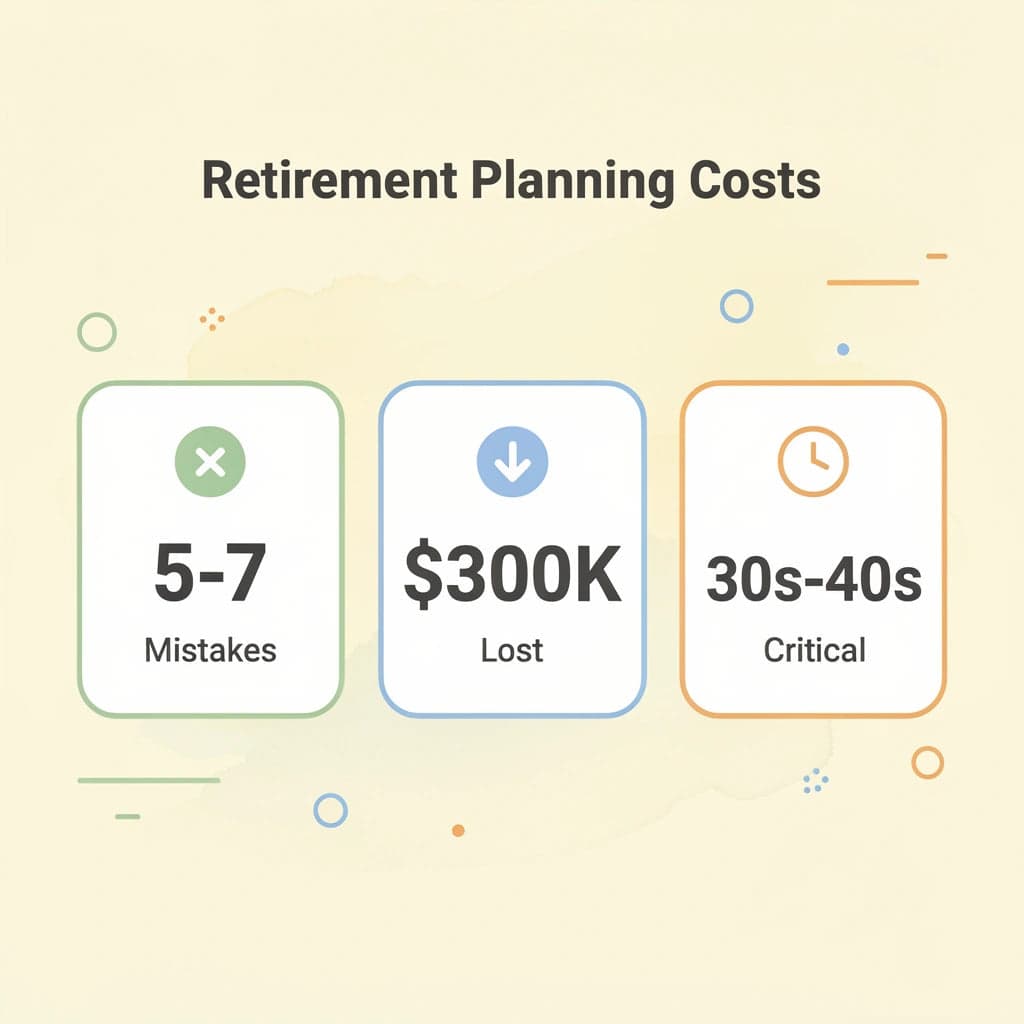
⚠️ Warning: Making retirement decisions in isolation without considering the broader financial ecosystem is one of the costliest mistakes you can make in your 30s and 40s.
Common Retirement Decision | Hidden Connections | Potential Impact |
|---|---|---|
Backdoor Roth IRA | Tax bracket, employer plans, future income | $50,000-$200,000 difference |
401(k) contribution level | Tax optimization, employer match, cash flow | $100,000-$500,000 difference |
Retirement age target | Social Security timing, healthcare costs, portfolio size | $200,000-$800,000 difference |

Why do most Americans lack comprehensive retirement strategies?
That's why only 1 in 4 Americans has a written financial plan. Without a framework showing how pieces fit together, investors chase tactics they read online or hear from colleagues. They optimize one account type while ignoring effects on others, focus on tax-free growth without calculating whether conversion taxes today exceed retirement taxes, and make isolated decisions that create friction elsewhere in their financial lives. Our Smart Financial Lifestyle approach provides a comprehensive framework that connects all the pieces of your retirement financial planning.
Why do investors struggle with fragmented strategies?
Paul Mauro spent 50 years managing over $1 billion in client assets and noticed a persistent pattern: fragmentation. Investors understood individual strategies but couldn't connect them into a coherent plan.
They knew Roth conversions offered tax-free growth but couldn't determine whether converting made sense given their tax bracket, future income, or estate goals. They recognized the pro-rata rule as a problem but didn't know whether rolling pre-tax IRAs into a 401(k) justified the administrative effort.
How does Smart Financial Lifestyle address this fragmentation?
Smart Financial Lifestyle transforms financial expertise into educational content focused on fundamental concepts rather than specific products. The goal isn't teaching you how to execute a Backdoor Roth IRA—it's helping you understand when this strategy strengthens your overall plan and when it becomes counterproductive.
Through books, free YouTube content, and a five-step framework, readers learn how to allocate money across different tax situations, invest regularly, and plan long-term work together.
Why most financial advice misses the bigger picture
According to Morgan Stanley, nearly 60% of Americans don't know how much they need to save for retirement. This uncertainty makes it difficult to determine whether a Backdoor Roth IRA deserves attention or whether you'd benefit more from increasing 401(k) contributions, building emergency reserves, or paying down high-interest debt.
Without knowing your destination, every route looks equally valid, and you optimize the wrong variables.
How does addressing underlying questions improve retirement planning?
The educational approach at Smart Financial Lifestyle cuts through confusion by addressing the questions underneath the questions. Not just "how do I avoid the pro-rata rule?" but "does this conversion improve my tax situation enough to justify the complexity?" Not just "what's the contribution limit?" but "am I prioritizing the right accounts given where I am today and where I need to be in 20 years?"
Retirement planning involves tradeoffs dependent on unpredictable variables. You can, however, build a system that adapts as those variables change, and that's what separates investors who retire confidently from those who second-guess every decision.
Understanding the principles matters only if you know where to apply them next, which is harder than it sounds when building a plan alone.
Kickstart Your Retirement Financial Planning Journey | Subscribe to Our YouTube and Newsletter
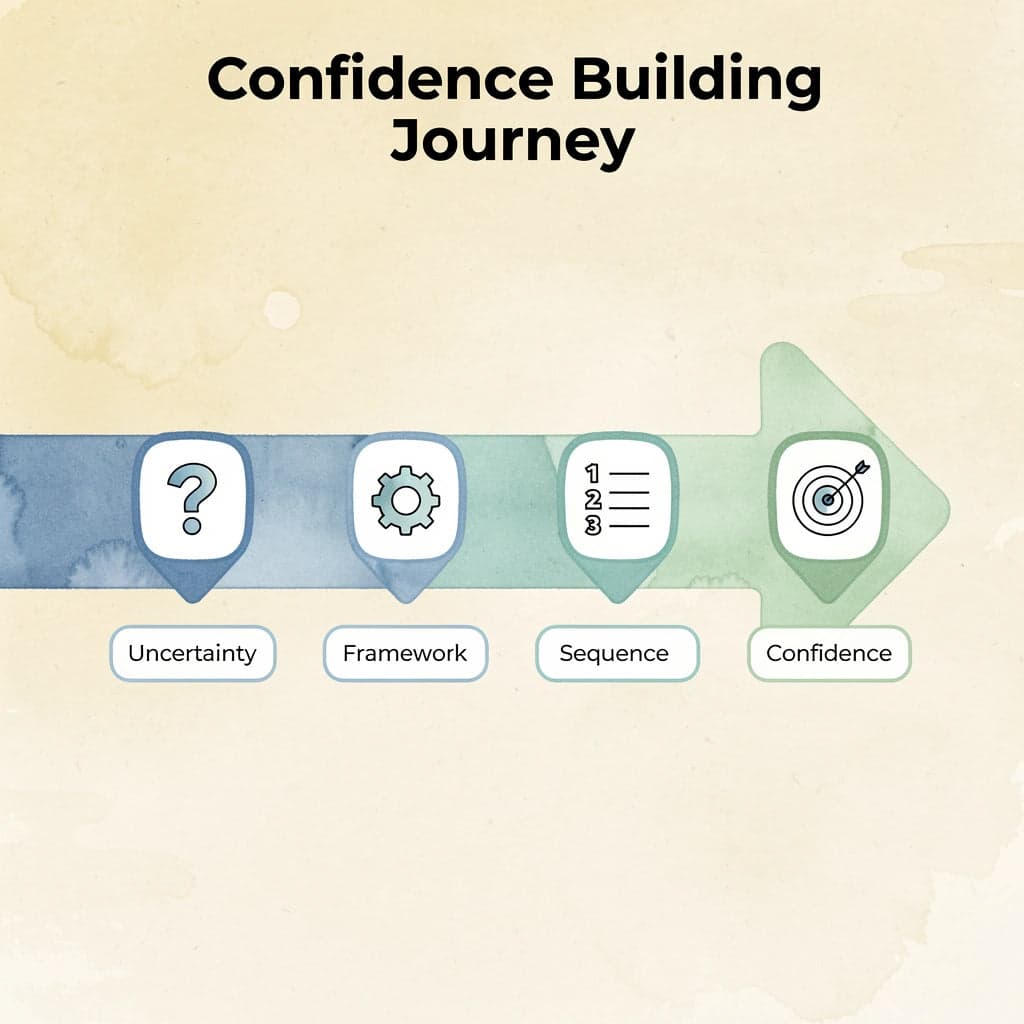
The principles matter, but applying them to your specific situation requires more than a blog post can deliver. You need a framework that shows you which levers to pull and when. Most people get stuck from uncertainty about sequencing and priority, not a lack of understanding.

Wondering whether a Backdoor Roth IRA makes sense for you? Explore Paul Mauro's books and free YouTube content through Smart Financial Lifestyle to learn wealth-building principles that guided more than $1 billion in assets under management. Our resources help you understand how taxes, retirement accounts, and long-term investing decisions work together for lasting financial independence: 50 years of practitioner insight distilled into actionable steps.
💡 Tip: The difference between confident executors and those who hesitate comes down to having a clear sequence. Subscribe to the YouTube channel for step-by-step walkthroughs of Roth conversions, pro-rata rule navigation, and tax-bracket planning. Sign up for the newsletter for targeted guidance that helps you avoid expensive mistakes.

"Most people get stuck from uncertainty about sequencing and priority, not lack of understanding when it comes to retirement planning." — Smart Financial Lifestyle, 2024
🎯 Key Point: Retirement planning isn't about perfection—it's about building a system that adapts as your income, tax laws, and goals evolve. Start with resources that show how the pieces fit together, then move forward with confidence.
Resource Type | What You Get | Best For |
|---|---|---|
YouTube Channel | Step-by-step walkthroughs | Visual learners who need sequences |
Newsletter | Targeted guidance | Avoiding expensive mistakes |
Books | 50 years of practitioner insight | Deep understanding of principles |