How to Calculate Tax on Pension Income Correctly

Retirement should mean financial freedom, not tax confusion. Many retirees discover too late that their pension income comes with tax obligations they didn't properly account for, leaving them with smaller monthly deposits than expected. Understanding how to calculate tax on pension income correctly transforms your retirement from guesswork into confidence, ensuring you keep more of what you've earned and build a truly tax-efficient retirement strategy.
Learning the specific formulas, allowances, and deductions that apply to pension withdrawals helps retirees accurately forecast their after-tax income. Smart planning can help ensure optimal withdrawal timing and reduce overall tax burden through legitimate strategies that align with current regulations. These skills form the foundation of effective retirement financial planning.
Summary
-
Pension income gets taxed as ordinary income at your regular federal rate, the same rate you paid on salary before retirement. The IRS doesn't offer special treatment just because you've stopped working, and whether your pension is fully or partially taxable depends entirely on who paid into it and when. If your employer funded the entire pension with pre-tax dollars, every dollar you receive is taxable income, but if you contributed after-tax money during your working years, part of each payment represents a return of your own contributions that won't be taxed again.
-
Social Security benefits can become up to 85% taxable depending on your combined income level. For married couples filing jointly, combined income above $32,000 triggers taxation on up to 50% of benefits, and crossing $44,000 means 85% becomes taxable. Most retirees discover this formula only after their first tax filing, when a pension that seemed manageable suddenly pushes their Social Security benefits into taxable territory, creating an unexpected tax burden.
-
IRMAA surcharges punish retirees for earning too much income two years earlier, with Medicare Part B and Part D premiums increasing when modified adjusted gross income exceeds $109,000 as a single filer or $218,000 filing jointly. The surcharges range from roughly $81 to $487 monthly for Part B alone, and a $2,000 increase in taxable income from a pension adjustment or capital gain can push you into the next premium bracket, costing hundreds of dollars monthly in healthcare expenses for a financial decision made years ago.
-
Required minimum distributions force withdrawals from traditional IRAs starting at age 73, whether you need the money or not, and those distributions trigger cascading consequences across every other retirement tax system. A $50,000 RMD can push more Social Security benefits into taxable territory, elevate you into a higher IRMAA bracket, and move ordinary income into higher federal tax brackets simultaneously, which means the conservative strategy of avoiding withdrawals in your 60s often creates larger tax problems in your 70s.
-
State tax treatment of pension income varies wildly, with some states exempting all pension income, others taxing private pensions but exempting government pensions, and a few having no income tax at all. Two retirees with identical $40,000 pensions, living in different states, might face state tax differences exceeding $2,000 annually, making location a significant tax variable affecting after-tax retirement income over decades without changing a single investment decision.
-
Roth conversions move money from a traditional IRA into a Roth IRA by paying taxes on the converted amount during the conversion year, but future qualified Roth withdrawals generally come out tax-free. The years between retirement and required minimum distributions create valuable planning windows in which taxable income is lower than it will be later, allowing retirees to convert moderate IRA balances while staying within manageable tax brackets and reducing future RMD pressure that would otherwise force income spikes in later years.
-
Retirement financial planning addresses this by coordinating pension income, Social Security timing, IRA distributions, and Medicare thresholds across decades rather than treating each income source as a separate annual decision.
Why Pension Taxes Catch So Many Retirees Off Guard
Pension income seems stable, but your tax bill often surprises you. What catches many retirees off guard is how that income combines with Social Security, IRA withdrawals, and investment earnings to create a combined tax burden that is heavier than expected.

🎯 Key Point: Your pension doesn't exist in a tax vacuum – it combines with multiple income streams to potentially push you into higher tax brackets than you planned for in retirement.
"The biggest shock for new retirees is discovering their total tax liability when all income sources combine, often resulting in effective tax rates higher than their working years."

⚠️ Warning: Many retirees assume their tax rate will be lower in retirement, but the reality is that multiple income streams can create unexpected tax consequences that catch even well-prepared retirees by surprise.
Why does automatic withholding create false security?
Withholding on a pension creates the illusion that taxes are handled. You receive a monthly check with taxes already deducted, but the withholding calculation assumes your pension is your sole source of income.
How do multiple income sources affect withholding accuracy?
When you add $28,000 in Social Security benefits, $15,000 from an IRA, and $8,000 in dividend income, your total taxable income jumps beyond what the withholding formula anticipates. The pension administrator withholds based solely on the pension, without coordinating with your other income sources. By April, you owe thousands more than expected.
The fragmented nature of retirement income makes it difficult to estimate total tax exposure without understanding how every source interacts across federal brackets, state rules, and benefit phase-ins.
How does pension income trigger Social Security taxation?
A pension might push your combined income past the threshold where Social Security becomes taxable. According to MSN, savers withdrew billions from pension accounts in 2026 due to concerns about budget tax changes. Once you cross that threshold, up to 85% of your Social Security benefit becomes taxable income.
What are the Medicare premium implications?
The same pattern repeats with Medicare premiums. If your modified adjusted gross income exceeds certain thresholds, you trigger Income-Related Monthly Adjustment Amounts (IRMAA), which can add hundreds of dollars monthly to your Medicare Part B and Part D costs. A $5,000 increase in taxable income can cost you $2,000 more annually in premiums alone, before additional income tax.
The misunderstood bracket assumption
Retirees often assume that spending less money means paying lower taxes. That logic made sense when income came from one employer and deductions like mortgage interest reduced tax liability. Retirement changes the equation: you receive income from multiple sources, deductions shrink, and the standard deduction may not offset the itemized write-offs you lost.
Some retirees end up paying taxes in the same tax bracket they were in while working, or even a higher one, because required minimum distributions from traditional IRAs force taxable withdrawals regardless of need. This complexity increases after age 73 when RMDs begin.
Understanding how pension income gets taxed provides clarity.
How Pension Income Is Taxed
How is pension income taxed at the federal level?
Most pension income is taxed at your regular federal income tax rate, the same rate you paid on your salary. Your monthly pension check is combined with Social Security, IRA withdrawals, and other income, and all of it is taxed together. Many retirees assume retirement means lower taxes, but the tax code doesn't distinguish between employment statuses.
What determines if your pension is fully or partially taxable?
Whether your pension is fully or partially taxable depends on who paid into it and when. If your employer funded the entire pension with pre-tax dollars, every dollar is taxable. If you contributed after-tax money during your working years, part of each payment represents a return of your own contributions and isn't taxed again.
According to IRS Publication 575, the Simplified Method spreads after-tax recovery across your expected lifetime of payments. Two retirees collecting identical $3,000 monthly pensions can owe vastly different taxes based solely on the contribution structure.
State Rules Add Another Layer
Federal taxation is only half the equation. State tax treatment varies significantly: some states don't tax any pension income, others tax private pensions but exempt government pensions, and a few have no income tax at all. Where you live in retirement can change your after-tax cash flow by thousands of dollars annually, even if your pension amount remains unchanged.
Military pensions are taxed by the federal government as ordinary income, though certain disability-related benefits may qualify for exclusions. Annuity-based pensions introduce complexity because each payment may blend taxable earnings with non-taxable principal recovery.
The Withholding Problem
Most pension plans let you choose federal withholding using Form W-4P, but that withholding is calculated as if the pension were your only income source. It doesn't account for Social Security benefits becoming taxable once your combined income crosses certain thresholds, or for required minimum distributions beginning at age 73.
Why do retirees often underpay their taxes?
Many retirees set their pension withholding once and forget it, only to discover at tax time that they've underpaid by thousands because their IRA withdrawal or investment income pushed them into a higher tax bracket. Our Smart Financial Lifestyle platform monitors these changes throughout the year, enabling you to adjust withholdings proactively and avoid surprises.
How do multiple income streams affect your tax burden?
The taxes you pay on your pension work together with all your other retirement income, creating a total tax burden that's easy to underestimate when examining one piece at a time. Our Smart Financial Lifestyle platform helps you see the complete picture by analyzing how your pension, Social Security, and other income sources interact from a tax perspective.
Related Reading
- Can You Have Multiple Roth IRA Accounts
-
Can a Non-Working Spouse Contribute To A Roth IRA
- What Is a Tax-Free Retirement Account
- How To Reduce Taxes In Retirement
- Tax-Free Retirement Income
-
Retirement Tax Savings
- Do Retirees Need To File Taxes
How to Calculate Tax on Pension Income Step by Step
Add your pension income, combine it with other retirement sources, subtract deductions, and apply tax brackets. The challenge: pension taxation never stands alone—every other income stream alters the calculation.
Understanding how it works requires walking through each layer systematically.

🎯 Key Point: Your pension income doesn't get taxed in isolation—it combines with Social Security, 401(k) withdrawals, and investment income to determine your total tax liability.
"Pension income is taxed as ordinary income, but the effective rate depends entirely on your total retirement income picture." — IRS Publication 575

⚠️ Warning: Many retirees underestimate their tax burden because they forget that multiple income streams push them into higher tax brackets than their pension alone would suggest.
|
Step |
Action Required |
Key Consideration |
|---|---|---|
|
1 |
Calculate total pension income |
Include all monthly payments × 12 |
|
2 |
Add other retirement income |
401(k), IRA, Social Security |
|
3 |
Subtract standard/itemized deductions |
Choose higher amount |
|
4 |
Apply current tax brackets |
Use marginal rates for calculation |
|
5 |
Calculate final tax owed |
Consider state taxes separately |

Start With Total Pension Income
Start by calculating your total pension income for the tax year. If you receive monthly payments of $3,200, your annual pension income totals $38,400. This is your starting number.
Your pension administrator sends Form 1099-R each January showing gross distributions, the taxable amount, and any federal or state withholding already taken. However, this form captures only one income stream and doesn't tell the complete tax story.
Determine What's Actually Taxable
Not all pension income gets taxed the same way. If your employer paid all contributions with pre-tax dollars, the entire pension is taxable as regular income. If you contributed after-tax dollars, part of each payment is a tax-free return of your contributions.
The IRS Simplified Method calculates this split by dividing your total after-tax contributions by the expected number of monthly payments. For a pension with $50,000 in after-tax contributions and 300 expected monthly payments, approximately $167 of each payment returns your contributions tax-free. The remainder is subject to full taxation at regular income rates.
Combine All Retirement Income Sources
Figuring out taxes on pensions becomes complicated when you combine pension income with other taxable sources: IRA withdrawals, 401(k) distributions, investment income, part-time work earnings, and the taxable portion of Social Security benefits.
How does Social Security taxation affect your pension tax calculation?
According to Empower, up to 85% of Social Security benefits may be taxable depending on your combined income level. This threshold calculation uses your adjusted gross income, nontaxable interest, and half of your Social Security benefits. When you cross certain income limits, a benefit that seemed exempt becomes mostly taxable.
A retiree with $38,400 in pension income, $12,000 from IRA withdrawals, and $22,000 in Social Security might assume total taxable income of $72,400. However, if combined income exceeds the thresholds, 85% of that Social Security becomes taxable, adding $18,700 to taxable income instead of zero. The pension remained unchanged, yet the tax outcome shifted dramatically.
Why do many retirees get surprised by their tax bills?
Many retirees discover this interaction only after filing their first tax return in retirement. They set pension withholding based solely on pension income, overlooking how that income affects Social Security taxability.
Tools like retirement financial planning from Smart Financial Lifestyle demonstrate how these interactions work before they create tax surprises. Our platform shows how different withdrawal strategies affect the combined taxable income across all sources, rather than treating each income stream in isolation.
Apply Deductions and Calculate Taxable Income
After combining all income sources, subtract either the standard deduction or itemized deductions. For 2024, married couples filing jointly can claim a standard deduction of $29,200, while single filers can claim $14,600.
Using the earlier example with $38,400 pension income, $12,000 IRA withdrawal, and $18,700 taxable Social Security, the total income reaches $69,100. After subtracting the $29,200 standard deduction, $39,900 in taxable income remains, which determines your applicable tax brackets.
Understand Progressive Tax Brackets
Federal income tax works through progressive brackets. The first portion of your taxable income is taxed at 10%, the next at 12%, and higher amounts move into 22%, 24%, or higher brackets depending on your total income.
A retiree with $39,900 in taxable income pays 10% on the first $23,200 and 12% on the remaining $16,700, totaling roughly $4,324 before credits, not 12% on the entire amount.
Many retirees overestimate their tax burden by assuming all income gets taxed at their highest bracket. Progressive taxation means incremental increases matter less than expected.
Account for State Taxation
State tax rules change frequently and can affect your after-tax retirement income more than federal tax brackets. Some states don't tax pension income at all, others tax pensions as regular wages, and some don't tax government pensions but do tax private pensions.
How much can state tax differences impact your retirement income?
Two retirees with identical $40,000 pensions living in different states might face state tax differences exceeding $2,000 annually. Where you live becomes an important tax factor in retirement.
What makes pension tax calculations more complex than expected?
The complexity stems from how pension income interacts with Social Security limits, IRA withdrawals, investment income, and state rules—areas where most retirees underestimate their tax liability. Our Smart Financial Lifestyle platform lets you model these scenarios together, so you can see the tax impact of each decision before making it.
Perfect calculations miss something important if you don't know which income decisions cause unexpected consequences.
The Hidden Retirement Tax Traps Most People Miss
The most dangerous retirement tax traps aren't found in the IRS code: they live in the space between income sources, where pension payments, Social Security benefits, IRA withdrawals, and Medicare rules collide in unexpected ways. These interactions create tax consequences that feel sudden but are predictable.

🎯 Key Point: The biggest retirement tax surprises happen when multiple income sources interact, not from individual tax rules you can easily research.
"Up to 85% of Social Security benefits can become taxable when combined income exceeds certain thresholds, catching many retirees off guard." — Social Security Administration

⚠️ Warning: Many retirees discover these tax traps after they've already triggered them, when it's too late to implement effective mitigation strategies.
The Social Security Taxation Surprise
Social Security benefits aren't tax-free. According to Greenbush Financial Group, up to 85% can be taxable depending on combined income. For married couples filing jointly, combined income above $32,000 triggers taxation on up to 50% of benefits; above $44,000, up to 85% becomes taxable.
A $48,000 pension plus a $20,000 IRA withdrawal pushes you past the $32,000 threshold, making your Social Security benefits taxable. The calculation uses provisional income: half your Social Security benefits plus all other income. Most retirees discover this only after their first tax filing.
IRMAA: The Medicare Premium Tax Nobody Expects
IRMAA surcharges penalize retirees whose modified adjusted gross income exceeds $109,000 (single) or $218,000 (joint filing). Medicare Part B and Part D premiums increase by roughly $81 to $487 monthly for Part B alone, with Part D adding another $14.50 to $91, depending on income brackets.
The threshold structure imposes sharp penalties: a $2,000 increase in income from a pension adjustment or capital gain can push you into the next bracket, costing hundreds of dollars per month. Income from 2024 triggers premium increases in 2026—you pay for financial decisions years later, often without realizing those decisions carried future healthcare costs.
Required Minimum Distributions and the Compounding Effect
RMDs force withdrawals from traditional IRAs starting at age 73, whether you need the money or not. Larger account balances result in larger mandatory distributions, triggering cascading consequences across retirement tax systems. A $50,000 RMD can push more Social Security benefits into taxable territory, move you into a higher IRMAA bracket, and shift ordinary income into higher federal tax brackets simultaneously.
Why does avoiding early withdrawals create bigger problems later?
Many retirees avoid withdrawals in early retirement, thinking they're minimizing taxes. Instead, they build larger IRA balances that eventually produce larger required minimum distributions (RMDs) and create compounding tax problems across multiple systems. The conservative strategy you adopted in your 60s becomes expensive in your 70s.
Tools like Smart Financial Lifestyle's free Roth conversion consultation help retirees understand how strategic earlier withdrawals can reduce future RMD pressure and prevent threshold stacking.
The Real Problem: Treating Taxes as Annual Events
Most retirees think about taxes one year at a time: file in April, pay what you owe, move on. But retirement taxes don't work that way. A pension withdrawal this year affects Social Security taxation this year, IRMAA surcharges two years from now, and RMD calculations a decade later. Our Smart Financial Lifestyle platform helps you model these long-term tax consequences so you can make informed decisions today.
Every income decision creates ripples that spread over time and across systems, with consequences that accumulate.
Why does retirement tax planning require a multi-decade view?
Retirement tax planning isn't about paying less in taxes this year—it's about coordinating pension income, Social Security timing, IRA distributions, and Medicare thresholds across decades to reduce lifetime tax drag and preserve spending flexibility when you need it. Our Smart Financial Lifestyle approach helps you see how these pieces fit together so you can make decisions that work across your entire retirement timeline.
The math isn't complicated once you see the full picture, but most people examine one piece at a time.
What strategies actually reduce taxes in retirement?
But knowing the traps is only half the answer, because tax-lowering strategies often run counter to what feels safe.
Related Reading
- Are Roth IRA dividends taxable
- Mega Backdoor Roth IRA
- Maxing Out Roth IRA
- Can You Tax Loss Harvest In A Roth IRA
- Are RMDs Required For Annuities
- Iul Vs Roth Ira
- Annuity Vs Roth IRA
- How To Calculate Tax On Pension Income
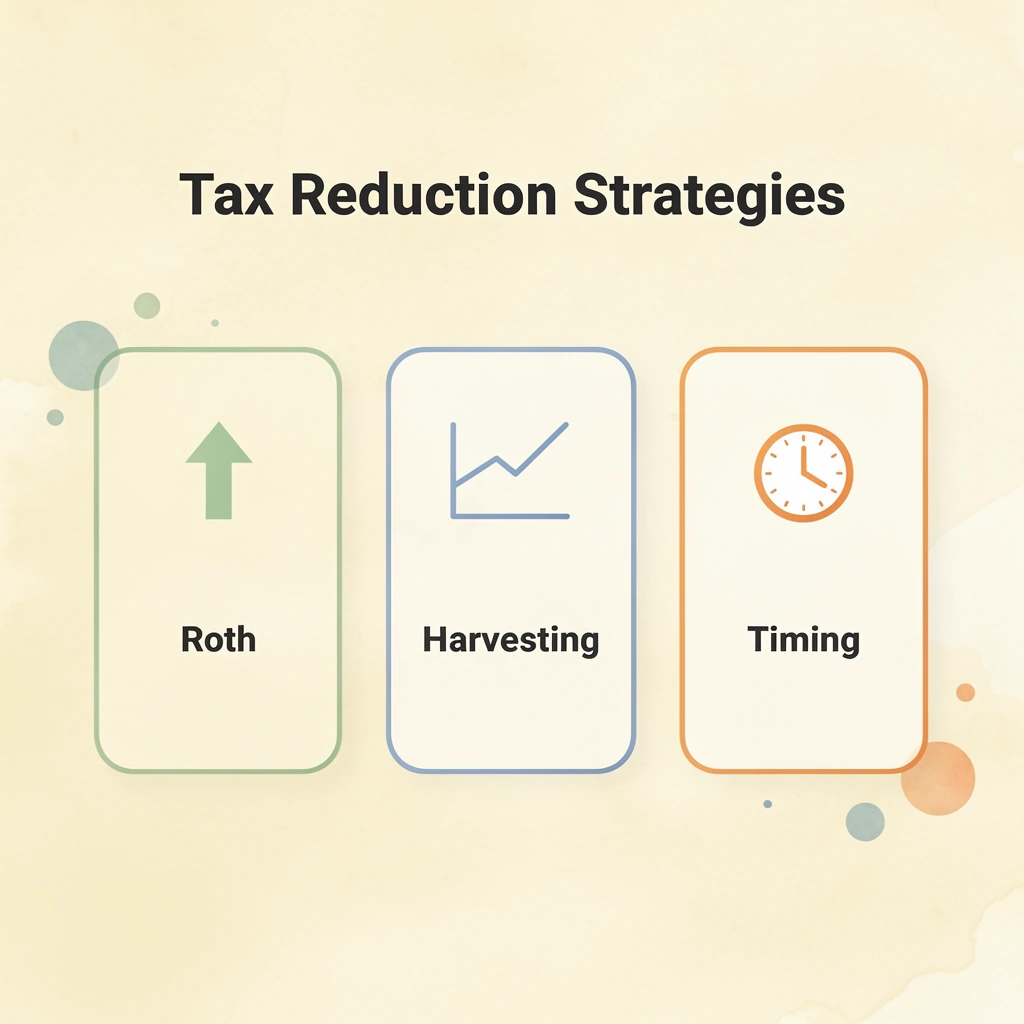
6 Strategies That Can Reduce Taxes on Pension Income
Building a coordinated strategy around pension income, Social Security, Medicare, and investment withdrawals requires thinking beyond this year's return. Strategies that reduce lifetime tax drag often mean paying taxes sooner to avoid paying more later.

🎯 Key Point: The most effective tax reduction strategies for pension income focus on timing and coordination rather than simple deferral tactics.
"Retirees who implement coordinated tax strategies can reduce their lifetime tax burden by 15-25% compared to those who handle each income source separately." — Tax Foundation, 2023
|
Strategy Type |
Best For |
Potential Tax Savings |
|---|---|---|
|
Roth Conversions |
High earners in low-tax years |
10-20% lifetime reduction |
|
Tax-Loss Harvesting |
Taxable account holders |
3-5% annual savings |
|
Income Timing |
Flexible retirees |
5-15% reduction |
|
Asset Location |
Multi-account owners |
8-12% improvement |
|
Charitable Strategies |
Philanthropic retirees |
20-30% on donated amounts |
|
State Planning |
Mobile retirees |
0-13% depending on the move |
⚠️ Warning: Many retirees make the mistake of only focusing on current-year tax savings while ignoring the long-term impact on their overall tax burden and Medicare premiums.
1. Coordinate Withdrawals Across Different Accounts
Taking money from different types of accounts in the right order matters more than most retirees realize. Large withdrawals from tax-deferred accounts increase taxable income, which pushes more Social Security benefits into taxable territory, triggers Medicare IRMAA surcharges, and moves you into higher federal tax brackets. According to First Citizens Bank, up to 85% of Social Security benefits may become taxable depending on your combined income.
Using a combination of taxable, tax-deferred, and Roth accounts lets you spread taxable income over time rather than create spikes in later years.
2. Use Roth Conversion Planning Strategically
Roth conversions move money from a traditional IRA into a Roth IRA. You pay taxes on the converted amount that year, but future qualified withdrawals from your Roth IRA are generally tax-free. Timing this correctly can save you tens of thousands of dollars over retirement.
When do retirement planning windows create the best conversion opportunities?
The years between retirement and required minimum distributions create valuable planning windows. Before Social Security begins, before RMDs start, and before pension income fully ramps up, you may have several years of lower taxable income. Our retirement financial planning approach helps identify these tax-efficient windows to optimize your long-term strategy.
A retiree who leaves full-time work at 63 but delays Social Security until 70 might convert moderate IRA balances during those years while staying within manageable tax brackets. This reduces future RMD pressure, lowers future taxable income, reduces Medicare premium exposure, and improves long-term withdrawal flexibility. Smart Financial Lifestyle's retirement planning tools help you model these scenarios and make confident decisions about timing and conversion amounts.
What happens without strategic conversion planning?
If you don't plan ahead, a larger IRA balance will eventually require substantial annual withdrawals. These required minimum distributions (RMDs) can force your income to spike in years when you don't need the money.
3. Manage Taxable Income Thresholds Carefully
Retirement taxes increase in layers around multiple thresholds: Social Security taxation, Medicare IRMAA surcharges, federal brackets, and capital gains treatment. A small increase in income can trigger significantly higher downstream costs. Our Smart Financial Lifestyle retirement financial planning approach helps you navigate these complex threshold effects strategically.
Additional IRA withdrawals increase federal taxes, Medicare premiums, Social Security taxation, and push investment gains into higher brackets. Managing income thresholds strategically avoids these cascading effects that multiply the real cost of each dollar withdrawn.
4. Time Capital Gains Strategically
Selling investments that have appreciated during lower-income years reduces your tax liability compared to selling them during high-income years from pensions, required minimum distributions, and Social Security. This is especially important if you hold money in regular investment accounts alongside retirement income.
When you sell investments for a profit, consider it part of your overall retirement income plan, not in isolation. The same $15,000 profit might cost you 0% in taxes during a year when you earn less money, or 15% plus Medicare surcharges during a year when you earn more money.
5. Review State Residency Implications
State taxes significantly affect your retirement spending in ways most people overlook. Some states tax all pension income; others tax only some; some tax only government pensions; and some have no state income tax. For retirees with the flexibility to relocate, choosing where to live can substantially impact how much you retain after taxes over time. Our Smart Financial Lifestyle platform helps you model these state tax scenarios to see the real impact on your retirement income.
When pension income, IRA withdrawals, and investment income are all taxed at the state level, the effect becomes significant. Moving from a state that taxes all retirement income to one that doesn't might save you $5,000 to $10,000 annually without changing any of your investments.
6. Adjust Pension Withholding Proactively
Many retirees assume their retirement tax withholding choices will remain correct indefinitely. However, retirement income fluctuates significantly as required minimum distributions (RMDs) begin, investment income varies, Social Security taxes increase, capital gains shift, and pension income combines with additional withdrawals. Pension withholding through Form W-4P should be reviewed regularly to avoid underpayment penalties, surprise tax bills, and substantial year-end tax liability. Our Smart Financial Lifestyle retirement planning approach monitors these changes proactively to keep your withholding aligned with your actual tax situation.
Some retirees benefit from making quarterly estimated tax payments depending on how their income is structured. Discovering in April that you owe $8,000 because withholding didn't keep pace with income changes is far worse than calculating the amount six months earlier.
How do different retirement income sources affect each other?
Most retirees treat each income source separately: pension withholding gets set once, IRA withdrawals happen when statements arrive, and Social Security starts when it feels right. But pension income affects Social Security taxation, IRA withdrawals affect Medicare costs, capital gains affect bracket exposure, and RMDs increase taxable income. Every decision affects the others.
Effective retirement tax planning coordinates withdrawals, strategically times income, and manages long-term tax exposure throughout the retirement timeline. When retirees test different withdrawal strategies and see year-by-year impacts on taxes, benefits, and account balances before deciding, they avoid compounding mistakes that erode purchasing power over decades. Our Smart Financial Lifestyle platform enables this coordination, allowing you to model scenarios and understand how each decision affects your retirement finances.
What tools help coordinate retirement income planning?
Platforms like retirement financial planning from Smart Financial Lifestyle help retirees coordinate multiple income sources rather than treating each decision in isolation. Coordinating Roth conversions, withdrawal sequencing, and income threshold management requires viewing the full timeline, not just the current tax year.
When done properly, coordination improves retirement cash flow, reduces avoidable tax pressure, and helps preserve portfolio longevity. The math is straightforward once you see how the pieces connect. Most people examine one piece at a time, wondering why the tax bill surprises them.
Understanding the Full Retirement System
Most retirement education answers "how much should I save?" but skips the harder question: "how do I turn savings into sustainable income without triggering avoidable tax consequences or benefit reductions?" Our Smart Financial Lifestyle approach addresses this by integrating tax-efficient withdrawal strategies into your retirement plan.

A retiree might understand their pension pays $3,200 monthly and their IRA holds $400,000. What they often don't grasp is how withdrawing $15,000 from that IRA in the same year could push 85% of their Social Security into taxable territory, increase their Medicare premiums by $2,000 annually through IRMAA surcharges, and create an unexpected tax bill. That's not a savings problem. It's a systems problem—one that Smart Financial Lifestyle is designed to help you navigate by coordinating these interconnected elements of your retirement income.
🎯 Key Point: Understanding retirement income requires looking beyond account balances to see how different income sources interact with taxes and benefits.
"Withdrawing $15,000 from an IRA could push 85% of Social Security into taxable territory and increase Medicare premiums by $2,000 annually through IRMAA surcharges."
|
Income Source |
Monthly Amount |
Tax Implications |
|---|---|---|
|
Pension |
$3,200 |
Fully taxable |
|
IRA Withdrawal |
$1,250 (annual $15K) |
Increases taxable income |
|
Social Security |
Variable |
Up to 85% taxable |
🔑 Takeaway: The most expensive retirement mistake isn't saving too little—it's withdrawing without understanding how different income sources trigger cascading tax consequences and benefit reductions.
Why Generic Advice Breaks Down
Most financial content treats retirement income sources as separate entities: pension, Social Security, and IRA withdrawals. This ignores how these streams interact within the tax code and benefit formulas. Our Smart Financial Lifestyle approach to retirement planning reveals these connections before you need them.
When pension income combines with required minimum distributions starting at age 73, it changes your provisional income calculation, which determines Social Security taxation and your modified adjusted gross income. Medicare uses this figure to set premium surcharges two years later. One withdrawal decision ripples across multiple systems, and most retirees don't see those connections until the bills arrive.
How does real-world experience change tax planning outcomes?
Wealth management experience reveals patterns that generic advice misses. Working with clients across different income levels, pension structures, and state tax environments demonstrates how a $10,000 Roth conversion in one year can reduce required minimum distributions by $30,000 over a decade, or how delaying Social Security from 62 to 70 affects lifetime tax exposure when combined with pension income.
Why does practitioner perspective matter for pension decisions?
This perspective comes from sitting across from someone whose decision to withdraw money at age 64 permanently increased their Medicare costs at 72, or helping a couple coordinate pension elections with Social Security timing to preserve $40,000 in cumulative tax savings. The math isn't theoretical when you've walked through it hundreds of times with real account balances and actual tax returns.
How does Smart Financial Lifestyle apply this practitioner approach?
Smart Financial Lifestyle's educational approach reflects a practitioner lens, focusing on withdrawal sequencing, tax bracket management, and how today's income decisions affect future flexibility. Our resources address specific planning questions: why provisional income thresholds matter more than marginal tax rates in certain situations, or how state residency affects after-tax pension income by thousands of dollars annually.
For situations requiring personalized analysis, such as determining optimal Roth conversion amounts based on your specific income mix and future RMD projections, free consultation calls provide clarity without generic assumptions.
What makes pension tax planning so complex?
The hard part isn't figuring out taxes on your pension—it's understanding how that pension income interacts with every other retirement choice you'll make over the next 20 or 30 years. Will you wait to claim Social Security or take it early? When should you convert money to a Roth account, and how much? Which accounts should you draw from first when you need cash? How do you avoid IRMAA surcharges without slowing portfolio growth?
Why don't universal answers exist for pension decisions?
These questions lack universal answers because the right approach depends on your specific income mix, tax situation, and timeline. However, frameworks exist to help you evaluate tradeoffs clearly rather than guess.
Most people figure this out slowly, one tax surprise at a time, wondering why nobody explained it sooner.
Kickstart Your Retirement Financial Planning Journey | Subscribe to Our YouTube and Newsletter
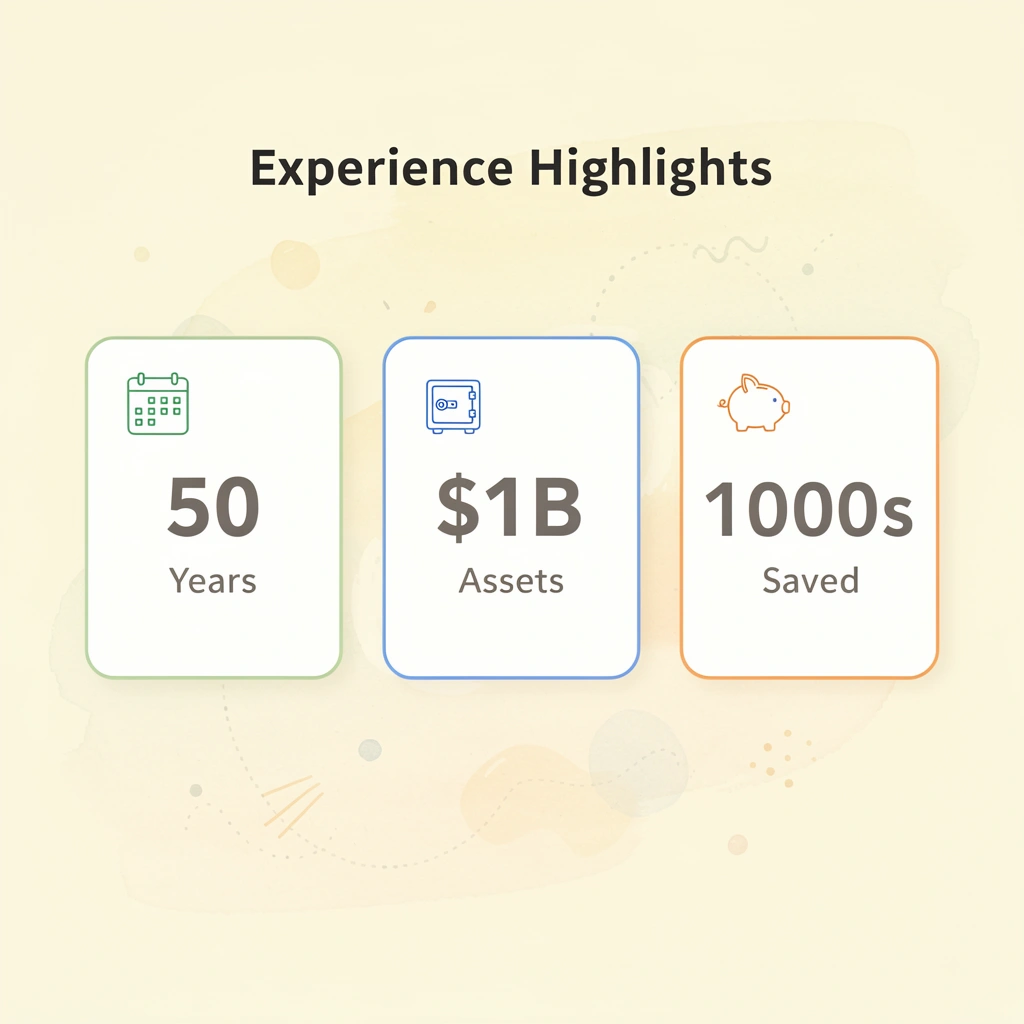
Smart Financial Lifestyle offers educational content built on 50 years of real-world experience managing over 1 billion in assets. Learn how pension income, Social Security benefits, IRA withdrawals, and tax brackets work together in practice, not through generic advice alone.

🎯 Key Point: Understanding how multiple retirement income sources interact can save you thousands in taxes and optimize your cash flow for decades.
Explore Paul Mauro's books and free YouTube content for practical retirement income strategies that address withdrawal timing, Roth conversion opportunities, and tax decisions that significantly affect your retirement cash flow over decades. Subscribe to the newsletter for actionable insights, or schedule a free Roth IRA conversion consultation if your situation involves multiple income sources that need to work together.
"The cost of waiting compounds silently in every withdrawal decision made without a clear strategy." — Smart Financial Lifestyle
💡 Critical Insight: The difference between understanding these interactions now versus later is measured in thousands of dollars and years of unnecessary stress. Most retirees wish they'd understood these dynamics before their first Required Minimum Distribution or Medicare enrollment. The frameworks are proven, and the cost of waiting compounds silently in every withdrawal decision made without a clear strategy.
⚠️ Warning: Every day without a comprehensive retirement income strategy potentially costs you money through suboptimal tax decisions and missed conversion opportunities.
Related Reading
- 403b vs Roth IRA
- Rollover Ira Vs Roth Ira
- Traditional Ira Pre Or Post Tax
- Roth Ira Alternatives For High Income
- Backdoor Roth Ira
- Tax Efficient Withdrawal Strategies
- Roth Ira Conversion Strategy
- Roth Ira Benefits And Disadvantages
- Are Rmds Required For Annuities
- How To Reduce Taxes On Rmds
- Can A 401k Be Rolled Into A Roth Ira
- Can Rmds Be Converted To Roth
-
Backdoor Roth IRA Mistakes