Rollover IRA vs Roth IRA: Which Builds More Retirement Wealth?

You've worked hard for decades, and now you're facing a job change or retirement with a critical decision: what should you do with your old 401(k)? The choice between a Rollover IRA and a Roth IRA shapes your tax-efficient retirement strategy and determines how much wealth you'll actually keep when you need it most. Understanding the real differences between these options helps identify which path might build the most retirement wealth for your specific situation, income level, and timeline.
Moving beyond surface-level rules reveals the actual dollar-and-cents impact of your IRA decision. Key factors include conversion benefits, required minimum distributions, potential tax bracket changes, and strategies that protect your nest egg. Making informed choices requires evaluating how much you contribute now, what tax rate you'll pay later, and which account type will maximize your wealth in retirement through strategic retirement financial planning.
Table of Contents
Why So Many Investors Get Confused About Rollover IRAs and Roth IRAs
The Biggest Mistake People Make When Comparing These Accounts
How Smart Financial Lifestyle Helps You Make Better Retirement Decisions
Kickstart Your Retirement Financial Planning Journey | Subscribe to Our YouTube and Newsletter
Summary
The IRA market now holds $7.9 trillion in assets, much of it accumulated through rollovers from employer plans. When you're moving $200,000 or $500,000 from a 401(k), the difference between a smart decision and a costly mistake can easily reach six figures over a retirement lifetime. Most investors face rollover choices during job transitions, when they're already managing new responsibilities and benefits enrollment, yet the decision about their retirement account carries decades of financial consequences.
Americans lost an average of nearly $1,000 to financial errors in 2025, and poorly timed conversions are among the costliest mistakes in retirement planning. Two people convert $100,000, but one pays the $24,000 tax bill from a savings account while the other withdraws $24,000 from the IRA to cover taxes. The first investor has $100,000 growing tax-free in the Roth, while the second has $76,000. Over 20 years, that difference compounds into tens of thousands of dollars.
A 35-year-old investor converting $100,000 has three decades for tax-free growth to compound, but someone five years from retirement faces a fundamentally different equation. The shorter your timeline, the harder it becomes for tax-free growth to offset the upfront tax cost. Near-retirement workers often discover that the conversion tax paid today exceeds any tax savings they'll realize before they start drawing income.
High earners converting during peak income years may pay 35% federal tax now to avoid potentially 22% later, which doesn't create value but destroys it. Retirees often spend less than they did during peak earning years, no longer pay payroll taxes, and see work-related expenses disappear. Some investors find themselves in meaningfully lower tax brackets once they stop working, making tax deferral the more efficient path than aggressive conversion strategies.
Americans who work with a financial advisor are 2.5 times more likely to feel financially secure, according to the Northwestern Mutual Planning & Progress Study 2025. The advantage comes from shifting the focus from products to principles, asking better questions like "What tax rate am I avoiding today versus potentially paying later?" rather than treating retirement planning as a multiple-choice test with one correct answer.
Retirement financial planning addresses this by helping you evaluate multi-year conversion strategies that spread tax liability across lower-income years rather than triggering massive one-time bills, and by coordinating withdrawals across account types based on your specific tax situation and timeline.
Why So Many Investors Get Confused About Rollover IRAs and Roth IRAs
The confusion stems from a basic mismatch between when the decision arrives and how ready people are to make it. Most investors face rollover choices during job transitions, when they're already managing new responsibilities, benefits enrollment, and relocation logistics.

🎯 Key Point: The retirement account decision carries decades of financial consequences, yet nobody teaches you how to evaluate tax timing, future income projections, or conversion tradeoffs.
"The average investor makes retirement account decisions during their most stressful career moments, when clear thinking about long-term tax strategy is nearly impossible." — Financial Planning Research, 2023

⚠️ Warning: This timing mismatch creates a perfect storm where critical financial decisions get made with incomplete information and emotional stress as primary influences.
Decision Timing | Investor State | Information Available |
|---|---|---|
Job transition | High stress, distracted | Limited, rushed |
Benefits deadline | Overwhelmed, reactive | Basic, incomplete |
Optimal planning | Calm, focused | Comprehensive, analyzed |

Why do high-dollar rollovers create such financial pressure?
The substantial sums moving between accounts raise the stakes. Investment Company Institute reports that the IRA market holds $7.9 trillion in assets, much of it accumulated through rollovers from employer plans.
When moving $200,000 or $500,000 from a 401(k), the difference between a smart choice and a costly mistake can easily reach six figures over a retirement lifetime. Most investors receive generic guidance that ignores income levels, time horizons, and tax bracket realities. Our retirement financial planning approach at Smart Financial Lifestyle accounts for these individual factors to help you make decisions tailored to your specific situation.
Why does financial media oversimplify rollover decisions?
Financial media creates false certainty by declaring winners. One headline insists Roth accounts are always superior because tax-free growth beats everything. Another argues traditional rollovers preserve wealth by avoiding immediate taxes. Both ignore what matters: what works for your specific tax situation, retirement timeline, and income trajectory.
A 35-year-old engineer earning $180,000 faces different math than a 58-year-old manager taking early retirement at $75,000. The "best" account depends entirely on circumstances that generic advice cannot address.
How do social media soundbites mislead investors?
Social media worsens the problem by reducing complicated tax planning to viral, catchy posts. You'll see people confidently claim "Roth conversions are free money" or "never pay taxes early" without discussing marginal rates, required minimum distributions, or estate planning goals.
The truth: every rollover choice involves trade-offs between paying taxes now and having more choices later, and between saving money today and receiving potential benefits years from now.
What questions should you ask before choosing a rollover?
Most rollover confusion stems from not knowing which questions to ask before making an irreversible choice. Should you prioritize saving money on taxes now or on tax-free income later? How do you determine your retirement tax bracket when you have 20 years before retiring?
What happens if tax laws change, your income drops unexpectedly, or you need early access to your money? These questions lack universal answers, which is why generic advice fails.
Understanding how each account works changes everything about how you compare them.
How a Rollover IRA and Roth IRA Actually Work
A Rollover IRA keeps tax-deferred retirement assets safe when you leave a job, allowing you to move 401(k) or 403(b) money into your own account without immediate taxes. A Roth IRA works differently: you contribute after-tax money and withdraw tax-free in retirement. These two account types serve different financial needs at different life stages.

🎯 Key Point: The main difference is when you pay taxes: Rollover IRAs defer taxes until withdrawal, while Roth IRAs require upfront tax payments for tax-free retirement income.
"Understanding the tax implications of different IRA types is essential for maximizing your retirement savings strategy." — Financial Planning Association, 2024
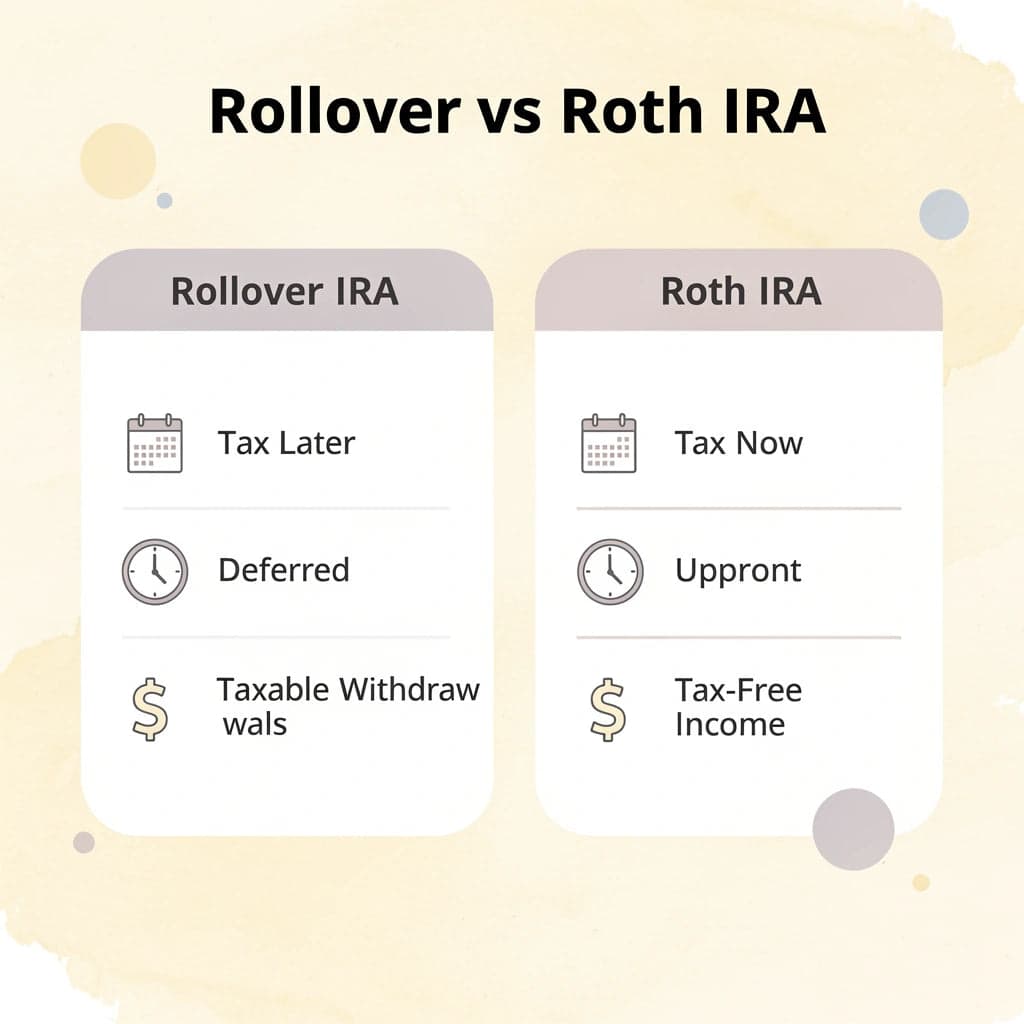
💡 Tip: Consider your current tax bracket versus your expected retirement tax bracket when choosing between these IRA options - this decision can save you thousands in taxes over time.
What happens when you roll over your 401(k) to an IRA?
When you leave a job, your 401(k) doesn't have to stay locked in your former employer's plan. A Rollover IRA lets you transfer those assets directly into an account you control, preserving its tax-deferred status with no taxes owed at transfer and no penalties.
How does a rollover IRA expand your investment options?
What changes is control. Most employer plans limit you to 15 or 20 investment options chosen by the plan administrator. After a rollover, you gain access to thousands of mutual funds, ETFs, individual stocks, and bonds. You're no longer constrained by someone else's choices.
What are the tax implications of a rollover IRA?
The tax treatment remains the same as your original 401(k). Dividends, interest, and capital gains grow tax-deferred. You'll pay ordinary income tax on withdrawals later. According to the IRS, you have 60 days to complete an indirect rollover if you receive the funds directly, though most investors use direct transfers to avoid withholding complications.
What makes Roth IRA contributions different from traditional IRAs?
A Roth IRA flips the tax equation. You contribute after-tax dollars, foregoing an immediate tax break. The benefit comes decades later: withdrawals of your contributions and earnings are tax-free in retirement.
How powerful is tax-free growth over long time horizons?
That tax-free growth becomes powerful over long time horizons. Contribute $6,500 annually for 30 years at 7% average returns, and you'll have roughly $600,000. In a traditional IRA, you owe taxes on every dollar withdrawn. In a Roth, qualified distributions cost nothing in federal income tax—a difference that can exceed $150,000 depending on your tax bracket.
Do Roth IRAs require minimum distributions like traditional accounts?
Roth IRAs also skip required minimum distributions during your lifetime. Traditional IRAs require you to start taking money out at age 73, whether you need it or not. Roth accounts let your money remain untouched, providing greater flexibility for estate planning and tax management in retirement.
How Conversions Connect the Two
You're not forced to choose one account forever. Many investors roll over a 401(k) into a Rollover IRA, then convert some or all of it into a Roth IRA. The conversion triggers ordinary income tax on the amount moved, but future growth becomes tax-free.
Converting $100,000 might push you into a higher tax bracket this year, but if you expect tax rates to rise or your income to climb, paying taxes now could save you significantly later.
What do the numbers tell us about conversion timing?
Research from the Investment Company Institute shows that IRAs hold trillions in assets across millions of households. A poorly timed conversion can cost thousands in unnecessary taxes, while a well-planned conversion can protect decades of growth from future tax increases.
What's the biggest mistake people make with these decisions?
The real question isn't which account wins in theory, but which tax treatment makes sense for your current income, expected future income, and investment timeline. Yet here's what almost no one considers when making that comparison—the single biggest reason these decisions go wrong.
Related Reading
The Biggest Mistake People Make When Comparing These Accounts
The biggest mistake is treating the decision like a product comparison instead of a tax timing decision. You're deciding whether paying taxes now, at today's rates, improves your outcome more than paying taxes later, at future rates. That question has no universal answer because your income trajectory, retirement timeline, and tax situation differ from everyone else's.

🎯 Key Point: This isn't about which account is "better" - it's about when you want to pay your taxes and at what rate.
"The decision between traditional and Roth accounts is fundamentally a tax timing strategy, not a product feature comparison." — Tax Planning Research, 2024

⚠️ Warning: Avoid the trap of looking for a one-size-fits-all answer. Your optimal choice depends entirely on your personal financial trajectory and tax circumstances.
What makes Roth conversions so expensive?
Most investors focus on tax-free withdrawals without calculating conversion costs. A Roth conversion adds the entire converted amount to taxable income that year. Moving $300,000 from a Rollover IRA to a Roth IRA means adding $300,000 to taxable income, potentially resulting in a six-figure tax bill.
If you use retirement funds to pay it, you've reduced the assets you hoped to grow tax-free.
When does conversion timing backfire?
The math only works if your current tax rate is lower than your retirement rate. Convert during a high-income year, and you might pay 32% or 35% federal tax on money that will be taxed at 22% or 24% in retirement.
That's expensive guessing, not tax planning.
Why does the source of tax payment matter so much
Paying conversion taxes from outside the retirement account keeps the full converted balance available for growth. Paying from the retirement account itself reduces the amount working for you. Two people convert $100,000. One pays the $24,000 tax bill from a savings account; the other withdraws $24,000 from the IRA to cover taxes. The first investor has $100,000 growing tax-free in the Roth. The second has $76,000. Over 20 years, that difference compounds into tens of thousands of dollars.
What are the most costly conversion timing mistakes?
Yahoo News reports that Americans lost an average of nearly $1,000 to financial errors in 2025, and poorly timed conversions are among the costliest mistakes in retirement planning. The error isn't choosing the wrong account type; it's converting at the wrong time, in the wrong amount, or without understanding how the tax payment affects long-term wealth. Our retirement financial planning approach at Smart Financial Lifestyle helps retirees map out multi-year conversion strategies that spread tax liability across lower-income years, but most investors never see that option because they compare accounts rather than analyze tax scenarios.
How does your age affect Roth conversion timing?
A 35-year-old has three decades for tax-free growth to justify the upfront tax cost. A 62-year-old retiring in three years has far less time to recover from a large conversion tax bill.
The Roth structure becomes valuable when the tax-free growth period is long enough to offset conversion costs. Younger investors often benefit more from Roth strategies, while older investors nearing retirement may find that preserving tax deferral makes more sense, especially if they expect to retire into a lower tax bracket.
When do perfect conditions still lead to conversion failure?
But there's one situation where the conversion backfires even when timing, tax rates, and growth assumptions align perfectly.
Related Reading
When a Rollover IRA May Be the Better Choice
The retirement industry often positions Roth conversions as the default smart move, but for many investors, keeping tax-deferred status through a Rollover IRA produces better long-term results. The decision depends on your current tax situation, your retirement timeline, and your expected finances in retirement.

🎯 Key Point: A Rollover IRA preserves your tax-deferred growth while maintaining maximum flexibility for future tax planning strategies.
"For investors in high tax brackets today who expect to be in lower brackets during retirement, maintaining tax-deferred status can result in significantly higher after-tax wealth." — Financial Planning Research, 2024

⚠️ Warning: Don't let industry marketing pressure you into a Roth conversion without carefully analyzing your specific tax situation and retirement timeline.
Why does high current income create immediate tax friction?
When you're in a high tax bracket, a Roth conversion adds converted dollars directly to your taxable income for that year. A $200,000 conversion could push significant portions of your income into the 32% or even 35% federal bracket, plus state taxes in many cases.
Paying 35% now to avoid potentially 22% later destroys value. Preserving tax deferral through a Rollover IRA lets you delay that tax bill until retirement, when your income may drop substantially.
What do the rollover statistics reveal about investor behavior?
According to the Investment Company Institute, 55% of IRA assets came from rollovers in 2024, with most investors choosing to maintain their tax-deferred status rather than convert immediately.
The math doesn't support paying high tax rates today when lower rates might be available later.
How does your timeline affect conversion decisions?
A 35-year-old investor converting $100,000 has three decades for tax-free growth to compound, whereas someone five years from retirement faces a fundamentally different situation. The shorter your timeline, the harder it becomes for tax-free growth to offset the upfront tax cost. Near-retirement workers often discover that the conversion tax paid today exceeds any tax savings they'll realize before drawing income.
Why do near-retirement workers prefer rollover flexibility?
Many investors nearing retirement face another reality: they want to avoid a substantial tax bill as they prepare to stop earning. A $400,000 rollover from a former employer plan could trigger a six-figure tax liability if converted all at once. Keeping that balance in a Rollover IRA preserves flexibility to evaluate partial conversions across multiple years when your income drops and tax brackets become more favorable.
Why aren't future tax rates guaranteed to rise?
The standard Roth conversion pitch assumes you'll pay higher taxes in retirement than you do now. For many households, that's inaccurate. Retirees often spend less than during peak earning years, no longer pay payroll taxes, eliminate work-related expenses, and may finish mortgage payments. Some investors find themselves in meaningfully lower tax brackets once they stop working, making tax deferral the more efficient path.
How should you plan for uncertain tax scenarios?
Retirement financial planning should account for your specific circumstances rather than generic assumptions. The goal is to pay taxes when costs are lowest. For high earners, those nearing retirement, or anyone expecting lower future tax rates, a Rollover IRA preserves that option without locking in today's rates. Our Smart Financial Lifestyle platform helps you model these scenarios based on your unique situation.
But there's a scenario where none of this matters: tax rates align perfectly, time horizons stretch decades, and the conversion still fails to deliver.
When a Roth IRA May Be the Better Choice
A Roth IRA strengthens when you have many years ahead and expect your tax rate to rise. If you're 35 and earning $85,000 but anticipate earning $200,000 by your mid-40s, paying taxes at today's 22% bracket rather than tomorrow's 32% or 35% saves significant money. You gain tax-free withdrawals plus 30 years of compounded growth in an account where gains never trigger a tax bill.

🎯 Key Point: The Roth IRA advantage becomes most powerful when you can lock in lower tax rates today while your income is still climbing toward its peak earning years.
"Paying taxes at today's 22% bracket instead of tomorrow's 32% or 35% saves you real money over 30 years of compounded growth."

🔑 Takeaway: Young professionals in their early-to-mid careers represent the sweet spot for Roth conversions—especially those expecting significant salary increases who can benefit from decades of tax-free compound growth.
How do young investors benefit from long investment horizons?
A 38-year-old professional converting $50,000 to a Roth pays approximately $11,000 in taxes today. Over 30 years at an average annual growth rate of 7%, that $50,000 becomes roughly $380,000. In a traditional IRA, withdrawing that amount in retirement creates taxable income on every dollar above the original contribution basis.
In a Roth, assuming you meet the five-year rule and age requirements, the entire balance can be accessed without federal income tax. The longer the compounding period, the larger the tax-free gain becomes relative to the upfront cost.
What makes time the key multiplier for Roth conversions?
According to Dreyer Wealth Management, the 2025 IRA contribution limit of $7,000 (or $8,000 if you are age 50 or older) enables younger investors to save meaningful amounts annually. Time makes Roth conversions powerful, not tax mechanics alone.
What makes early retirement an ideal time for Roth conversions?
An investor who retires at 58 but delays Social Security until 70 has twelve years in a lower tax bracket. Converting portions of a Rollover IRA at 12% or 22% rates can make sense if you expect higher rates later when required minimum distributions begin or when Social Security and pension income push you into higher brackets. Our Smart Financial Lifestyle platform helps you model these scenarios to optimize your tax strategy during this critical window.
How do traditional IRA withdrawals affect your overall tax situation?
When you withdraw money from a traditional IRA, it counts as income and gets added to your Social Security, pensions, and investment gains. This extra income can trigger IRMAA surcharges on your Medicare premiums or push you into higher tax brackets.
Why does Roth flexibility become more valuable over time?
Roth assets let you withdraw money tax-free for unexpected expenses, make large withdrawals without increasing your taxable income, or strategically draw from different account types to stay within a target tax bracket. This flexibility becomes more valuable as retirement progresses and your income sources multiply.
How do Roth IRAs help with estate planning?
Roth IRAs don't require withdrawals during your lifetime, allowing your money to grow indefinitely. When you pass a Roth IRA to beneficiaries, they receive the money tax-free, though they must follow distribution rules. This contrasts with traditional IRAs, where heirs pay taxes on withdrawals.
What's the optimal strategy for managing both account types?
Most investors benefit from holding both traditional and Roth assets in retirement, allowing them to withdraw from tax-deferred accounts during low-income years and tax-free accounts during high-income years. The question is whether your current tax situation, time horizon, and future income expectations justify the upfront conversion cost.
Knowing when to convert and how much to convert without triggering unintended tax consequences requires practical expertise.
How Smart Financial Lifestyle Helps You Make Better Retirement Decisions
Rollover decisions feel overwhelming because they combine high stakes with limited time to decide. The solution isn't finding a universal "right answer" but understanding how your specific tax situation, timeline, and income trajectory shape which strategy serves you best.

🎯 Key Point: Your rollover decision should align with your personal financial profile rather than following generic advice that doesn't account for your unique circumstances.
"The biggest mistake people make with retirement rollovers is treating them as one-size-fits-all decisions instead of personalized financial strategies based on individual tax situations." — Financial Planning Association, 2023
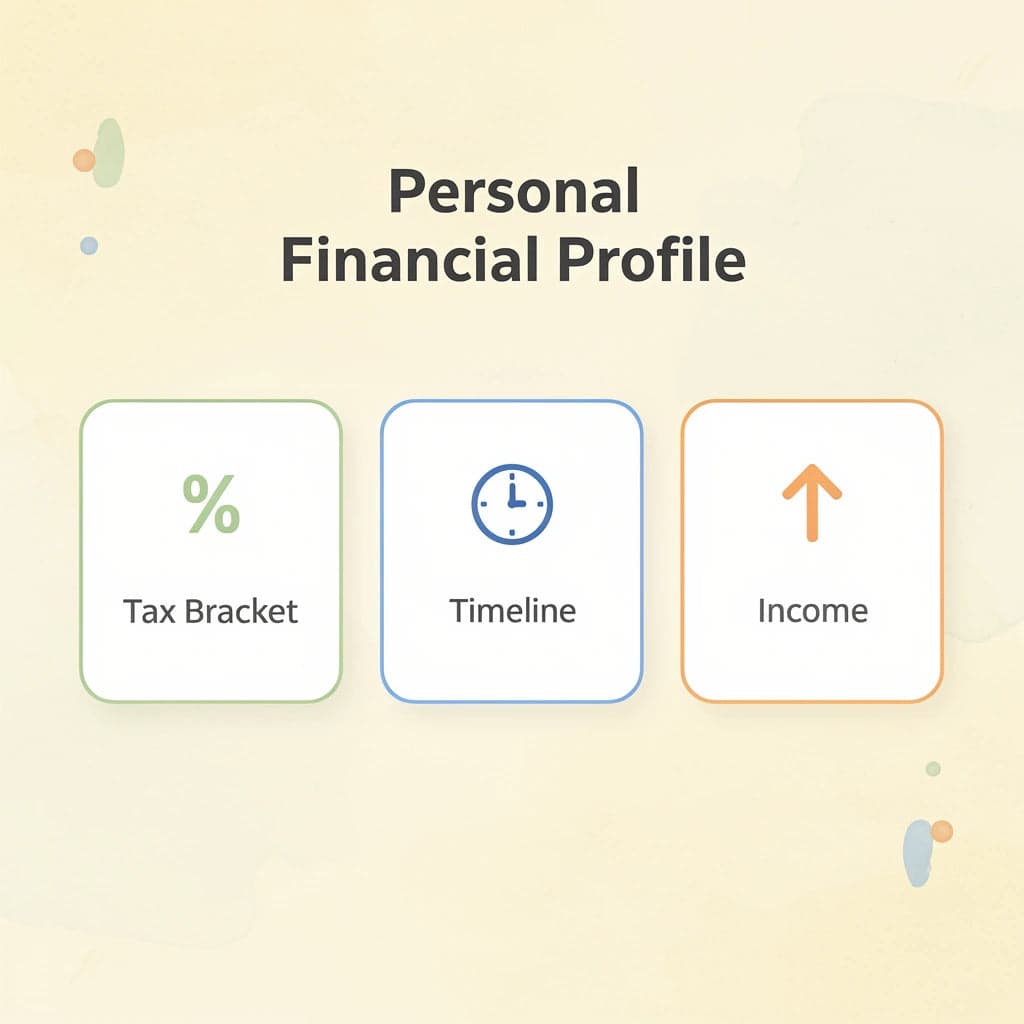
💡 Tip: Before making any rollover decision, evaluate your current tax bracket, expected retirement income, and timeline to retirement to determine which approach will maximize your long-term wealth.
The Problem with Generic Advice
Search for rollover guidance, and you'll find thousands of conflicting articles: some say Roth conversions always win, others warn against paying taxes today, and still others suggest splitting the difference.
No one knows your tax bracket, retirement timeline, or whether you'll need that money in five years or thirty. Generic advice treats retirement planning as a multiple-choice test with one correct answer, but real financial decisions require understanding the variables that make your situation unique.
What do real-world experiences reveal about retirement conversions?
Paul Mauro spent five decades managing over $1 billion in assets for families facing these decisions. His experience revealed patterns most investors miss: the couple who converted aggressively at 62, only to need that tax money for medical expenses three years later; the engineer who delayed converting for ten years, watching his tax-deferred account grow so large that required minimum distributions pushed him into higher tax brackets than he'd faced while working.
How do these lessons shape better retirement decisions?
These lessons come from watching hundreds of families make decisions that either built up their wealth or slowly eroded it through avoidable tax problems.
What questions should you ask before making retirement decisions?
Smart Financial Lifestyle helps readers ask better questions before making decisions they can't undo. Not "Is Roth better?" but "What tax rate am I avoiding today versus potentially paying later?" Not "Should I convert everything?" but "How much can I convert this year without jumping into a higher bracket?" Americans who work with a financial advisor are 2.5 times more likely to feel financially secure, according to the Northwestern Mutual Planning & Progress Study 2025, because guidance shifts focus from products to principles.
How do taxes and growth interact over decades?
The books and free YouTube content explain how taxes, growth, and income planning work together over many years. They help you understand when a Rollover IRA preserves the flexibility you'll need later, or when a Roth conversion locks in tax savings that grow for thirty years.
Where Education Becomes Strategy
Retirement success comes from making smart choices consistently. These choices should match your current situation and goals. Smart Financial Lifestyle provides a framework for evaluating these decisions without sales pressure or confusing advice.
Understanding the main ideas is only half of what you need. The other half is knowing where to find trustworthy help when you're ready to apply them.
Related Reading
Kickstart Your Retirement Financial Planning Journey | Subscribe to Our YouTube and Newsletter
Deciding to roll money into a rollover IRA or convert to a Roth IRA depends on factors that most general advice overlooks. Understanding your own situation clearly is what matters.

🎯 Key Point: Your retirement account decisions should be based on your specific financial situation, not generic advice that doesn't consider your unique circumstances.
Explore Paul Mauro's books and free YouTube content through Smart Financial Lifestyle to learn wealth-building ideas that have guided more than $1 billion in assets under management. You'll gain a clearer understanding of how taxes, retirement accounts, and long-term investing work together to build lasting financial independence.

"Real retirement planning is built on education that respects your intelligence and recognizes that your situation is yours alone."
Subscribe to the newsletter and YouTube channel for ongoing insights without sales pressure. Real retirement planning is built on education that respects your intelligence and recognizes your situation is unique.

💡 Tip: Start with educational content that empowers you to make informed decisions rather than following one-size-fits-all retirement advice that may not suit your specific goals.