Mega Backdoor Roth IRA: Building More Tax-Free Retirement Wealth

High earners who have maxed out their 401k contributions often seek additional ways to build tax-free retirement wealth. The Mega Backdoor Roth IRA strategy offers a powerful solution, allowing eligible participants to contribute tens of thousands of additional dollars annually to a Roth account. This approach creates substantial tax-free growth potential without the constraints of traditional contribution limits. However, success depends on having the right employer plan features and executing the strategy correctly.
Understanding whether your employer plan allows after-tax contributions and in-plan conversions is crucial for implementation. Proper coordination with existing retirement accounts and knowledge of current contribution limits can significantly accelerate your path to financial independence. For comprehensive guidance on maximizing these opportunities and keeping more money out of the IRS's reach, consider working with experts in retirement financial planning.
Table of Contents
Why the Mega Backdoor Roth IRA Confuses So Many Investors
What a Mega Backdoor Roth IRA Actually Is
Why High Earners Use the Mega Backdoor Roth Strategy
The Biggest Mega Backdoor Roth IRA Mistakes Investors Make
Why the Bigger Retirement Planning Question Is Tax Strategy
When a Mega Backdoor Roth IRA May Make Sense
How Smart Financial Lifestyle Helps Investors Think Beyond Roth IRA Tactics
Kickstart Your Retirement Financial Planning Journey | Subscribe to Our YouTube and Newsletter
Summary
The Mega Backdoor Roth confuses investors because it depends entirely on employer plan features that vary widely across companies. Some plans allow after-tax 401(k) contributions and in-service Roth conversions, while many don't. ASPPA notes that, when this feature is in effect, plan administrators must track 12 items instead of 10, which explains why many employers simply don't offer it. Online discussions treat the strategy as universally available, skipping over eligibility requirements that determine whether it actually works for your situation.
Terminology overlap creates dangerous implementation errors that cost investors tens of thousands in lost contribution capacity. Financial representatives often conflate after-tax 401(k) contributions with standard Roth deferrals because both involve post-tax money and use "Roth" in descriptions. One investor explicitly requested Mega Backdoor Roth setup and received standard Roth deferrals instead, capping contributions at $23,500 rather than the intended $70,000. The institution acknowledged the conversation but concluded no error occurred because "Roth contributions" were delivered as discussed.
High earners face income phaseout limits that prevent direct Roth IRA contributions entirely, creating structural frustration for those with the strongest savings capacity. The Mega Backdoor Roth solves this by routing substantially larger amounts through employer plans. Voya Financial reports that the total contribution limit reached $69,000 in 2024, creating meaningful capacity beyond standard deferrals that compounds significantly over decades of tax-free growth.
Tax strategy determines how much retirement income you actually keep, not just how much you accumulate. The CFP Board 2025 survey identifies December 31, 2025, as a critical inflection point when temporary tax provisions expire, potentially reshaping retirement income planning for millions. A retiree with assets split evenly across taxable, tax-deferred, and tax-free accounts has far more control than someone with the same total concentrated in Traditional IRAs, even if both saved diligently for decades.
Investors often overconcentrate on one account type, treating the Mega Backdoor Roth as an isolated optimization tactic rather than as part of a broader tax and liquidity framework. Some become so focused on maximizing Roth contributions that they neglect emergency reserves, business liquidity, or cash-flow flexibility. The strategy only works when it doesn't require living on a significantly reduced income or depleting accessible savings to hit contribution ceilings.
Retirement financial planning addresses this by coordinating withdrawal strategies across all three tax buckets rather than fixating on maximizing contributions to any single account type, helping investors understand how Roth assets, taxable accounts, and pre-tax balances work together across different retirement phases when market conditions shift or healthcare costs spike.
Why the Mega Backdoor Roth IRA Confuses So Many Investors
The Mega Backdoor Roth IRA confuses investors because the name sounds like marketing hype rather than a legitimate strategy. Adding "backdoor" to anything financial makes people assume it's sketchy or exclusive. The reality is straightforward: this is a specific contribution process available through certain employer 401(k) plans that lets you contribute significantly more to Roth accounts than standard limits allow.

🎯 Key Point: The confusing name creates unnecessary barriers - this is a completely legal and IRS-approved retirement strategy, not some questionable financial loophole.
"The Mega Backdoor Roth allows eligible participants to contribute up to $66,000 annually to retirement accounts, compared to the standard $23,000 limit for traditional 401(k) contributions." — IRS Publication 590-A, 2024

⚠️ Warning: Many investors miss out on this strategy simply because they assume the "backdoor" terminology means it's too complicated or not legitimate for average savers.
Why do eligibility requirements matter so much?
Your strategy depends on what your employer's plan allows. Some plans permit after-tax 401(k) contributions and in-service Roth conversions; many don't. Online discussions treat it as universally available but overlook the eligibility requirements that determine whether it will work for you. According to White Coat Investor's comprehensive guide, the topic requires 17,751 words to explain properly because the details matter more than the main idea.
Why does confusing terminology create problems for investors?
People call their financial institution asking about "Mega Backdoor Roth contributions" and receive standard Roth deferrals instead of the after-tax 401(k) contributions they need. Both involve money that has already been taxed and have "Roth" in the name, but they're different contribution types with different limits and purposes. When a representative says "Roth contributions, taxed at the time of contribution," it matches what someone seeking a Mega Backdoor Roth expects to hear, but it describes the wrong account type.
How do financial representatives misunderstand these requests?
Financial service representatives often confuse these contribution types due to similar terminology. One investor requested a Mega Backdoor Roth setup but found standard Roth deferrals on their statement. The institution claimed no error occurred because the investor received "Roth contributions" as discussed, though the $23,500 Roth deferral limit replaced the planned $70,000+ after-tax contribution option.
Why do most people miss the plan-dependency problem?
The bigger issue is treating this strategy as automatically smart without asking whether it fits your situation. You can't execute a Mega Backdoor Roth without specific plan provisions. Your employer's 401(k) plan must allow after-tax contributions beyond the standard pre-tax and Roth deferral limits, then permit in-service conversions or withdrawals to move those after-tax dollars into a Roth account while still employed.
ASPPA notes that, when this feature is in effect, plan administrators must track 12 items instead of 10, which explains why many employers don't offer it.
How do contribution limits interact across account types?
Investors struggle with how contribution limits interact across account types. The standard $23,500 employee deferral limit (pre-tax or Roth) is separate from the overall $70,000 annual addition limit that includes employer contributions. The Mega Backdoor Roth exploits the gap between your deferrals plus employer match and the $70,000 ceiling, but only if your plan permits after-tax contributions.
That's not a simple calculation when managing basis, conversion timing, and five-year rules.
When should you seek professional guidance for this strategy?
When complexity reaches this level, many investors benefit from working through the mechanics with someone who has implemented this strategy across different plan types and income situations. Resources like Smart Financial Lifestyle help retirees and pre-retirees cut through conflicting advice by explaining whether the Mega Backdoor Roth applies to their specific 401(k) plan and broader financial picture, rather than presenting it as a universal solution.
But understanding eligibility is the first filter, because even when your plan allows it, execution creates unanticipated questions.
Related Reading
What a Mega Backdoor Roth IRA Actually Is
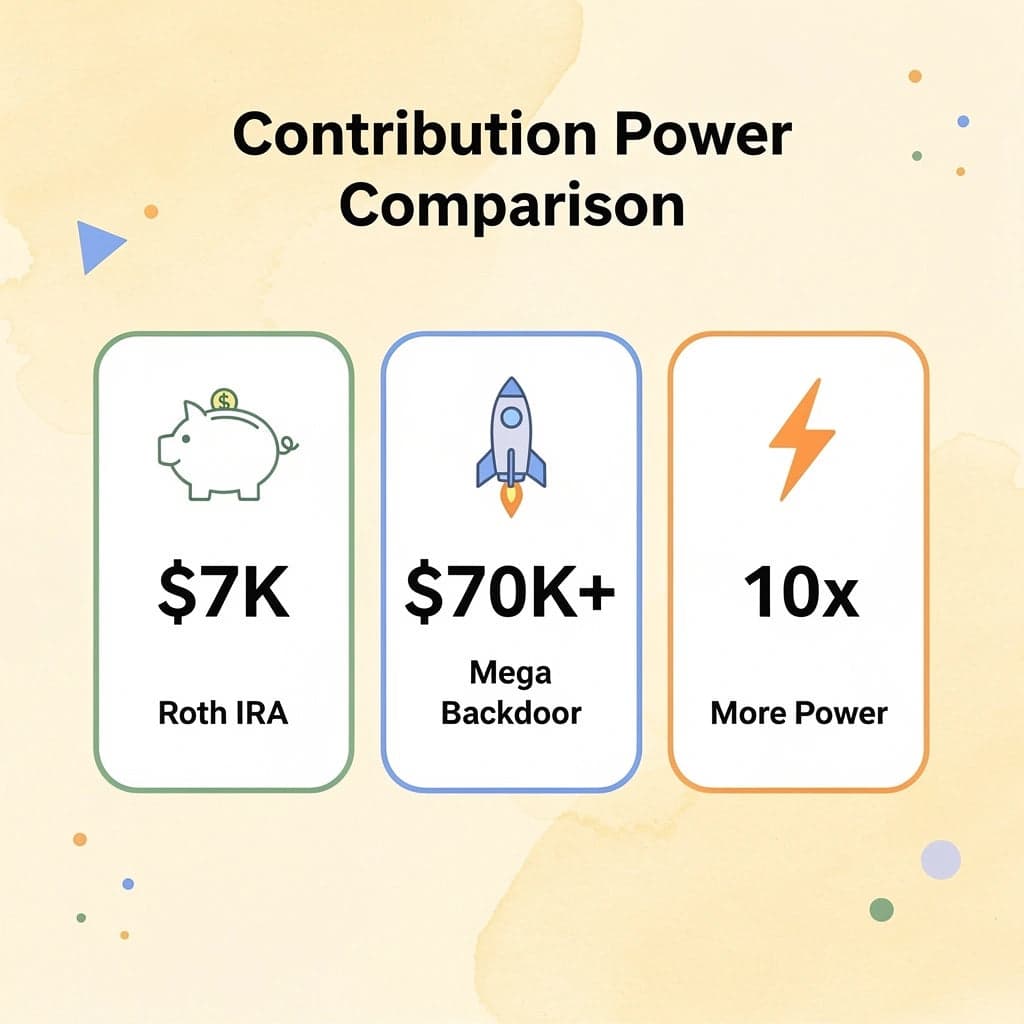
The Mega Backdoor Roth is a two-step move that lets you contribute more money into tax-free retirement accounts than standard Roth IRA limits allow. You make after-tax contributions to your 401(k) beyond the normal pre-tax or Roth deferral cap, then convert those dollars into a Roth account where future growth compounds without tax liability. According to MaxiFi's 2025 financial glossary, this strategy can push total annual contributions up to $70,000 or more, far exceeding the $7,000 Roth IRA ceiling.

🔑 Key Takeaway: The Mega Backdoor Roth allows you to contribute 10x more than traditional Roth IRA limits by leveraging your 401(k) plan's after-tax contribution feature.
"This strategy can push total annual contributions up to $70,000 or more, far exceeding the $7,000 Roth IRA ceiling." — MaxiFi Financial Glossary, 2025
💡 Important Note: Your employer's 401(k) plan must allow after-tax contributions and in-service withdrawals or in-plan Roth conversions for this strategy to work effectively.
How does the contribution limit gap work?
This strategy exploits a gap in IRS contribution rules. For 2026, you can contribute $24,000 of your salary to a 401(k) through regular contributions, while the total contribution limit across all sources reaches $72,500 for workers under 50. The Mega Backdoor Roth lets you contribute after-tax dollars to fill that gap, then immediately convert those contributions to Roth treatment.
How it differs from other Roth strategies
This is not a Roth IRA, which you fund directly with after-tax money and that is subject to income phaseouts. It's not a Backdoor Roth IRA, where high earners contribute to a Traditional IRA and convert it to circumvent income limits. It's not a Roth 401(k), the Roth version of your regular salary deferral. The Mega Backdoor Roth specifically requires after-tax 401(k) contributions followed by a Roth conversion or rollover, and it only works if your employer's plan supports both features: after-tax contribution acceptance and either in-service withdrawals or in-plan Roth conversions.
What happens when providers misunderstand the strategy?
When bank and investment company employees are confused about after-tax contributions with regular Roth deferrals, the plan fails before it begins. One investor requested a Mega Backdoor Roth but received a standard Roth deferral instead, limiting contributions to $23,500 rather than the $70,000 intended. The W-2 form showed the wrong tax code, thousands of dollars in possible contributions were lost, and despite acknowledging the error, the institution refused to correct it.
How do you navigate the complexity and tax implications?
Solutions like Smart Financial Lifestyle help retirees and those preparing for retirement understand this complex topic. Our platform explains whether the Mega Backdoor Roth works for your specific 401(k) plan, focusing on how the strategy functions and whether you can use it. Once money enters a Roth account, qualified withdrawals and all future growth become tax-free under current law.
After-tax contributions don't get taxed again when you convert them. The only tax you might owe is on any investment gains that accumulated before the rollover. Most people convert quickly to avoid creating taxable income on the growth.
What plan features must your employer support?
Your employer's 401(k) must clearly allow after-tax contributions and provide a way to move those dollars into Roth treatment, either through in-service withdrawals to a Roth IRA or in-plan conversions to a Roth 401(k). Many plans lack both features, making the strategy unavailable for a large portion of the workforce.
You need to check eligibility with your HR department or plan administrator before making any contribution decision, because without those specific plan provisions, the Mega Backdoor Roth isn't possible. But knowing your plan allows it doesn't answer the next question: whether the math justifies the effort for your situation.
Why High Earners Use the Mega Backdoor Roth Strategy
High earners face income phaseout limits that prevent direct Roth IRA contributions. The Mega Backdoor Roth solves this by routing substantially larger amounts into Roth accounts through employer 401(k) plans.

🎯 Key Point: The contribution capacity difference is massive for wealth building.
Instead of the $7,000 annual Roth IRA limit, eligible investors can move tens of thousands of additional dollars into tax-free territory each year. According to Voya Financial, the total contribution limit for 2024 reaches $69,000 (or $76,500 if you're 50 or older). That difference compounds over decades.
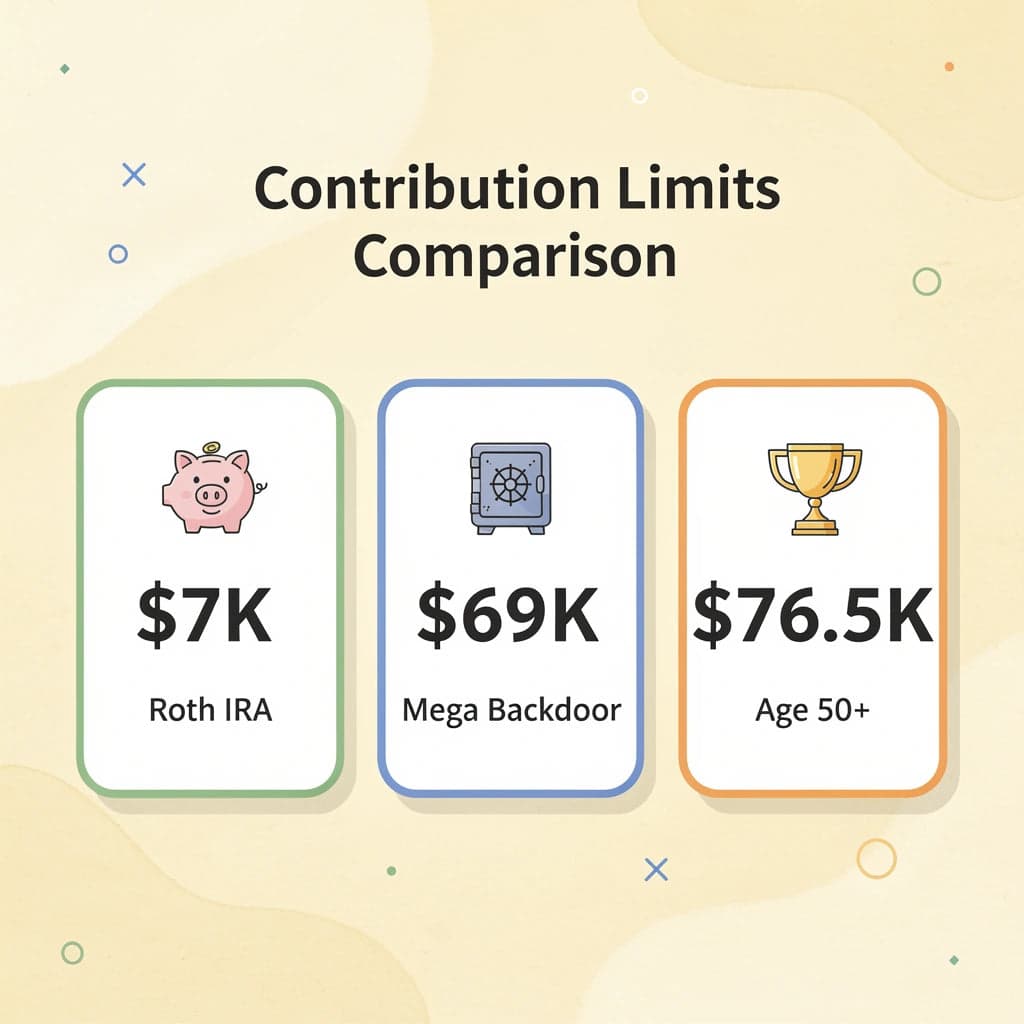
"The total contribution limit for 2024 reaches $69,000 (or $76,500 if you're 50 or older)." — Voya Financial, 2024
🔑 Takeaway: High earners use this strategy because it's the only way to access Roth benefits at scale when direct contributions are prohibited by income limits.

What makes the tax-free growth so valuable over time?
The conversion moves money from one account type to another. Once assets settle inside a Roth account, qualified growth and withdrawals become tax-free under current IRS rules. Over 20 or 30 years of compounding, that tax treatment creates enormous value compared to taxable accounts, where capital gains taxes, dividend taxes, and future retirement income taxation gradually reduce growth efficiency.
How does this strategy compare to standard retirement contributions?
Consider two high earners who invest aggressively over 25 years. The first contributes only standard 401(k) employee deferrals annually. The second uses after-tax 401(k) contributions, along with Mega Backdoor Roth conversions, to move significantly more money into Roth accounts each year.
The second investor builds a much larger portion of retirement savings inside tax-free structures rather than future taxable retirement income streams. This creates flexibility around withdrawal strategies, tax bracket management, Required Minimum Distributions, and retirement income planning that pre-tax balances cannot provide.
Who finds this strategy most valuable?
This strategy becomes especially attractive for investors who expect future tax rates to rise, retirement income to remain high, or large pre-tax retirement balances to create future tax problems. Younger high earners with strong cash flow and long investing time periods find it particularly appealing when their employer's retirement plan supports it.
Qualified Roth withdrawals generally don't increase taxable income, which matters when managing Medicare premiums, Social Security taxation, or estate planning.
When should you consider implementing this approach?
Many professionals wish they had discovered this approach earlier in their careers, when decades of growth could have significantly multiplied its benefits. For those making these decisions now, retirement financial planning resources from Smart Financial Lifestyle can help clarify whether the math makes sense for your specific situation.
The right guidance helps you understand not only whether your plan allows the strategy, but whether your cash flow, tax situation, and retirement timeline make it worthwhile. However, knowing the strategy exists does not prevent investors from making costly execution mistakes that can undermine the overall benefit.
The Biggest Mega Backdoor Roth IRA Mistakes Investors Make
One of the biggest mistakes investors make with the Mega Backdoor Roth strategy is assuming every 401(k) plan supports it. The strategy works only when the employer plan allows both after-tax contributions and in-service Roth conversion or withdrawal. Many plans lack these critical features, making the strategy unavailable to those investors.

Before implementing this strategy, investors must verify their plan's specific capabilities. The two essential requirements – after-tax contribution options and in-service distribution rights – are not standard across all employer-sponsored plans. Without both features, the Mega Backdoor Roth becomes impossible to execute, leaving investors with limited tax-advantaged options.
Triggering Unnecessary Taxes During Conversion
After-tax contributions aren't taxed again during conversion, but investment gains that accumulated before the rollover become taxable. Delaying conversion allows earnings to grow, creating unnecessary tax complexity.
Overlooking Liquidity While Maximizing Roth Space
Some high earners become so focused on maximizing Roth contributions that they aggressively push additional money into retirement accounts while neglecting emergency reserves, shorter-term investing goals, business liquidity, or cash-flow flexibility. According to CNBC, the after-tax contribution limit reached $69,000 in 2024, prompting investors to fill every available dollar of retirement space. This can create unnecessary financial pressure even if the retirement strategy itself is technically efficient.
Most people treat the Mega Backdoor Roth as a checkbox tactic rather than one piece of a broader tax and liquidity framework. Maximizing Roth accumulation alone does not create the best retirement outcome.
Why does isolated optimization fail in retirement planning?
An investor may successfully move large sums into Roth accounts while overlooking tax diversification, future withdrawal sequencing, retirement income coordination, or long-term tax bracket management. Retirement financial planning that integrates tax strategy, cash flow, and withdrawal sequencing helps investors determine whether aggressive Roth conversions align with their long-term goals or whether a balanced approach across account types yields better outcomes.
A poorly executed Mega Backdoor Roth strategy fails because the investor treats it as an isolated optimization tactic rather than integrating it into a broader retirement and tax-planning framework, where contribution limits, liquidity needs, and future tax rates interact in ways that online calculators rarely capture.
What bigger question does perfect execution miss?
But even if you execute the Mega Backdoor Roth perfectly, it doesn't answer the bigger question of whether you're building the right tax plan for retirement.
Why the Bigger Retirement Planning Question Is Tax Strategy
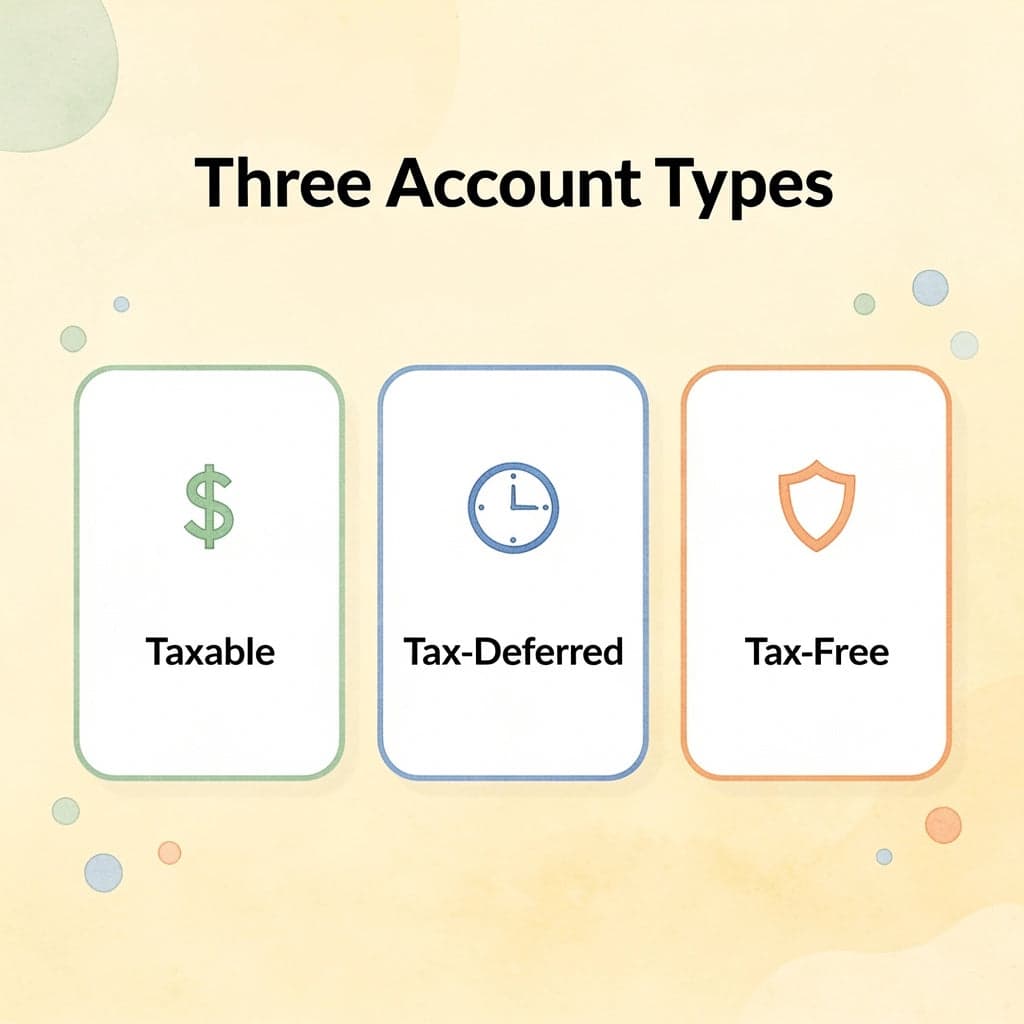
Tax strategy determines how much income you keep in retirement. You can execute the Mega Backdoor Roth perfectly and still face unexpected tax burdens without a coordinated withdrawal plan across taxable, tax-deferred, and tax-free accounts. The question isn't which account type wins, but whether you're building flexibility to manage tax brackets across 30 years of changing circumstances.
🎯 Key Point: The most sophisticated retirement savings strategy fails without proper tax coordination across all account types during withdrawal.

"Tax diversification in retirement accounts provides the flexibility to manage tax brackets and optimize withdrawal strategies across decades of changing tax laws." — Financial Planning Association, 2023
Account Type | Tax Treatment | Withdrawal Strategy |
|---|---|---|
Taxable | Pay taxes on gains | First for lower brackets |
Tax-Deferred | Pay ordinary income tax | Fill the remaining bracket space |
Tax-Free (Roth) | No taxes on qualified withdrawals | Preserve for the highest brackets |
⚠️ Warning: Even perfect contribution strategies can result in suboptimal retirement income without coordinated withdrawal planning across all account types.
What is the three-bucket retirement framework?
Most investors focus heavily on one or two account types without understanding how all three buckets work together during retirement. Taxable brokerage accounts offer flexibility and favorable tax treatment on capital gains. Tax-deferred accounts (Traditional 401(k)s and IRAs) create future ordinary income tax obligations and mandatory RMDs. Tax-free accounts (Roth IRAs and Roth 401(k)s) allow withdrawals without increasing taxable income. The strongest retirement plans balance all three categories strategically rather than maximizing one.
Why does tax flexibility matter for retirement planning?
According to the CFP Board 2025 CFP® Professionals Taxes Survey, December 31, 2025, marks a turning point as temporary tax rules expire, potentially changing retirement income planning for millions. This uncertainty makes flexibility more valuable than strict optimization around today's rules.
Putting too much money in pre-tax accounts risks large RMDs pushing retirement income into higher tax brackets as Social Security becomes taxable and Medicare premiums increase. Focusing only on Roth accumulation while ignoring taxable accounts sacrifices liquidity and the ability to harvest losses or manage capital gains strategically.
Why does a withdrawal order affect your lifetime tax bill?
The order in which you withdraw from different account types directly affects your lifetime tax bill and asset longevity. Standard advice suggests spending from taxable accounts first, then tax-deferred accounts, then tax-free accounts, but this sequence overlooks opportunities to strategically fill lower tax brackets, manage RMD timing, reduce Social Security taxation, and coordinate Medicare premium thresholds. Our Smart Financial Lifestyle platform helps you model withdrawal sequences to optimize tax efficiency throughout retirement.
A retiree with $2 million split evenly across all three buckets has far more control than someone with the same total concentrated in Traditional IRAs.
How much can coordinated withdrawal strategies save?
Platforms like retirement financial planning help retirees determine annual withdrawal amounts by analyzing different tax scenarios rather than relying on basic rules. Our Smart Financial Lifestyle approach to withdrawal planning can save higher-net-worth retirees more than six figures in lifetime taxes compared to basic rules.
When should you start building tax diversification?
The time to create tax diversification is during your working years, not after retirement. If you're 45 with 20 years until retirement and everything sits in Traditional 401(k) accounts, every dollar you withdraw triggers ordinary income tax at unpredictable rates.
How does the Mega Backdoor Roth create future flexibility?
Adding Mega Backdoor Roth contributions now creates future choices, but only if you keep enough taxable assets for early retirement spending and enough pre-tax balances to fill lower tax brackets strategically. The goal isn't perfection: it's having enough in each bucket to respond when tax laws change, or circumstances shift.
Knowing you need tax flexibility and building it are two different challenges.
Related Reading
How to Reduce Taxes on RMDs
When a Mega Backdoor Roth IRA May Make Sense
The Mega Backdoor Roth suits high earners who maximize standard retirement contributions, exceed Roth IRA income limits, maintain emergency reserves, and have stable cash flow to save beyond contribution limits. The strategy works best as an additional layer of tax diversification, not as the foundation of a retirement plan.

🎯 Key Point: This strategy is designed for those who have already maxed out their traditional retirement accounts and are looking for additional tax-advantaged savings opportunities.
"The Mega Backdoor Roth strategy is most effective for high-income earners who have exhausted other tax-advantaged retirement options and seek additional tax diversification."

⚠️ Warning: Don't pursue a Mega Backdoor Roth if you haven't first established a solid emergency fund and maximized your employer 401(k) match - these should always be your top priorities.
Requirement | Why It Matters |
|---|---|
High income | Need excess cash flow beyond basic retirement savings |
Maxed standard contributions | Should exhaust $23,000 401(k) and other limits first |
Emergency fund | Must have 3-6 months' expenses saved |
Stable cash flow | Strategy requires a consistent ability to save |
Income limits exceeded | Can't contribute directly to a Roth IRA |
Who qualifies as a high-income professional with room to save?
High-income professionals benefit most from this strategy. Many earn above Roth IRA income limits while having excess funds beyond standard 401(k) contribution caps. The Mega Backdoor Roth creates additional tax-free growth space that would otherwise remain in taxable investment accounts.
According to LTax Consulting, the combined employee and employer contribution limit reaches $70,000 for those under 50 and $77,500 for ages 50–59, substantially exceeding the $23,000 standard deferral limit.
What does having room to save really mean?
The critical qualifier is "room to save." Someone earning $300,000 but carrying high-interest debt, unstable income, or minimal emergency reserves may not benefit from aggressively prioritizing additional retirement funding. The strategy assumes financial stability exists first.
Why does cash flow stability matter more than high income?
Having a stable cash flow matters as much as income level. Investors with emergency savings, manageable debt, and consistent savings have more options for advanced contribution strategies. Those facing cash flow pressure or short-term cash needs may find the Mega Backdoor Roth creates stress rather than value, since after-tax contributions lock funds in retirement accounts with limited early access.
What happens when investors feel pressure to maximize contributions?
A common pattern emerges in online retirement communities: investors in their early 40s who started saving late feel pressure to maximize every available tax-advantaged space. The strategy works only when it doesn't require drastically reducing current income or depleting accessible savings. Concentrating contributions early in the year becomes problematic when unexpected expenses arise, and liquid reserves are insufficient to cover them.
Why do future tax expectations matter for retirement planning?
Some investors expect to pay higher taxes later because they have large amounts of money saved for retirement before taxes are taken out, they expect to have high income in retirement, they will be required to take money out of retirement accounts, or taxes might change in the future. Building larger Roth account balances gives you more choices for how to withdraw money in the long term and lowers how much taxable income you will have in the future. This strategy works well if the tax rate you will pay in retirement is the same as, or higher than, the tax rate you pay now, making untaxed withdrawals more valuable than a deduction today.
When might pre-tax contributions be the better choice?
The counterargument makes sense. Investors moving to states with a high cost of living or earning in the 22-24% federal bracket face genuine choices in which neither pre-tax nor Roth contributions are clearly superior. State taxes often favor pre-tax contributions now, allowing deductions at higher combined rates and enabling strategic conversions during lower-income retirement years.
Why should this be an additional layer rather than your foundation
This strategy works best for investors who have already maximized contributions to traditional or Roth 401(k) accounts, HSA accounts, and employer matches. Think of the Mega Backdoor Roth as an additional tax-deferral tool rather than your primary strategy. This keeps priorities in focus.
If someone hasn't already maximized their employer match or HSA contributions, they shouldn't focus on after-tax 401(k) contributions simply because the strategy sounds advanced.
How do you build a comprehensive retirement framework
Platforms like Smart Financial Lifestyle help investors build complete retirement plans that balance tax diversification, liquidity needs, and long-term withdrawal flexibility. This approach prevents overemphasis on Roth accumulation and focuses instead on maintaining sufficient funds across tax buckets to respond when circumstances change.
Understanding when the strategy makes sense is only half the challenge; the harder part is knowing how to use it without triggering unnecessary taxes or administrative complexity.
How Smart Financial Lifestyle Helps Investors Think Beyond Roth IRA Tactics
Retirement planning conversations online often devolve into tactical debates about Roth conversions, contribution limits, and account types without addressing the strategic questions those tactics serve. Investors focus on whether to max a Mega Backdoor Roth while ignoring how those assets interact with taxable accounts during Required Minimum Distribution years, or how withdrawal sequencing affects Medicare premiums decades later. The tactics aren't wrong—treating them as destinations rather than tools within a broader wealth structure is.

🎯 Key Point: The most sophisticated retirement tactics become counterproductive when they're not aligned with your overall financial strategy and long-term wealth goals.
"Successful retirement planning requires thinking beyond individual account optimization to understand how different vehicles work together across decades of changing tax landscapes." — Financial Planning Research, 2024

💡 Strategic Insight: Smart financial lifestyle planning means viewing Roth conversions and contribution strategies as components of a comprehensive system that adapts to changing tax brackets, healthcare costs, and legacy planning objectives over 30+ year retirement horizons.
How does Smart Financial Lifestyle approach retirement planning differently?
Smart Financial Lifestyle approaches retirement planning by coordinating long-term income rather than optimizing isolated accounts. Instead of asking "should I use a Mega Backdoor Roth?" the framework asks how Roth assets fit into overall tax diversification, what withdrawal flexibility you'll need across retirement phases, and how different account types work together when market conditions shift or healthcare costs spike. This perspective comes from Paul Mauro's 50 years of managing wealth through multiple market cycles, including over $1 billion in assets under management. The focus is on building coordinated strategies that hold up across decades, not tax years.
What happens when investors focus only on maximizing Roth contributions?
When investors focus too much on maximizing Roth accounts, they often overlook access to money outside retirement accounts, opportunities to reduce taxes by selling losing investments in regular accounts, and the fact that large pre-tax balances will increase Medicare costs later. One investor might convert everything to Roth accounts during early retirement to avoid required withdrawals, only to lose the ability to strategically use lower tax brackets in their 70s when charitable gifts or medical costs create tax deduction opportunities. Smart Financial Lifestyle helps you balance these competing priorities by mapping out a comprehensive retirement strategy that considers all your account types together.
Another might maximize contributions to after-tax 401(k) conversions while allowing emergency savings to dwindle, forcing withdrawals at inopportune times during market downturns.
How should retirement planning coordinate across all account types?
The real planning work happens when you coordinate withdrawal strategies across all three tax buckets: pulling from taxable accounts for capital gains treatment in some years, using Roth funds to control MAGI during ACA subsidy windows, and managing pre-tax distributions to avoid bracket creep when pension income starts. Balancing ACA premium optimization, Roth conversions, RMD planning, and IRMAA avoidance becomes impossible when your planning framework focuses on maximizing one account type rather than understanding how all the pieces work together over 20 or 30 years.
How do broader wealth planning principles shape better outcomes?
Retirement financial planning resources shift focus from "what's the maximum I can contribute?" to "how should my portfolio structure support income needs across different retirement phases?" This includes understanding step-up basis planning in taxable accounts, timing conversions during years when you've lost ACA subsidies to maximize amounts without additional subsidy sacrifice, and why maintaining liquidity outside retirement accounts matters more than hitting contribution limits. Our Smart Financial Lifestyle approach prioritizes portfolio flexibility over contribution maximization.
These structural decisions determine whether your retirement income plan adapts to changing circumstances or locks you into rigid withdrawal patterns that trigger unnecessary taxes.
Why does coordinated planning matter more than individual tactics?
The educational approach focuses on clear explanations in plain language, with real maths rather than generic advice. You get frameworks for determining whether a Mega Backdoor Roth works for your specific tax situation, income path, and liquidity needs, not just confirmation that it's a powerful tool for high earners.
Retirement success rarely comes from executing one clever tactic perfectly. It comes from coordinating multiple strategies across decades while maintaining flexibility to adjust when markets crash, tax laws change, or healthcare costs spike.
Understanding principles and accessing coordinated planning guidance are valuable only if you use them to build a retirement structure that fits your specific situation.
Kickstart Your Retirement Financial Planning Journey | Subscribe to Our YouTube and Newsletter
Understanding the Mega Backdoor Roth IRA means knowing when it fits your situation and what to do next. That decision depends on your employer's plan features, your current tax bracket, your liquidity needs, and how this strategy aligns with your retirement plan.

🎯 Key Point: The Mega Backdoor Roth IRA is just one piece of a comprehensive retirement strategy that must align with your specific financial situation.
Smart Financial Lifestyle offers books, educational resources, and a weekly newsletter that help investors understand how tactics like the Mega Backdoor Roth fit into long-term wealth-building strategies. Paul Mauro's approach draws on 50 years of managing over $1 billion in assets, translating complex retirement strategies into clear frameworks you can use. Subscribe to the YouTube channel and newsletter for retirement planning guidance shaped by decades of real advisory experience. The content focuses on tax diversification, withdrawal sequencing, and income design across retirement phases that determine whether your money lasts.
"50 years of managing over $1 billion in assets provides the real-world experience needed to translate complex retirement strategies into actionable frameworks." — Smart Financial Lifestyle
💡 Tip: Subscribe to both the YouTube channel and newsletter to get comprehensive retirement planning guidance that goes beyond single tactics like the Mega Backdoor Roth.
Your next step is to determine whether this strategy serves your specific goals and to build a structure that holds up when markets shift, tax laws change, or healthcare costs spike unexpectedly.