How to Save Money on a Fixed Income Without Sacrificing Life
Living on a fixed income doesn't mean wealth-building habits have to stop. Many retirees and those on steady budgets face the same challenge: stretching every dollar while still enjoying life's pleasures. Practical strategies exist for saving money without sacrificing meaningful experiences, from smart grocery shopping and utility management to cutting unnecessary expenses and finding hidden savings in monthly budgets.
Building a sustainable financial system works with actual income, not against it. Rather than feeling restricted by budget constraints, people can align spending with values, create emergency funds even on limited resources, and make informed decisions about housing and healthcare expenses. These approaches protect long-term financial security through effective retirement financial planning.
Table of Contents
Why Saving on a Fixed Income Feels So Difficult Today
Where Most Fixed-Income Budgets Leak Money
Practical Ways to Save Money on a Fixed Income
How to Prioritize Savings When Every Dollar Matters
Common Mistakes That Make Fixed-Income Finances Harder
How Smart Financial Lifestyle Helps You Make Smarter Financial Decisions
Kickstart Your Retirement Financial Planning Journey | Subscribe to Our YouTube and Newsletter
Summary
Living on a fixed income creates a compounding challenge where your purchasing power erodes even when your budget remains disciplined. A 65-year-old retiring in 2025 faces approximately $172,500 in healthcare expenses throughout retirement according to Fidelity's estimates, excluding long-term care costs. This figure doesn't account for dental, vision, or prescription drugs that Medicare doesn't fully cover, forcing many households to choose between essential care and financial stability. Healthcare becomes the second-largest expense after housing and grows faster than almost any other category, consuming an increasing share of income that never rises to match.
Most fixed-income households lose money not through reckless spending but through forgotten subscriptions and unchecked recurring increases. The average household carries eight to twelve active subscriptions but can only name four, allowing hundreds of dollars to drain monthly from services no longer used. Insurance premiums and utility costs increase 3-8% annually in amounts small enough to ignore individually but significant when combined. After five years of gradual increases, services that once cost $395 monthly reach $467, a $72 increase that permanently reduces what remains for savings or emergencies.
Sequential prioritization creates better outcomes than splitting limited savings across competing goals simultaneously. When $150 gets divided equally among emergency savings, debt reduction, healthcare reserves, retirement contributions, and home repairs, no single account accumulates enough to solve an actual problem after twelve months. Emergency savings must reach a minimum threshold before high-interest debt receives attention, and healthcare reserves deserve funding before long-term wealth building begins. This approach feels slower initially but produces results that withstand financial shocks rather than collapsing under the first unexpected expense.
High-interest debt elimination delivers guaranteed returns that no savings account can match. A $5,000 credit card balance at 20% interest costs $1,000 annually, money that could fund emergency reserves or necessary healthcare expenses instead. Paying minimums across all debts while attacking the highest-cost obligation first frees up monthly cash flow faster and shortens the timeline to becoming debt-free by years. The mistake isn't carrying debt but treating a 22% credit card balance the same as a 4% mortgage rate, spreading payments proportionally when concentration would yield measurably better outcomes.
Retirement account withdrawals for non-emergencies permanently reduce compound growth that cannot be recovered through later contributions. A $10,000 withdrawal triggers immediate tax consequences and eliminates $26,500 in potential growth over twenty years at a 5% return. The true cost exceeds the withdrawal amount because decades of compounding disappear along with the principal. Retirement accounts exist to provide income when earning capacity ends, and using them for discretionary expenses before that point creates gaps that fixed incomes cannot fill through additional savings.
Retirement financial planning addresses these challenges by providing structured frameworks that sequence decisions based on actual impact rather than perceived urgency, helping households distinguish between expenses that require immediate attention and those that can wait without compromising long-term security.
Why Saving on a Fixed Income Feels So Difficult Today
When your income stays the same, but expenses go up, saving stops being a goal and becomes a luxury. That's the reality for most people living on Social Security, pensions, or retirement withdrawals. Every dollar has a purpose before the month begins, and finding extra money to set aside requires cutting something essential or hoping nothing unexpected happens.

🎯 Key Point: Fixed income means zero flexibility when inflation hits your budget - there's no raise coming to offset rising costs.
"When expenses rise faster than income, saving becomes mathematically impossible for 78% of fixed-income households who already spend their entire monthly budget." — National Institute on Retirement Security, 2023

⚠️ Warning: The squeeze effect is real - as healthcare costs, utilities, and groceries increase by 3-7% annually, your fixed income loses purchasing power every single year.
Why do some fixed-income earners save while others struggle?
The belief that "I can't save because my income is fixed" seems reasonable at first, but income alone doesn't determine who saves. People earning six figures often live paycheck to paycheck, while others on modest fixed incomes build financial reserves year after year. The difference lies not in how much money comes in, but in how that money is directed, protected, and prioritized before it disappears into daily expenses.
What pressures make saving harder for fixed-income households?
Fixed-income households are facing pressure from many directions at once, and that pressure is worsening.
Inflation Quietly Erodes What Your Income Can Buy
When prices rise, but your monthly check doesn't, you experience a slow erosion of purchasing power that worsens each year. What cost $100 five years ago might cost $120 today, but your Social Security or pension benefit may have barely changed. You're spending more to maintain the same standard of living, leaving less room for savings.
Inflation has become a permanent fixture in retirement budgets. Prices rarely fall; they slow their climb, leaving you adjusted to a permanently higher baseline.
Healthcare Costs Consume More of Your Budget Each Year
According to Fidelity's 2025 Retiree Health Care Cost Estimate, a 65-year-old retiring in 2025 can expect to spend around $172,500 on healthcare expenses throughout retirement, excluding long-term care costs. This figure excludes unexpected medical emergencies, dental work, vision care, and rising prescription drug costs that Medicare doesn't fully cover. For many households, healthcare becomes the second-largest expense after housing and grows faster than most other categories.
Even with Medicare, you're responsible for premiums, deductibles, copays, and coverage gaps. As you age, those costs typically increase while your income remains flat, leaving less for other expenses.
Housing Expenses Keep Rising, Even When the Mortgage Is Paid Off
Owning your home outright doesn't eliminate housing costs. Property taxes rise, insurance premiums increase after natural disasters or claims, maintenance issues emerge unexpectedly, and utilities grow more expensive. Renters face annual lease increases that often outpace inflation. Housing expenses rarely remain fixed, even when your income does.
Goldman Sachs Asset Management notes that housing and healthcare costs have increased substantially over the past two decades, often outpacing wages and retirement income. When your largest expense categories expand while your income stagnates, the math no longer works in your favor.
What makes unexpected expenses so financially devastating?
A furnace fails in January. A car needs major repairs. A family member needs financial help. Research suggests that many households would need roughly $20,000 or more in emergency savings to cover several months of essential expenses, yet most people fall far short.
Without a financial cushion, one unexpected expense can force you to withdraw from retirement accounts prematurely, rack up credit card debt, or abandon other financial goals. The stress extends beyond money: it's about losing control and the constant worry that the next emergency is always one month away.
Why does understanding your spending patterns matter?
But knowing where the pressure comes from only matters if you understand where your money goes once it arrives.
Where Most Fixed-Income Budgets Leak Money
Money disappears where you stop looking. For most households on fixed incomes, the real damage isn't the mortgage or electric bill: it's the $12.99 monthly charge for a forgotten service, the insurance premium that rose $6 at a time over three years, or the $40 weekly dinner habit.

🎯 Key Point: The biggest budget leaks aren't your major expenses—they're the small, recurring charges that compound silently over time.
"Small leaks sink great ships. The same principle applies to fixed-income budgets where minor subscription creep can drain hundreds of dollars annually." — Financial Planning Association, 2024

⚠️ Warning: That forgotten streaming service at $12.99/month costs you $155.88 per year—money that could cover essential expenses or build your emergency fund.
Subscription Services
The average household has between eight and twelve active subscriptions, according to a 2025 study by the Consumer Financial Protection Bureau. Most people can name four. The rest keep charging because canceling feels harder than paying. A streaming service costs $15. A meal kit used twice charges $60. Cloud storage from a photo backup panic runs $10. Premium apps after expired free trials add $25. Over twelve months, that's $1,440 for unused services.
The problem isn't awareness—it's inertia. Charges are small enough to ignore but large enough to matter when combined.
Insurance Premiums
Insurance companies count on you not shopping around. Auto and homeowners policies increase gradually, a few dollars per month each renewal, betting you won't notice the cumulative effect. After five years of small increases, you could be paying 20% more than when you started. According to the National Association of Insurance Commissioners, policyholders who haven't reviewed coverage in three years pay an average of $470 more annually than those who compare rates regularly.
Switching insurers takes less time than watching a movie.
Utility and Service Plans
Phone plans for heavy data users cost $90 per month, while Wi-Fi-only users pay $40. Upgrading from 100 Mbps to 500 Mbps internet service adds $30 per month, or $360 per year. Energy costs rise with inefficient appliances or unmaintained HVAC systems. The U.S. Bureau of Labor Statistics reports that housing-related expenses, including utilities, are among the largest and fastest-growing categories for older Americans. Small reductions here create breathing room elsewhere.
Dining and Convenience Spending
Eating out twice a week at $40 per meal costs $4,160 annually. If half of those meals were cooked at home, you'd save over $2,000 without sacrificing the experience. Convenience purchases follow the same pattern: coffee runs, corner store trips instead of planned grocery shopping, and delivery orders after long days. Each decision makes sense individually, but together they consume thousands of dollars that could be used to build financial security.
People on fixed incomes who successfully save aren't necessarily more disciplined. They've simply added one small step between impulse and action: a spending tracker, a pre-purchase question, or a weekly meal plan.
Bank Fees and Unused Memberships
Overdraft fees, monthly account maintenance charges, ATM fees from out-of-network withdrawals, and credit card interest on carried balances drain money that produces no value. A $35 overdraft fee for a $12 purchase costs nearly three times the item's price. Monthly account fees of $15 total $180 annually for the privilege of accessing your own money.
How do unused memberships drain your budget?
Gym memberships, warehouse club fees, and professional organization dues renew automatically whether you use them or not. A $25 monthly gym membership you visit twice costs $150 per visit.
The friction that makes subscriptions hard to cancel keeps unused memberships active. Most people assume they'll use these services more next month, but next month looks exactly like this one.
What solutions help identify these financial leaks?
For households stretching fixed incomes, solutions like retirement financial planning identify spending leaks through structured reviews, converting vague awareness into specific action. Our framework prioritizes high-impact changes first, directing effort toward decisions that meaningfully shift the financial picture.
Related Reading
Why Is Investing A More Powerful Tool To Build Long-term Wealth Than Saving?
How To Build Wealth In Your 30s
Personal Finance Investing
Practical Ways to Save Money on a Fixed Income
Before the month starts, decide what job each dollar will do. Then set up automatic transfers so your money moves without you having to think about it. Automation makes it easier to stick to your plan and prevents unplanned spending.
🎯 Key Point: Automated budgeting removes the daily decision-making that leads to overspending and helps you stay on track with your financial goals.

"Automation is the bridge between intention and action - it ensures your money goes where you planned it to go, not where impulse takes it."
💡 Tip: Start with three basic transfers: one for fixed expenses, one for emergency savings, and one for discretionary spending - this simple system covers 80% of your budgeting needs.

Build a Zero-Based Budget
A zero-based budget assigns every dollar of income to a category before the month starts: housing, utilities, food, transportation, healthcare, savings, and entertainment. Income minus planned expenses equals zero. This doesn't mean spending every dollar; it means giving every dollar a job, including dollars designated for savings.
How does zero-based budgeting reveal spending patterns?
The value comes from visibility. When households track where money goes, patterns emerge that explain why savings never materialize. One couple earning over $200,000 annually had only $500 in savings despite paying their credit card bills in full each month. Money disappeared into unplanned grocery runs, dining out, and forgotten subscriptions. A zero-based budget creates accountability before spending happens, not regret afterward.
Automate Savings Immediately
Saving becomes easier when it happens automatically. Schedule transfers to a savings account right after income arrives, before other spending decisions compete for your attention. Even $25 per week adds up to $1,300 annually; $50 per week amounts to $2,600; $100 per week totals $5,200.
How does automation remove willpower from the equation?
Automation removes the need to make a savings decision every month, turning saving from a willpower-dependent task into a structural part of your financial system. When one parent discovered their baby fund was being used for family iPad purchases, the solution wasn't better intentions but separate accounts with automated transfers that made the baby fund physically inaccessible for other spending.
Review Insurance and Recurring Bills
Insurance needs change over time. Policies that made sense years ago may no longer match your current situation. Reviewing your coverage regularly helps you eliminate unnecessary coverage, identify duplicate policies, bundle policies to save, and secure better rates.
According to J.D. Power (2023) insurance industry data, consumers who compare policies annually lower their premiums by 15% without sacrificing important protection. A $30 monthly reduction yields $360 in yearly savings.
What recurring bills can be negotiated to save money?
Many recurring bills can be negotiated: internet service, cable packages, mobile phone plans, subscription services, and insurance premiums. A single phone call often secures promotional rates, loyalty discounts, or service adjustments that reduce monthly expenses.
Because these savings repeat each month, their long-term impact compounds. Solutions like retirement financial planning help households systematically review recurring costs through structured spending audits to identify which expenses can be reduced or eliminated. Our Smart Financial Lifestyle platform makes it easier to track and optimize these recurring expenses as part of your overall financial strategy.
Focus on Systems, Not Sacrifice
The most successful people on fixed incomes who save money create systems that make smart financial decisions easier: automating savings, monitoring recurring expenses, regularly reviewing major costs, and improving efficiency without sacrificing quality of life.
Small changes add up: a household saving $25 monthly on subscriptions, $40 through insurance adjustments, $20 on utilities, and $30 using discounts generates $115 monthly, or $1,380 annually.
How can you make existing money work harder?
Saving on a fixed income requires making existing money work harder. But these systems only help if you know which savings to protect when competing priorities emerge.
How to Prioritize Savings When Every Dollar Matters
The hardest part of saving on a fixed income is deciding which goal gets each dollar first. When you're managing an emergency fund, paying down debt, covering healthcare costs, and saving for retirement simultaneously, progress feels slow. The answer isn't balancing everything—it's doing things in the right order.
💡 Tip: Focus on one savings priority at a time rather than spreading small amounts across multiple goals. You'll reach each milestone faster and build momentum.
"67% of Americans would struggle to cover a $400 emergency expense without borrowing money or selling something." — Federal Reserve, 2023
⚠️ Warning: Trying to save for everything simultaneously often leads to minimal progress on all goals and can cause you to abandon your savings plan entirely.

[IMAGE: https://im.runware.ai/image/os/a04d20/ws/3/ii/31c10d01-cfa8-4a0c-b758-aeac5e0b93a8.webp] Alt: Balance scale weighing savings versus debt priorities
Why splitting savings across too many goals backfires
Imagine you have $150 left at the end of the month. If you divide it evenly—$30 to emergency savings, $30 toward debt, $30 for healthcare reserves, $30 to retirement, $30 for home repairs—you accumulate $1,800 annually, but no single account reaches a meaningful threshold. Your emergency fund cannot cover a $1,200 car repair. Your debt barely moves. Your healthcare reserve won't cover a hospital visit.
When every goal gets a little money, none get enough. Progress becomes hard to see, and motivation fades. I've watched retirees abandon their savings plans entirely because spreading limited resources across six priorities left them feeling like they were accomplishing nothing.
Start with the foundation, not the dream
According to DEXSTA Federal Credit Union, the 50/30/20 rule divides your income into three parts: 50% for needs, 30% for wants, and 20% for savings and debt repayment. With a fixed income, that 20% often becomes available only after covering essentials.
What expenses should you prioritize first?
Essential expenses (housing, utilities, food, transportation, insurance, and basic healthcare) always come first. Without stability in these areas, everything else falls apart.
Why should emergency savings come before other goals?
Once you cover the basics, building emergency savings becomes the next priority ahead of retirement or debt repayment. Without emergency savings, a single unexpected expense forces you to borrow, withdraw from retirement accounts, or abandon other financial goals. Academy Bank reports that the most successful savers focus on building protective barriers before pursuing growth.
When debt costs more than savings earn
After emergency savings reach a minimum threshold (even $1,000 makes a difference), high-interest debt needs attention. If you're carrying credit card balances at 22% interest, paying those down yields a guaranteed 22% return. No savings account or conservative investment matches that. Every dollar used to eliminate expensive debt improves cash flow and frees up future resources.
Debt reduction is savings. You're not lowering what you owe; you're recovering money that would have disappeared into interest payments. Once high-interest debt is gone, the monthly payment becomes available for other priorities.
Why do healthcare reserves matter for fixed-income households?
Healthcare costs rise with age, and insurance rarely covers everything. Deductibles, copays, prescriptions, dental work, vision care, and unexpected medical needs can add up quickly. Without dedicated healthcare savings, these expenses deplete emergency funds, delay retirement savings, or force difficult choices between treatment and financial stability.
How much should you save for healthcare expenses?
Building healthcare savings doesn't require large contributions. Even $50 per month creates $600 annually, enough to cover several prescriptions or a minor procedure without affecting other goals. Treat healthcare as a separate priority, not an afterthought funded by leftover money. Many fixed-income households underestimate how often medical expenses arise until they face bills they cannot comfortably pay.
Why should long-term savings come after other priorities?
Only after the foundation is secure—essentials covered, emergency fund established, high-interest debt reduced, healthcare reserves started—does long-term wealth building become the focus. Retirement accounts, investment contributions, and legacy planning matter deeply, but they cannot replace the stability created by earlier priorities.
Frameworks like those offered through retirement financial planning help individuals approaching retirement sequence these decisions without sacrificing one goal for another. Our Smart Financial Lifestyle approach balances immediate stability with long-term wealth goals.
How does sequential prioritization create lasting results?
Saving for the future only works when the present is protected. Building wealth while ignoring debt, emergencies, or healthcare needs creates a fragile structure that collapses under pressure.
Doing things in the right order feels slower at first, but it produces lasting results. Once each layer is in place, the next becomes easier to build.
Related Reading
How To Grow Your Money
How to Stop Living Paycheck to Paycheck
How Much Money Should I Have Saved by 30
Common Mistakes That Make Fixed-Income Finances Harder
These mistakes add up quietly, reducing flexibility one decision at a time until households find themselves unable to handle a single unexpected bill. Small missteps compound into structural weakness, making financial challenges harder to overcome.

🎯 Key Point: Financial mistakes don't announce themselves—they silently erode your emergency preparedness until a $500 car repair becomes a crisis that could have been easily managed.
"Small missteps in fixed-income management compound into structural weakness, transforming manageable challenges into financial emergencies." — Financial Planning Research, 2024

Common Mistake | Impact on Flexibility | Long-term Cost |
|---|---|---|
No emergency fund | Zero buffer for surprises | High-interest debt |
Ignoring small expenses | Budget creep over time | Reduced savings capacity |
Poor timing decisions | Missed opportunities | Lower investment returns |
⚠️ Warning: The most dangerous aspect of these financial missteps is their invisible nature—by the time you notice the damage, your financial flexibility has already been significantly compromised.
Treating All Debt the Same
Credit card debt at 22% interest and a mortgage at 4% require different strategies. Yet many households spread extra payments equally across all debts instead of prioritizing the highest-cost debt first, extending their debt-free timeline by years. A $5,000 credit card balance at 20% costs $1,000 annually in interest alone—money that could fund emergency savings, healthcare, or home repairs. Paying minimums on other debts while attacking the most expensive debt first accelerates progress and frees up monthly cash flow sooner.
Why do people underestimate future healthcare expenses?
Fidelity's 2025 Retiree Health Care Cost Estimate projects that a 65-year-old retiring this year will need around $172,500 after tax to cover health care expenses throughout retirement, excluding long-term care. Many assume Medicare premiums ($300 monthly) cover all costs, but premiums represent only part of total spending.
What healthcare costs does Medicare not fully cover?
Deductibles, copays, prescription costs, dental work, vision care, and hearing aids are expenses that Medicare doesn't fully cover. Without planning for medical cost increases averaging 5-6% annually, a budget based on today's expenses won't suffice in five years.
Structured frameworks like retirement financial planning help measure healthcare costs across retirement timelines, enabling families to understand their actual needs rather than relying on scattered spreadsheets and incomplete projections. Our Smart Financial Lifestyle approach makes it easier to project these expenses accurately and build a sustainable retirement budget.
Withdrawing Retirement Savings for Non-Emergencies
A $10,000 withdrawal from a traditional IRA to cover a vacation or home improvement triggers immediate tax consequences and permanently reduces future compound growth. That withdrawal might cost $2,500 in taxes and penalties, leaving only $7,500 for the intended purpose. The $10,000 that left the account would have grown to $26,500 over 20 years at a 5% return. Using retirement accounts for discretionary expenses before retirement creates a gap that cannot be recovered through additional contributions once income becomes fixed.
Ignoring Small Recurring Increases
Insurance premiums, utility costs, and subscription services increase 3-8% annually: small increases individually but significant in aggregate. A household paying $150 monthly for auto insurance, $180 for utilities, and $65 for internet might see these costs rise to $164, $194, and $70 the following year.
After five years of similar increases, those same services now cost $213 per month, a $63 increase from the starting point. Fixed-income households that don't review these costs annually find their budgets no longer cover expenses that once fit comfortably. The solution is to periodically compare rates, negotiate with providers, and ensure every recurring charge delivers proportional value.
How do you build a financial structure that holds when circumstances change?
But even households that avoid these mistakes face a deeper question: how do you build a financial structure that holds when circumstances change?
How Smart Financial Lifestyle Helps You Make Smarter Financial Decisions
Building a financial structure means creating a comprehensive plan that addresses rising costs, healthcare uncertainty, inflation, and fixed-income constraints. This crucial clarity comes from guidance shaped by decades of real-world experience rather than abstract theory.

🎯 Key Point: A smart financial lifestyle isn't just about budgeting—it's about creating a systematic approach that anticipates real-world challenges like healthcare costs and inflation pressure before they impact your financial stability.
"Financial planning based on real-world experience rather than theory provides the clarity needed to navigate rising costs and economic uncertainty." — Smart Financial Lifestyle Framework

💡 Pro Tip: The most effective financial structures address multiple risk factors simultaneously—inflation protection, healthcare reserves, and income diversification—rather than treating each challenge as a separate problem.
What makes Smart Financial Lifestyle different from other platforms?
Smart Financial Lifestyle was built on this principle. Drawing on over 50 years in wealth management and oversight of more than $1 billion in assets, our platform helps individuals and families approaching retirement make informed decisions about retirement planning, Roth conversions, and legacy building. We focus on applying principles that have consistently worked across market cycles and life stages, rather than chasing trends.
What resources and guidance does the platform provide?
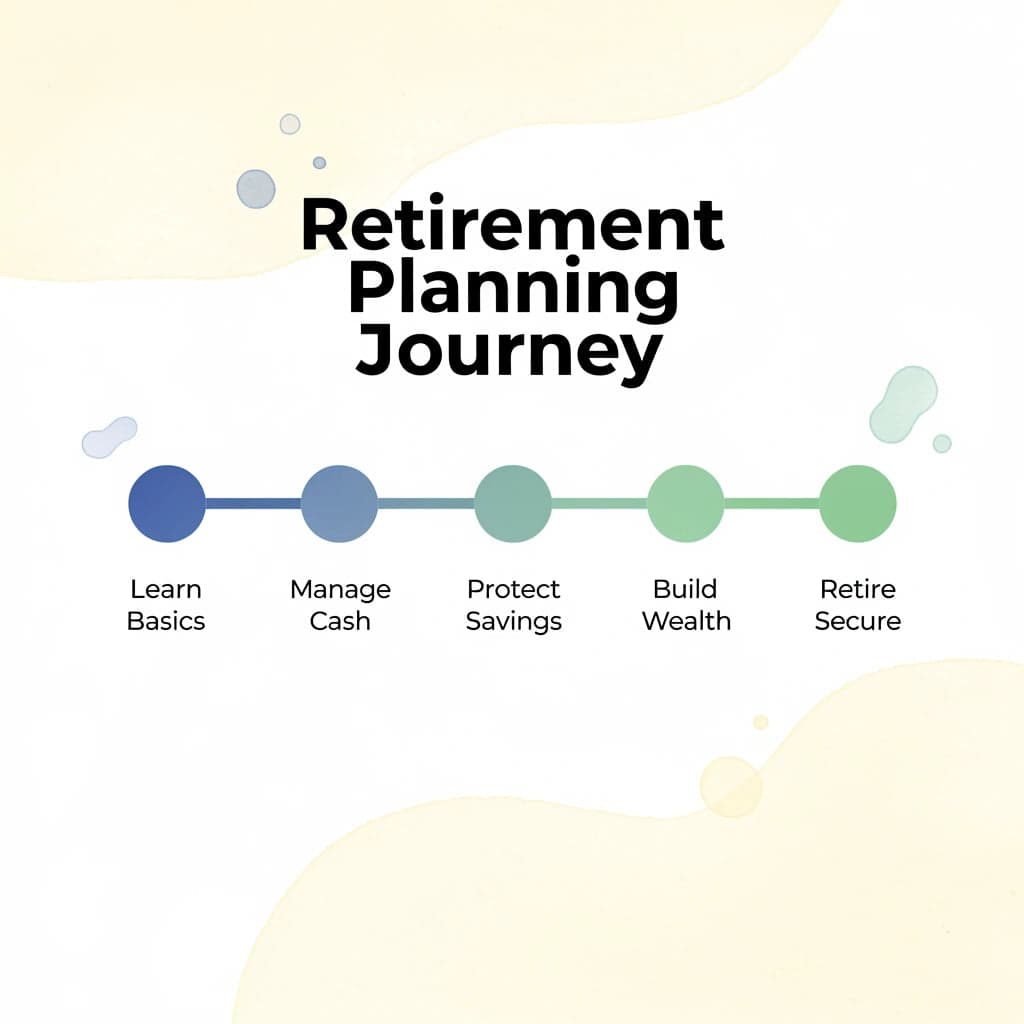
Resources include educational books, free consultations, and a 5-step wealth-building framework. Topics range from managing cash flow and preparing for healthcare costs to understanding investment fundamentals and protecting wealth during retirement. Each piece explains not only what to do but why it matters and how it fits into a larger financial picture.
How can fixed-income earners benefit from experienced financial guidance?
For people on fixed incomes, financial security depends less on earning more than on making better decisions with what they have. This means knowing when to prioritize emergency savings over debt reduction, how to evaluate recurring expenses against long-term goals, and which financial moves warrant immediate attention. These judgments require experience and understanding of how decisions compound over time.
For practical guidance grounded in real experience, retirement financial planning offers a starting point. Our Smart Financial Lifestyle resources, including books, videos, and free consultations, help you build a financial structure that creates lasting security for you and your family.
Kickstart Your Retirement Financial Planning Journey | Subscribe to Our YouTube and Newsletter
Explore Paul Mauro's books and free educational content through Smart Financial Lifestyle to learn practical strategies for managing cash flow, protecting your savings, and making informed financial decisions using principles developed over a 50-year career helping clients build and preserve wealth.

🎯 Key Point: Access to proven financial strategies from decades of real-world experience can accelerate your retirement planning and help you avoid costly mistakes that derail financial goals.
"50 years of helping clients build and preserve wealth has taught us that the right strategies, applied consistently, make all the difference in retirement success." — Smart Financial Lifestyle
💡 Tip: Start with the free educational content to get a solid foundation in cash flow management before diving into more advanced wealth preservation techniques — this step-by-step approach ensures you build sustainable financial habits.
Related Reading
Early Retirement Strategies
Best Investment For Retirement Income
Are Index Funds Good For Retirement
Long-Term Stock Investments
How To Stop Living Paycheck To Paycheck
How To Invest 1000 Dollars
How Much Money Should I Have Saved By 30
Retirement Planning Mistakes
What Happens If You Run Out Of Money In Retirement
Low Risk Investment Options
Ira Pros And Cons
Retirement Income Strategies
How Much Should I Save Each Month