10 Wealth Building Habits That Matter More Than Income
You watch friends earn twice your salary, yet somehow you're building more wealth. The difference isn't luck or inheritance - it's the daily patterns that shape your financial future far more than any paycheck ever will. Wealth-building habits determine whether you'll achieve financial independence or stay trapped in the paycheck cycle regardless of income level. These specific behaviors separate those who accumulate lasting wealth from those who simply earn and spend.
Strategic planning transforms ordinary financial decisions into powerful wealth creation tools. Smart habits compound over time, creating the financial security and freedom most people work toward but never achieve. Professional guidance helps turn these wealth-building principles into personalized action steps for retirement financial planning.
Table of Contents
The Biggest Wealth Building Mistake Most People Never Notice
How Smart Financial Lifestyle Helps You Build Lasting Wealth
Kickstart Your Retirement Financial Planning Journey | Subscribe to Our YouTube and Newsletter
Summary
Lifestyle inflation prevents wealth accumulation even when income rises substantially. According to FINRA's National Financial Capability Study, 26% of Americans report spending more than they earn, up from approximately 18%-20% in prior years. This pattern cuts across all income brackets because the behavior is psychological, not mathematical. When raises get absorbed into upgraded apartments, newer cars, and expanded subscriptions, the financial breathing room never materializes regardless of salary increases.
High earners often accumulate significant debt despite high incomes. The average U.S. consumer debt load exceeded $104,000 in 2025, according to a Schwab survey. Higher income unlocks higher credit limits, making financing feel frictionless and weakening the discipline to delay gratification. The question shifts from whether you need something to whether you can make the monthly payment, masking the reality of true affordability.
Most non-retirees lack confidence in their progress toward retirement. The Federal Reserve's Survey of Household Economics and Decisionmaking found that only 35% of non-retirees believe their retirement savings plan is on track. Nearly two-thirds don't feel confident about retirement readiness, even during periods of rising wages and strong markets. The planning gap exists because people focus on immediate financial decisions rather than long-term outcomes that feel distant and abstract.
Consistent investing through market cycles separates wealth builders from everyone else. Automated contributions enable dollar-cost averaging, where investments occur at regular intervals regardless of price. This removes the pressure to predict market movements and keeps the focus on long-term accumulation. Vanguard's annual investor research shows that disciplined, long-term investing behavior often drives success more than attempts to time markets or chase performance.
Wealthy families frequently lose wealth across generations due to missing habits, not poor investments. Financial Poise reports that 70% of wealthy families lose their wealth by the second generation and 90% by the third. The next generation inherits assets but not the behavioral patterns that created them. Systems that automate positive financial behavior, like routing raises directly into investment accounts or setting up retirement contributions before paychecks arrive, remove the need for constant willpower and ensure progress continues regardless of motivation levels.
Retirement financial planning translates wealth-building principles into specific, actionable steps tailored to individual situations, accounting for actual income, spending patterns, and long-term goals, rather than relying on generic advice.
Why So Many People Earn More but Build Less Wealth
The disconnect between earning and building wealth comes down to behavior, not income level. Wealth accumulation depends on the gap between what flows in and what flows out. You can double your salary and still end up financially stuck if spending rises proportionally, leaving that gap unchanged.

🎯 Key Point: Your wealth-building potential isn't determined by how much you earn, but by how much you keep and invest from what you earn.
"It's not how much money you make, but how much money you keep, how hard it works for you, and how many generations you keep it for." — Robert Kiyosaki

⚠️ Warning: The biggest trap is lifestyle inflation - when your expenses automatically expand to match every salary increase, leaving you with the same financial stress despite earning significantly more.
What is the lifestyle inflation trap?
When income increases, most people upgrade their living situation almost immediately: a nicer apartment, a newer car, more subscriptions, more frequent vacations. Each choice feels justified. You worked hard for the raise. You deserve to enjoy it.
Why does lifestyle inflation feel invisible?
But these upgrades rarely feel like choices—they feel like natural progressions. Everyone around you at your income level lives this way. The new baseline becomes invisible, and the financial breathing room you expected from earning more never materializes.
How widespread is overspending across income levels?
According to FINRA's National Financial Capability Study, 26% of Americans spend more money than they earn, up from 18%-20% in earlier years. This pattern spans income brackets because it reflects spending behavior rather than mathematical necessity.
The debt access problem
Higher income unlocks higher credit limits. Banks approve larger loans, credit card companies raise limits without asking, and financing options proliferate. Easy access to credit obscures whether you can afford something.
A Schwab survey discussed by Investopedia found that the average U.S. consumer debt load exceeded $104,000 in 2025, including mortgages. When financing feels easy, the discipline to delay gratification weakens. You stop asking whether you need something and start asking whether you can afford the monthly payment.
Why do most people struggle with long-term financial planning?
Most people focus on immediate financial decisions: this month's bills, this year's vacation, this weekend's purchase. Meanwhile, questions that determine wealth—such as "Am I improving my net worth?" or "Will I have enough to retire comfortably?"—get pushed aside because the answers feel distant and difficult to understand.
Many professionals recognize this gap but struggle to close it. Without a clear plan, a higher income creates more opportunities to spend than to build wealth. The Federal Reserve's latest Survey of Household Economics and Decisionmaking found that only 35% of non-retirees believe their retirement savings plan is on track. Nearly two-thirds lack confidence about their retirement progress, even during periods of rising wages and strong markets.
How does proper financial planning bridge the wealth-building gap?
Retirement financial planning transforms wealth-building ideas into actionable steps tailored to individual circumstances. Rather than generic advice about saving or investing, you receive a roadmap accounting for your income, spending patterns, and long-term goals. Our Smart Financial Lifestyle approach helps you outpace lifestyle inflation by establishing sound behaviors before extra money gets absorbed into lifestyle upgrades.
Financial independence isn't determined by how much you earn; it's determined by the behaviors that follow the paycheck. Two people earning identical incomes can end up in vastly different financial positions depending on how they manage their money. One directs raises toward investments and asset accumulation. The other absorbs raises into lifestyle upgrades. After a decade, their net worths tell entirely different stories.
Why is changing wealth-building behavior so challenging?
But knowing this doesn't make it easier to change, because the behaviors that build wealth often require doing the opposite of what feels natural.
What Wealth Building Actually Means
Wealth building is the systematic process of increasing net worth—what you own minus what you owe. This shifts focus from income alone to accumulating productive assets that appreciate or generate returns. Someone earning $80,000 annually while consistently investing may accumulate more wealth than someone earning $250,000 who saves little.

🎯 Key Point: Net worth growth matters more than high income when building long-term wealth. Focus on the gap between what you earn and what you spend.
"Net worth, not income, is the true measure of financial success. It's what you keep and grow, not what you earn." — Financial Planning Principle
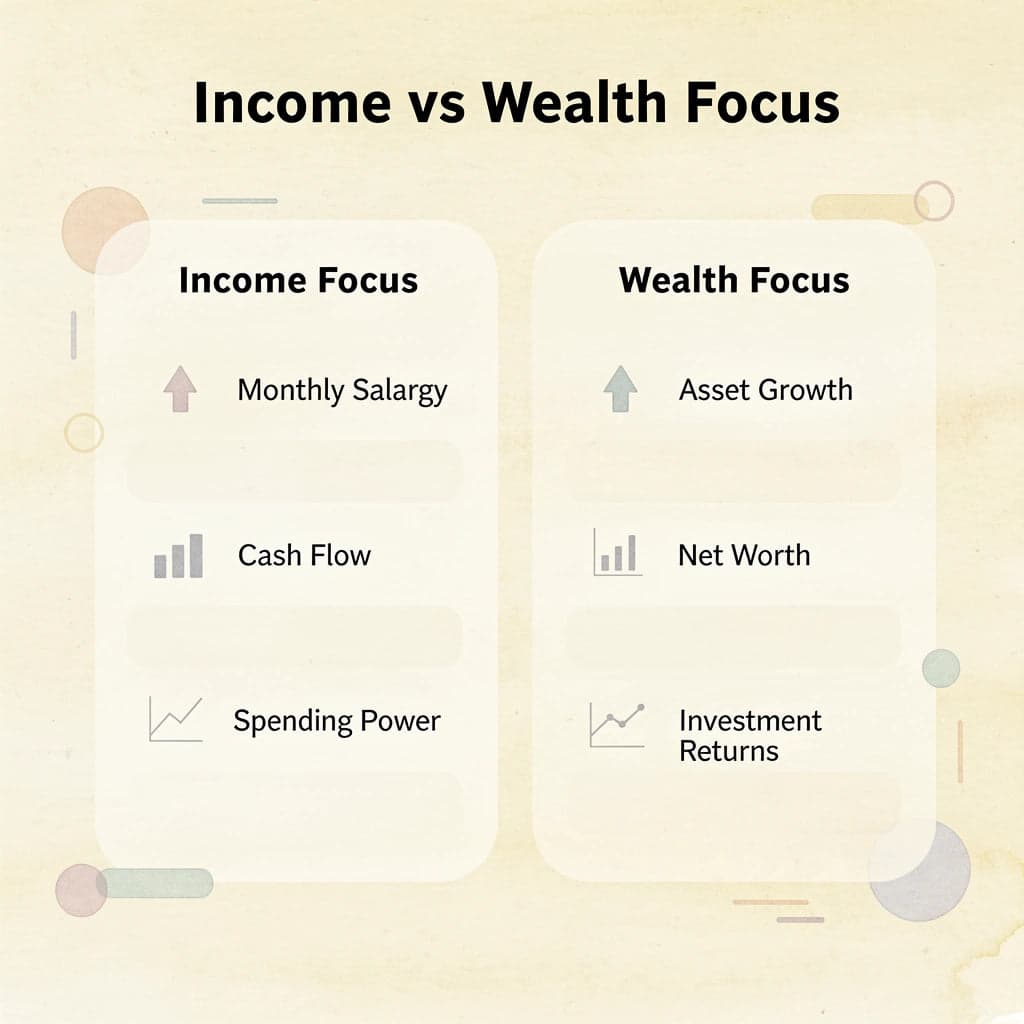
💡 Tip: Calculate your net worth monthly by tracking total assets minus total debts. This simple metric reveals whether you're building real wealth or just maintaining cash flow.
Why do high earners struggle with wealth building?
High earners with strong credentials often recognize they cannot catch up to inherited wealth through salary alone. Even six-figure incomes feel insufficient in the face of the compounding power of established generational assets. Years of corporate work may never close the wealth gap, creating disillusionment about traditional career paths as the primary wealth-building vehicle.
Asset accumulation sits at the center
Wealth is typically created by owning assets that work independently of your labor: retirement accounts, taxable investment portfolios, businesses, or real estate. According to IPX1031, 90% of millionaires built their wealth through real estate. Money invested today generates returns that compound over decades, creating growth beyond salary increases or career advancement.
Financial independence creates flexibility
Wealth creates options that income alone cannot provide. Financial independence occurs when accumulated assets and income sources reduce reliance on employment income, enabling early retirement, career changes, business ventures, reduced working hours, or greater financial security. High net worth individuals sometimes struggle psychologically with the transition from wealth accumulation to its use, even when the maths supports retirement: a steady income feels safer than drawing down assets, regardless of how substantial those assets have become.
Cash flow management fuels everything
Building wealth requires a gap between income and spending. The surplus becomes fuel for investing, saving, and asset accumulation. People who spend all they earn have limited chances to build wealth, while those who redirect surplus funds toward productive assets create the foundation for long-term financial growth. This is why successful investors often focus less on finding extraordinary investments and more on consistent investing and long-term commitment.
Knowing what wealth building means doesn't guarantee you'll do it.
Related Reading
Why Is Investing A More Powerful Tool To Build Long-term Wealth Than Saving?
How To Build Wealth In Your 30s
Personal Finance Investing
10 Wealth Building Habits That Matter More Than Income
Building wealth depends far less on how much money you make than on what you consistently do with it. A surgeon making $400,000 who spends $395,000 builds wealth more slowly than a teacher earning $65,000 who saves $15,000 annually.

🎯 Key Point: Your income level doesn't determine your wealth-building success — your consistent financial habits do.
"It's not how much money you make, but how much money you keep, how hard it works for you, and how many generations you keep it for." — Robert Kiyosaki

These ten habits separate people who build lasting wealth from those who remain financially dependent regardless of salary.
💡 Tip: Focus on increasing your savings rate rather than just increasing your income — the habits you build will compound over time.

1. Spend Less Than You Earn
Creating a gap between income and expenses is the foundation of building wealth.
Without extra money left over, there is nothing to invest. Without investing, wealth creation becomes nearly impossible. This principle applies whether someone earns $50,000 or $500,000 annually.
Why does the savings rate matter more than income level?
The gap between what you earn and what you spend matters more than how much money you make. Saving 15% of your income consistently, even if modest, can grow into substantial wealth over many years. A 2% savings rate on high earnings produces far less wealth, despite initially appearing impressive.
How do spending patterns affect wealth-building progress?
Many people focus on earning more money while ignoring their spending. This creates a situation in which income rises, but wealth does not. The extra money goes into retirement accounts, emergency savings, and investment portfolios that eventually generate passive income.
2. Automate Saving and Investing
Relying on motivation to save and invest consistently fails: motivation changes, unexpected expenses arise, and manual decisions get delayed, especially during market uncertainty.
Automation removes the decision entirely. Money moves into retirement accounts, brokerage accounts, or savings vehicles before it can be spent, creating consistency regardless of mood, market conditions, or competing priorities.
Automated contributions enable dollar-cost averaging, where investments occur at regular intervals regardless of price. Over time, this reduces the impact of market timing and keeps focus on building savings rather than prediction.
3. Invest Consistently Through Market Cycles
Investing when markets are strong feels comfortable. Investing when markets are weak feels scary. This is where people who build wealth separate themselves from others.
Market downturns create fear. News becomes negative. Portfolios decline. The urge to stop adding money, move to cash, or wait for conditions to improve costs you money.
Consistent investing means buying assets when markets are both high and low, removing the pressure to predict market movements and keeping your focus on building wealth over time. Investors who stay committed through multiple cycles benefit most from the recovery and growth that follow periods of uncertainty.
4. Prioritize Long-Term Thinking
Most financial mistakes happen because what you want now outweighs what you want in the future. Buying something expensive feels good today, while putting more money toward retirement provides security years from now. The immediate desire is powerful.
Building wealth rewards patience. Successful investors make choices based on where they want to be in twenty or thirty years, not next month.
How does understanding opportunity cost support wealth building?
This does not mean avoiding enjoyment entirely. It means understanding the cost of current spending in terms of future wealth: every dollar spent today cannot grow over time.
Long-term thinking helps investors evaluate whether current choices support or undermine financial independence. The ability to consistently choose future benefits over immediate pleasure is one of the most powerful wealth-building habits.
5. Avoid Lifestyle Inflation
As income increases, spending typically increases alongside it. This phenomenon, known as lifestyle inflation, is one of the biggest obstacles to wealth accumulation: a promotion leads to a more expensive home, a raise to a luxury vehicle, and higher earnings create pressure to upgrade nearly every aspect of life.
The problem isn't these decisions themselves, but when spending absorbs most or all of the additional income.
How do wealth builders handle income increases differently?
People who build real wealth direct a meaningful portion of raises, bonuses, and income growth toward investments rather than lifestyle upgrades, allowing savings rates to rise with income.
Over time, the gap between earning and spending becomes a defining difference between wealth builders and high earners who remain financially dependent on their next paycheck. Maintaining spending discipline during income growth creates compounding advantages that last for decades.
6. Use Tax-Advantaged Accounts Strategically
Taxes are among the biggest expenses many investors face over their lifetimes. Successful wealth builders pay attention not only to what they invest in but also to where they keep those investments. Tax-advantaged accounts like 401(k)s, IRAs, Roth IRAs, and Health Savings Accounts offer significant benefits over time.
The best strategy depends on your income, tax bracket, retirement goals, and available employer plans. Tax-advantaged accounts allow more of each dollar you invest to grow without annual tax erosion, creating a significant long-term advantage.
7. Focus on Asset Accumulation
Wealth is built through ownership, not consumption. Luxury cars, designer wardrobes, and expensive vacations show that someone has money, but they don't build long-term net worth.
Wealth builders focus on assets that grow in value or generate income: retirement accounts, investment portfolios, businesses, and income-producing real estate. The more productive assets a person owns, the less dependent they are on income from their job.
This doesn't mean every purchase must be an investment, only that building assets should take priority over excessive spending. Over time, asset income can replace work income, enabling financial independence.
8. Continuously Improve Financial Knowledge
Financial education creates a unique form of compounding. Knowledge you gain today influences hundreds of future financial decisions: better investing improves portfolio management, greater tax knowledge increases after-tax returns, and improved retirement planning leads to more effective long-term strategies.
Financial education isn't about chasing complex strategies or constantly reacting to market news. It's about developing a deeper understanding of the principles that drive wealth accumulation. Better decisions produce better outcomes over time.
How does continuous learning adapt to challenging economic environments?
According to easyMoney, continuous financial education is essential for building wealth during economic downturns. Adapting your money strategies based on new knowledge compounds advantages over time.
9. Protect Wealth From Major Mistakes
Building wealth requires both accumulation and protection.
Many investors undo years of progress through avoidable mistakes: taking on excessively high-interest debt, speculating with long-term funds, making emotional investment decisions amid volatility, or maintaining inadequate emergency reserves.
Avoiding major mistakes often has a greater impact on long-term financial success than finding extraordinary investments. A single poor decision can erase years of disciplined saving.
Substantial wealth comes from combining consistent accumulation with careful risk management.
10. Review and Adjust Your Plan Regularly
Building wealth takes time and persistence. Jobs change, tax laws evolve, families grow, retirement goals shift, and markets fluctuate. Your financial plans should adapt accordingly when your life does.
How often should you review your financial plan?
This does not require constant monitoring or daily adjustments. Excessive tinkering can be counterproductive. However, periodic reviews ensure that investment allocations, savings rates, retirement goals, and tax strategies remain aligned with current objectives.
For many people over 50, financial planning shifts from building wealth to protecting, distributing, and leaving a legacy. Strategies that worked during the wealth-building phase may need adjustment as retirement approaches.
What resources can help with financial transitions?
Platforms like Smart Financial Lifestyle provide educational resources and guidance to help navigate these transitions. Our retirement financial planning resources ensure that long-term strategies remain appropriate as life circumstances change.
What really builds lasting wealth?
Most people believe wealth is built through extraordinary income, market timing, or a single breakthrough investment. In reality, wealth usually results from ordinary behaviors repeated consistently over long periods. Those who achieve financial independence are often not the highest earners, but those who consistently practice habits that convert income into lasting wealth.
Yet even when people understand these habits, one mistake undermines everything else.
The Biggest Wealth Building Mistake Most People Never Notice
The biggest mistake isn't missing a hot stock tip or buying property in the wrong neighborhood. It's believing that wealth comes from a few brilliant moves rather than from what you do every month for decades.
🎯 Key Point: The most successful wealth builders understand that consistency beats brilliance every time.

This creates a dangerous illusion. Someone recalls the mutual fund that doubled in five years but forgets the automatic contributions made every paycheck. They remember refinancing at the perfect rate but overlook the spending discipline that kept their debt manageable. The memorable moments get credit. The invisible habits do the real work.
"The memorable moments get credit. The invisible habits do the work."

⚠️ Warning: Focusing on dramatic investment wins while ignoring daily financial habits is the fastest way to sabotage long-term wealth building.
Why consistency beats intensity
Building wealth is less like a fast race and more like long-distance running. A person who invests $400 each month for thirty years will often build more wealth than someone who makes sporadic $5,000 contributions. Compounding rewards time in the market, not perfect timing.
According to Financial Poise, 70% of wealthy families lose their wealth by the second generation, and 90% by the third. The next generation inherits assets but not the behavioral patterns that created them.
How do systems create automatic wealth building?
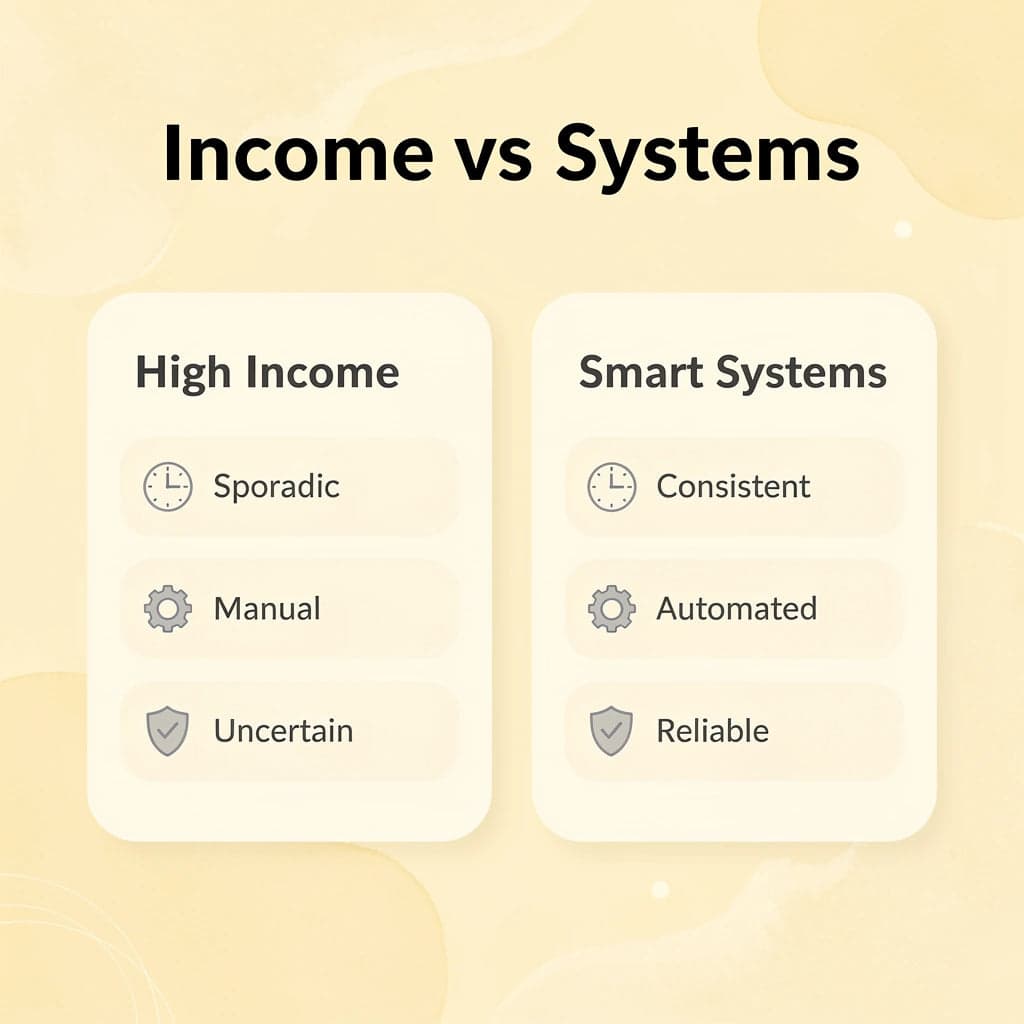
This is where systems matter more than intentions. Successful people who build wealth design their financial lives so positive behavior happens automatically: setting up retirement contributions before paychecks arrive, routing raises into investment accounts, and building spending guardrails that prevent lifestyle inflation. These strategies eliminate the need for constant willpower.
Over time, the system does the heavy lifting. Progress occurs whether motivation is high or low, whether markets feel optimistic or frightening. The portfolio grows because contributions continue, and the retirement account compounds because withdrawals don't happen.
What ordinary decisions create extraordinary wealth?
Wealth isn't built through extraordinary moments but through ordinary decisions that repeat consistently: the monthly transfer, the automatic rebalance, the choice to stay invested when headlines scream panic. Those actions generate outcomes worth living with for decades.
Related Reading
How To Grow Your Money
How to Stop Living Paycheck to Paycheck
How Much Money Should I Have Saved by 30
How to Build Your Own Wealth-Building System
A wealth-building system is a set of decisions that repeat automatically, directing income toward assets before discretionary spending consumes it. It removes the need for constant willpower, market timing, or motivational momentum. Wealth accumulates whether you feel inspired or not.

Most people make isolated financial decisions when prompted by life events, tax deadlines, or market headlines. A bonus sits in checking. A raise gets absorbed into lifestyle adjustments. Retirement contributions happen sporadically. This unsystematic behavior produces unsystematic results.
Anchor Your System to Savings Rate
Your savings rate determines how much money goes into building wealth. If you save 5% of your income, you spend 95%. If you save 20%, you live on 80%. The difference compounds significantly over time. According to Fidelity's retirement analysis, saving about 15% of your income during your working years helps many people prepare for retirement, though individual circumstances vary.
The first question is not what to invest in, but how much of your income you allocate toward future goals rather than spending it now. If the answer is small, increasing your savings rate will have a bigger impact on your long-term success than picking better investments.
Why does behavioral consistency matter more than timing?
Being consistent in your behavior matters more than doing something great once in a while. Investors who invest only when they feel good about the market often miss opportunities to buy when prices are low.
According to Vanguard's annual investor research, sticking to a long-term investing plan and staying disciplined outperform market timing or chasing top performers. The system should ensure you invest on a regular schedule regardless of news, market sentiment, or motivation.
How does automation remove decision fatigue from investing?
Automation removes decision-making from the moment. Retirement accounts can be funded through payroll deduction, and brokerage accounts can be linked to checking accounts with scheduled transfers. Our Smart Financial Lifestyle approach automates these processes, ensuring your retirement financial planning stays on track without constant manual effort.
This ensures investing happens before spending decisions are made, not by limiting freedom, but by designing the easiest path to align with long-term goals rather than short-term impulses.
Why should you focus on one constraint instead of everything?
Many people try to improve everything at once. A better approach is to identify the single thing holding back progress. For one person, the problem might be insufficient savings. For another, high-interest debt consumes their cash flow. Someone else might save adequately but invest poorly, letting cash accumulate without growth. Others might have sound money habits but lack clarity on retirement goals or tax strategy.
How do you identify which habit creates the greatest improvement?
The goal is to find the habit that will make the biggest improvement if you work on it. If you are not saving much money, focus on that. If high-interest debt is consuming your income, prioritize paying it down. If cash is accumulating without being invested, focus on putting that money to work. If you are uncertain about your retirement goals, focus on planning. Our Smart Financial Lifestyle approach helps by treating wealth building as a system rather than separate choices, making the process less stressful.
But even the strongest system needs something most people overlook until it is too late.
How Smart Financial Lifestyle Helps You Build Lasting Wealth
Building lasting wealth requires a foundation that most people underestimate: education that connects the pieces. A smart financial lifestyle means understanding how compound interest, risk management, and strategic planning work together to create sustainable wealth over time. The difference between those who build generational wealth and those who struggle financially often comes down to financial literacy and the ability to see the bigger picture.

🎯 Key Point: Financial education is the multiplier that turns good habits into wealth-building systems. Without understanding the why behind financial decisions, even high earners can struggle to build lasting wealth.
"Financial literacy is not just about knowing how to balance a checkbook—it's about understanding how money works to make money work for you." — Financial Planning Association

💡 Tip: Start with the fundamentals: understand compound growth, learn about asset allocation, and master the art of delayed gratification. These three pillars form the foundation of every successful wealth-building strategy.
Why does integrated financial knowledge matter more than scattered tactics?
Not school-style education, but understanding how tax strategy affects investment returns, how choosing the right retirement account builds long-term wealth, and how small decisions compound into significant results over time. Most investors learn individual tactics without seeing how they work together as part of one complete plan.
What causes people to feel stuck despite consuming financial content?
This gap explains why many people feel stuck despite reading extensive financial content. They understand Roth conversions, tax-loss harvesting, and asset allocation. But when deciding which actions matter most for their situation, which to prioritize, and how each choice affects the others, they struggle.
Why isolated knowledge creates decision paralysis
Financial decisions rarely happen in isolation. Choosing between traditional and Roth contributions requires estimating your future tax bracket, planning retirement income, and considering what happens to your money after death. Deciding when to claim Social Security involves assessing longevity, spousal benefits, and tax implications for other retirement income. Determining how to allocate investments across accounts depends on your time horizon, risk tolerance, income needs, and tax-efficient account structure.
How do contribution limits affect decision-making?
According to SageMint Wealth, investors face yearly contribution choices, including the $23,000 limit for 401(k) plans in 2025. Whether to maximize contributions depends on current tax rates, future income projections, and alternative uses for that money. The limit itself provides no guidance; your situation determines whether maximizing contributions makes sense or whether other priorities should take precedence.
What happens when complexity leads to poor choices?
Many people deal with this complexity by either avoiding decisions or making reactive choices based on urgent information. Avoiding decisions means missing opportunities that compound over time. Reactive decisions prioritize short-term comfort over long-term outcomes, leading to inconsistent behaviors that undermine wealth accumulation.
How does practitioner experience bridge the knowledge gap?
Smart Financial Lifestyle distills five decades of wealth management experience into practical frameworks, showing how financial decisions interconnect. Rather than promoting products or predicting markets, it helps readers develop judgment to navigate their own situations with greater confidence.
Successful wealth building comes from applying consistent principles across changing circumstances rather than finding perfect tactics for every situation. Markets shift, tax laws change, and personal situations evolve. Investors who build lasting wealth adapt strategies while maintaining core disciplines around saving, investing, tax management, and risk control.
What insights come from managing billions in assets?
Through books, free YouTube content, and educational resources, readers gain insights from managing over $1 billion in client assets. This experience provides pattern recognition most investors lack: understanding how different strategies perform across market cycles, how tax decisions compound over decades, and how behavioral mistakes undermine sound plans.
But knowledge alone never builds wealth without one final step; most people delay far too long.
Related Reading
Are Index Funds Good For Retirement
Low-Risk Investment Options
What Happens If You Run Out Of Money In Retirement
How To Invest 1000 Dollars
Best Investment For Retirement Income
Retirement Income Strategies
Early Retirement Strategies
How Much Should I Save Each Month
Retirement Planning Mistakes
Ira Pros And Cons
How To Stop Living Paycheck To Paycheck
How Much Money Should I Have Saved By 30
Long-Term Stock Investments
Kickstart Your Retirement Financial Planning Journey | Subscribe to Our YouTube and Newsletter
That final step is starting. You already understand that wealth builds through consistent behavior, not income level, and you recognize the systems that matter. What separates knowledge from results is deciding that today matters more than waiting for the perfect moment.

💡 Tip: Want to build wealth more systematically? Explore Paul Mauro's books and free YouTube content through Smart Financial Lifestyle and learn the same principles that helped guide more than $1 billion in assets under management. You'll gain clarity on which wealth-building habits deserve your attention now and how they fit into a long-term financial strategy. Subscribe to the weekly newsletter for insights that cut through conflicting advice and show you what actually works across market cycles and tax environments.
🔑 Takeaway: Your financial future depends less on what you earn next year and more on what you automate this week. Families who build lasting wealth don't wait for certainty—they start with clarity, build systems that run without constant attention, and adjust as circumstances change.