8 Types of Savings Plans and How to Choose the Right One
Building wealth requires consistent habits, and choosing the right savings plan forms the foundation of those efforts. Most people face confusion when comparing high-yield savings accounts, certificates of deposit, money market accounts, and retirement accounts like 401(k)s and IRAs. Understanding each option's unique benefits helps align savings strategies with specific financial goals, timelines, and risk tolerance levels. The key lies in matching each savings vehicle to its intended purpose within a broader financial framework.
Smart savers recognize that different accounts serve different functions in wealth accumulation. Emergency funds require immediate access, while long-term growth benefits from tax-advantaged accounts that compound over decades. Concepts like liquidity, tax benefits, and compound interest become practical tools rather than abstract ideas when applied correctly. Those ready to transform their approach to savings can benefit from expert guidance on retirement financial planning.
Table of Contents
Why Most People Struggle to Build Savings Consistently
The 8 Main Types of Savings Plans
How Different Savings Plans Support Different Financial Goals
Common Savings Mistakes That Slow Wealth Building
How to Build a Savings Strategy That Works Long Term
How Smart Financial Lifestyle Helps You Build Wealth Beyond Basic Savings
Kickstart Your Retirement Financial Planning Journey | Subscribe to Our YouTube and Newsletter
Summary
Most people treat saving as an afterthought rather than a structured system, which explains why progress stalls even when income rises. Research from TIAA Institute reveals that individuals with lower financial literacy are four times more likely to struggle to make ends meet, demonstrating that understanding money mechanics matters more than earning power alone. Without deliberate systems that assign specific purposes to different accounts, funds flow toward immediate lifestyle upgrades instead of long-term security.
Emergency funds and retirement accounts cannot coexist in the same savings vehicle without one goal suffering. Emergency money requires immediate liquidity and principal protection, while retirement savings need decades of growth potential to outpace inflation. Using a single account for incompatible timelines creates inefficiency that compounds over years, leaving families either unable to access funds when needed or watching purchasing power erode in overly conservative holdings.
Employer retirement matches represent immediate returns without market risk, yet billions in matching contributions go unclaimed annually. Someone earning $60,000 who contributes only 3% instead of the 6% needed for a full 50% match leaves approximately $900 per year on the table, which compounds to roughly $36,900 in lost wealth over 20 years at an average 7% return. Failing to capture the full match functions identically to accepting a voluntary pay cut.
Cash holdings create psychological comfort but impose steep long-term costs through inflation erosion. The Federal Reserve's 2024 household survey found that 63% of adults maintain emergency funds covering three months of expenses, yet many keep far more in low-yield accounts than necessary. When savings earn 0.25% while inflation runs at 3.8%, the account grows nominally but loses real purchasing power, which is particularly devastating for money that won't be needed for a decade or more.
Early retirement account withdrawals destroy more wealth than the immediate amount suggests. A 50-year-old withdrawing $10,000 from a 401(k) nets roughly $6,500 after taxes and penalties, but that $10,000 left invested at 7% annual returns would grow to approximately $38,700 by age 70. The true cost is the future purchasing power permanently removed from the compounding equation, not just the dollars that left the account.
Separating savings goals by timeline prevents the confusion that undermines long-term progress. Short-term needs (0-3 years) belong in liquid accounts, medium-term goals (3-10 years) require stable growth vehicles, and long-term objectives (10+ years) demand investment accounts that can weather volatility. Retirement financial planning addresses this by matching specific savings vehicles to distinct family objectives across generations, then adjusting allocations as circumstances evolve rather than forcing incompatible goals into a single account structure.
Why Most People Struggle to Build Savings Consistently
The problem isn't income. Its structure. Most people treat saving as something that happens after spending, which means it rarely happens. Without a deliberate system that assigns specific purposes to different accounts, money flows toward immediate needs and lifestyle upgrades instead of long-term security.

🎯 Key Point: The biggest barrier to consistent saving isn't how much you earn—it's the lack of intentional money management systems that prioritize future security over present desires.
"78% of Americans live paycheck to paycheck, regardless of income level, because they lack structured saving systems." — Federal Reserve Economic Data, 2023

⚠️ Warning: When saving becomes an afterthought, lifestyle inflation will always consume any extra income before it reaches your emergency fund or retirement accounts.
How does lifestyle inflation sabotage savings progress?
Lifestyle inflation explains much of this: when earnings increase, spending tends to rise proportionally. Without intentional guardrails, it becomes possible to earn significantly more while making no measurable progress toward retirement, emergency funds, or legacy goals. Research from TIAA Institute reveals that those with lower levels of financial literacy are 4 times more likely to have trouble making ends meet, suggesting that understanding how money works matters more than earning it.
Why do people struggle to define their savings goals?
Many people cannot explain what they are saving for. Emergency funds, retirement security, helping grandchildren with education costs, healthcare reserves, and legacy planning require different strategies. These goals blur into a vague feeling of "I should be saving more." Without clarity, savings become reactive: money gets set aside when convenient and withdrawn when something urgent arises.
How does unclear purpose affect savings progress?
It becomes hard to measure progress when your savings lack a clear purpose. Watching your balance grow feels less rewarding without a specific plan for that money. People see the account balance and wonder if they are saving enough, but without specific goals tied to specific life stages, there is no way to know.
The Single Account Trap
Using one account for every savings goal creates inefficiency. An emergency fund requires liquidity and stability, while a retirement account thirty years away needs growth potential that outpaces inflation. Using the same vehicle for both compromises one goal.
Most people make savings choices based on what they know rather than what fits their needs. Understanding all available savings options matters before choosing a path, since each family's situation, risk tolerance, and timeline differ.
The question becomes: which specific savings vehicles align with which life stages and family objectives?
The 8 Main Types of Savings Plans
Different savings plans exist because different financial goals need different tools. A 20-year retirement timeline requires growth potential that an emergency fund cannot afford to chase, while next month's car repair needs accessible money that a locked certificate of deposit cannot provide. Matching the right tool to the right purpose determines whether your money works efficiently or sits misaligned with your needs.

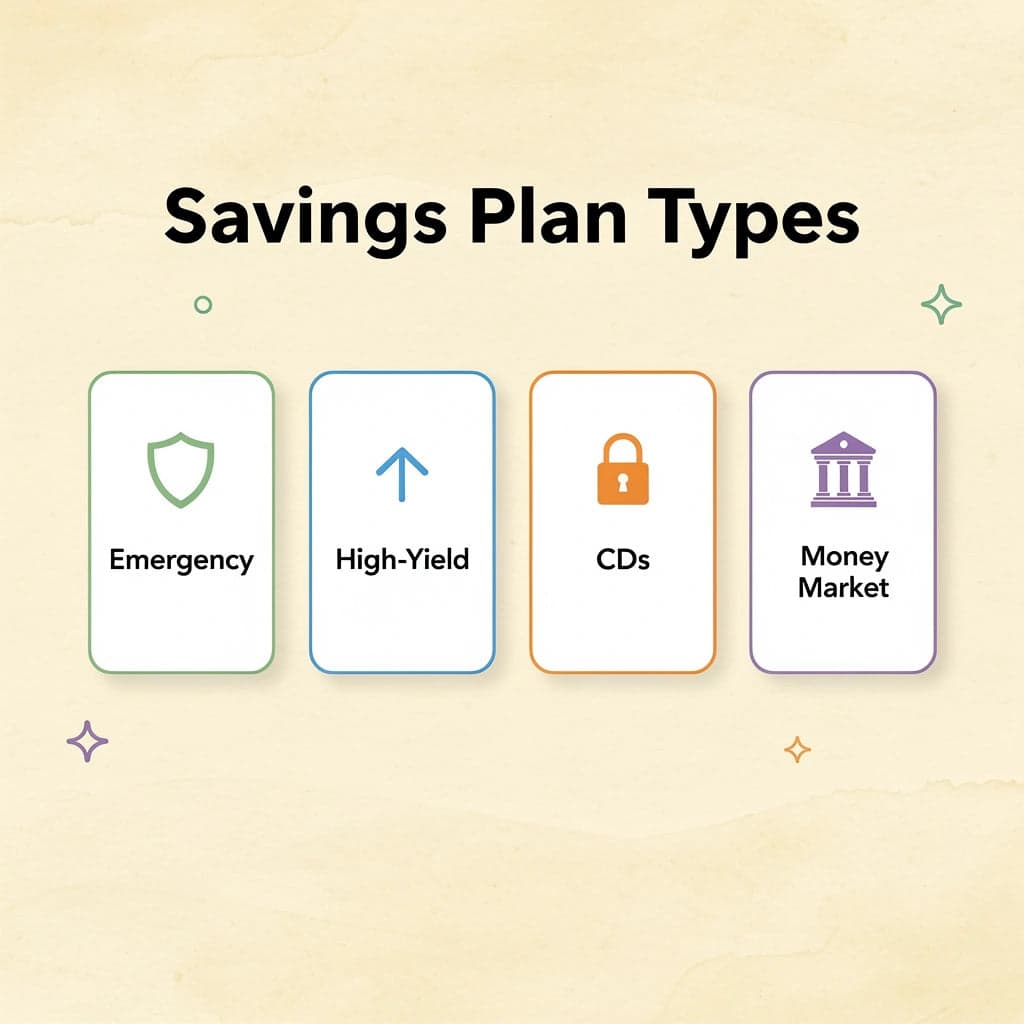
Savings Plan Type | Best For | Access Speed | Growth Potential |
|---|---|---|---|
Emergency Fund | Unexpected expenses | Immediate | Low |
High-Yield Savings | Short-term goals | 1-3 days | Low-Medium |
CDs | Fixed timeline goals | Locked term | Medium |
Money Market | Flexible access + growth | Same day | Low-Medium |
401(k) | Retirement | Age 59½+ | High |
IRA | Retirement flexibility | Age 59½+ | High |
529 Plans | Education expenses | Varies | Medium-High |
HSA | Healthcare costs | Immediate | Medium-High |
🎯 Key Point: The biggest mistake savers make is using a one-size-fits-all approach when different goals require fundamentally different strategies.
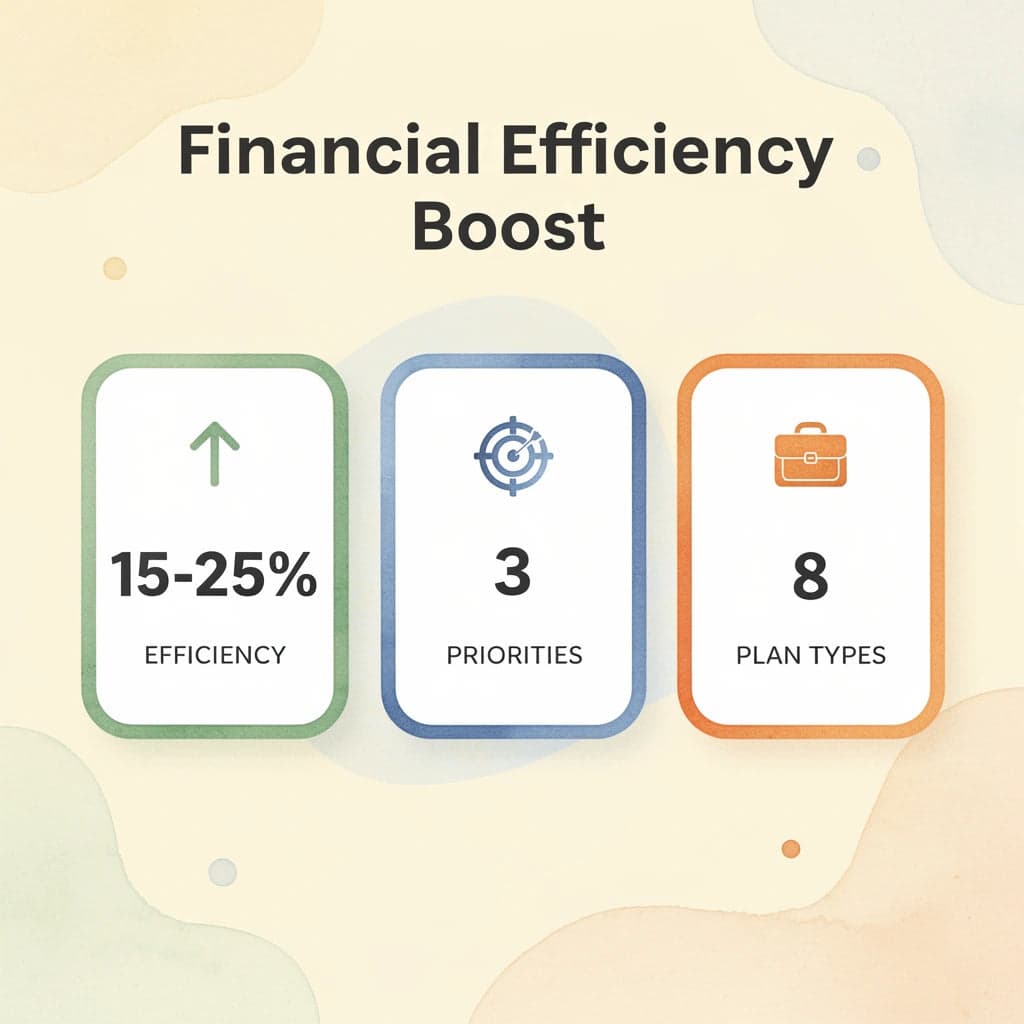
"Proper asset allocation across different savings vehicles can improve your overall financial efficiency by 15-25% compared to keeping everything in basic savings accounts." — Financial Planning Association, 2023
💡 Tip: Start by identifying your top 3 financial priorities and their specific timelines before choosing which savings plan types to prioritize.
1. Traditional Savings Accounts
Traditional savings accounts prioritize safety and accessibility over growth, offering federal deposit insurance through banks and credit unions that protects deposits even if the institution fails. Interest rates typically range from 0.01% to 0.50% annually, offering minimal protection against inflation while allowing immediate withdrawal for unexpected expenses.
These accounts work best for short-term goals requiring frequent access, such as holding money for monthly bills, building savings, or keeping cash while you make larger financial decisions. You sacrifice higher earnings in exchange for guaranteed access to your money without penalties or waiting times.
2. High-Yield Savings Accounts
High-yield savings accounts pay significantly more interest than regular savings accounts. Online banks offer rates between 4% and 5% because they lack physical branches and pass those savings on to customers. Your money remains federally insured and accessible anytime, earning returns that beat inflation.
Emergency funds, down payments on homes, vacation savings, and cash reserves needed within one to three years work well in these accounts. The higher interest compounds over time without adding market risk, making these accounts ideal for families who want their safety net to grow while keeping their money readily available.
3. Money Market Accounts
Money market accounts combine features of savings and checking accounts, offering competitive interest rates alongside cheque-writing and debit card access. They typically require a minimum balance of $1,000 to $10,000 and suit those saving larger amounts.
These accounts suit people who want both earnings and liquidity. If you maintain a large emergency fund and occasionally need to write checks from it, a money market account eliminates the need to transfer money between accounts first.
4. Certificates of Deposit
Certificates of deposit lock your money away for a set period in exchange for a guaranteed interest rate. Terms range from three months to five years, with longer commitments typically earning higher returns. Early withdrawal penalties apply, so CDs make sense only when you know exactly when you'll need the money.
Current top CD rates have exceeded 4% in recent years, making them attractive for known future expenses. If you're saving for a wedding in 18 months or a home renovation scheduled two years out, a CD matching that timeline locks in a predictable return without market volatility.
5. Retirement Savings Plans
Retirement accounts build wealth through special tax benefits. DC plan access drives stronger retirement readiness across generations, according to Vanguard's 2025 Retirement Outlook, because these plans combine employer contributions, tax benefits, and decades of compound growth. Common examples include 401(k) plans, traditional IRAs, and Roth IRAs, each offering different tax treatments depending on whether you want deductions now or tax-free withdrawals later.
How do retirement investments build wealth over time?
These accounts typically invest in stocks, bonds, and mutual funds. A 30-year timeline allows portfolios to recover from market downturns and capture long-term growth. Americans held $49.1 trillion in retirement accounts as of December 2024, according to the Investment Company Institute, reflecting their importance for building financial security beyond Social Security benefits.
Why do tax advantages matter for retirement savings?
The tax advantages matter significantly. Traditional accounts lower your current tax burden and let your money grow tax-deferred until retirement. Roth accounts use after-tax money but allow tax-free withdrawals later, including all investment gains. Your choice depends on whether you expect taxes to be higher now or in retirement.
6. Education Savings Plans
A 529 plan lets your money grow without paying taxes on gains each year. You can then withdraw funds tax-free for qualified education costs, including college tuition, room and board, and private K-12 school expenses. Many states also offer a tax deduction on contributions, providing immediate savings while your money grows.
How does timing work with education savings plans?
Education costs arrive on a predictable schedule. If your grandchild is three years old today, you have 15 years before college bills arrive, allowing investments time to grow through market cycles. Unlike retirement accounts, 529 plans allow you to change beneficiaries, so unused funds can transfer to siblings, cousins, or future grandchildren without penalty.
7. Health Savings Accounts
Health Savings Accounts offer a triple tax advantage: contributions reduce taxable income, investments grow tax-free, and withdrawals for qualified medical expenses are tax-free. You must have a high-deductible health plan to qualify, but HSAs are powerful tools for both current healthcare costs and long-term retirement planning.
How do HSA funds accumulate over time?
Unused money rolls over indefinitely, unlike flexible spending accounts that expire annually. HSA balances accumulate year after year and can be invested like a retirement account. Many people pay for current medical costs with their own money while letting their HSA grow, then use the accumulated funds years later for healthcare costs in retirement.
What happens to HSAs after age 65?
After age 65, HSA withdrawals for non-medical expenses are subject to ordinary income tax, functioning like a traditional IRA. This flexibility makes HSAs valuable for comprehensive retirement income planning.
8. Brokerage Accounts for Long-Term Goals
Taxable brokerage accounts offer complete flexibility with no contribution limits, withdrawal restrictions, or required minimum distributions. You can invest in stocks, bonds, ETFs, mutual funds, or other securities and access your money whenever you want without penalties. The trade-off: investment gains are taxed as capital gains, and annual dividend taxes reduce your net returns compared to tax-advantaged accounts.
When should you consider using brokerage accounts for long-term goals?
These accounts suit goals outside traditional retirement or education timelines: early retirement before age 59½, major purchases like a second home, or building wealth beyond yearly retirement contribution limits. You control timing completely, adjusting strategy as life circumstances change without government-imposed restrictions.
Families pursuing financial independence often rely on brokerage accounts because they provide access to invested assets without waiting until traditional retirement age.
Why One Account Never Covers Everything
The biggest mistake people make is using a single account for multiple conflicting goals. Your emergency fund cannot grow aggressively because you might need it next month. Your retirement savings cannot sit in cash because inflation will erode purchasing power over 30 years. Your child's college fund cannot be locked into a five-year CD because tuition bills arrive on a fixed schedule that may not coincide with the CD's maturity date.
Each goal has different time horizons, risk tolerances, and liquidity requirements. Successful savers deliberately match tools to objectives. Rather than asking where to put money, the better question becomes: what is this specific dollar intended to accomplish, and which tool serves that purpose most efficiently?
How do you match savings plans to your specific situation?
Platforms like Smart Financial Lifestyle help families over 50 map their specific goals across appropriate savings options, recognizing that retirement security, legacy building, and supporting grandchildren each require different strategies. Generic advice fails because your situation depends on details that emerge only through careful analysis of your income, timeline, tax bracket, and family objectives.
Real decisions require understanding how different savings plans work together, which tax advantages matter most for your situation, and how to rebalance as priorities change. The landscape of options exists because one-size-fits-all approaches fail when applied to the complexity of actual family finances.
What comes after understanding your options?
But knowing which savings plans exist only opens the door to a harder question: how do you decide which goals belong in which accounts?
Related Reading
How Different Savings Plans Support Different Financial Goals
Matching savings vehicles to specific goals means understanding that money with different timelines and purposes needs different tools. A dollar you might need tomorrow cannot sit in the same place as a dollar you won't touch for 20 years. The timeline, purpose, and consequences of the wrong choice all shape which account makes sense.

🎯 Key Point: Your emergency fund needs instant access, so it belongs in a high-yield savings account or money market account. Your retirement savings can handle volatility and should aim to grow through 401(k)s or IRAs.
"The biggest mistake people make is putting long-term money in short-term accounts, missing out on decades of potential compound growth." — Financial Planning Association, 2023
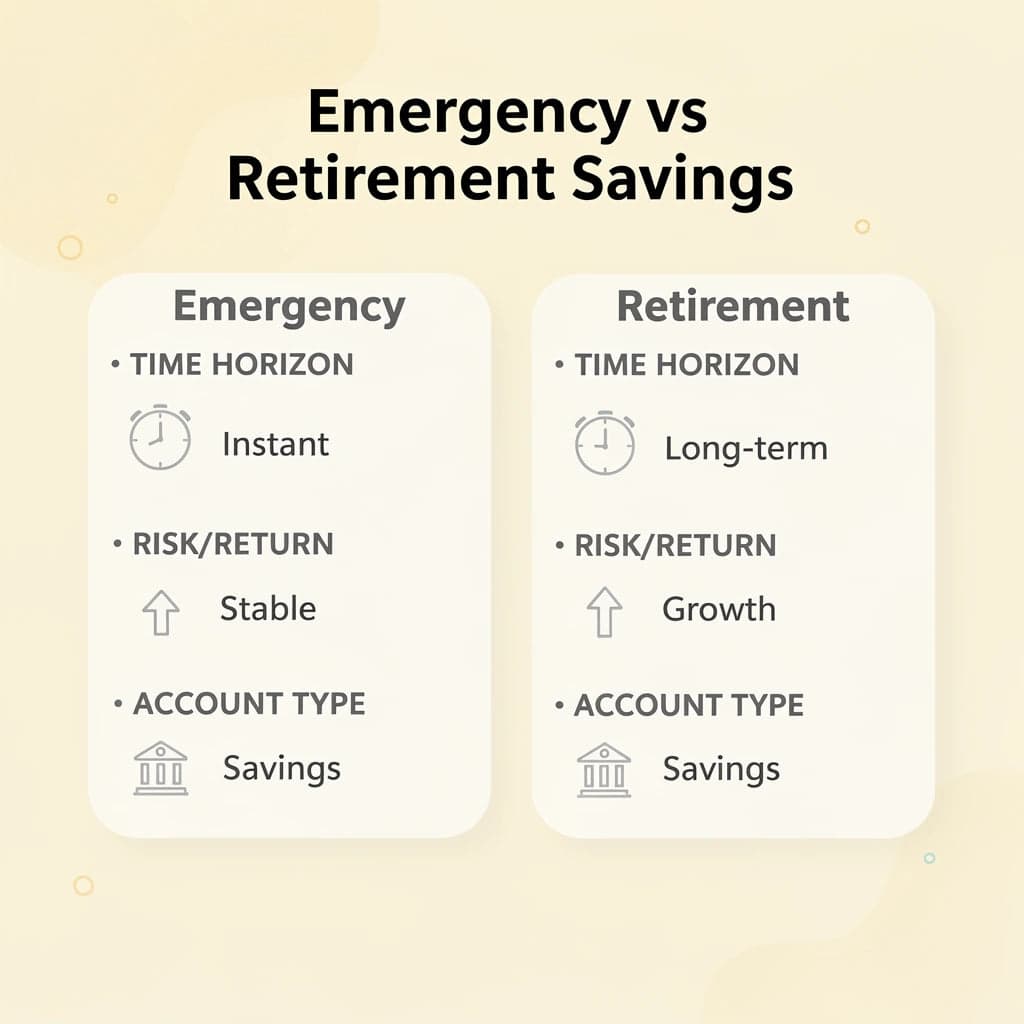
💡 Tip: Match your savings timeline to your account choice. Short-term goals (less than 2 years) need liquidity and stability. Medium-term goals (2-10 years) can handle some risk for better returns. Long-term goals (10+ years) should prioritize growth over safety.
When Emergencies Strike Without Warning
Emergency funds stop financial disasters from becoming life disasters. A car transmission fails, a water heater floods the basement, or a sudden job loss eliminates steady income. These moments don't wait for convenient timing.
Emergency money belongs in accounts that prioritize access over growth: high-yield savings accounts, money market accounts, or traditional savings accounts. You sacrifice higher returns to guarantee funds are available in full when needed. According to NerdWallet, most Americans set financial goals for 2025, yet many keep emergency savings mixed with other funds, creating confusion about what's truly available during a crisis.
When Home Ownership Moves From Dream to Timeline
Saving for a down payment on a home is tricky for many families. The goal feels far enough away to justify risk, yet close enough that a market downturn could erase years of savings. Someone planning to buy within three years faces a different situation than someone saving for retirement in 30 years.
Certificates of deposit, high-yield savings accounts, and money market accounts protect your money while generating returns that beat inflation. The goal isn't maximum growth but ensuring your down payment is available when the right house appears, regardless of stock market performance.
When Retirement Demands Decades of Compounding
Retirement savings operate under different rules. The decades-long timeline accommodates growth-focused investments too risky for short-term goals. Volatility becomes acceptable because time smooths market fluctuations. A 35-year-old contributing to a 401(k) can weather downturns that would harm someone buying a house next year.
How do tax-advantaged accounts accelerate wealth building?
Tax-advantaged accounts like 401(k)s, traditional IRAs, and Roth IRAs compound returns without annual tax erosion. MX research reports that consumers are optimistic about their 2025 financial goals, yet confidence doesn't always translate into an understanding of how retirement accounts build wealth.
The difference between starting at 25 versus 45 isn't 20 years of contributions—it's 20 years of compounding that cannot be recovered later through larger deposits alone.
Why does matching money to the timeline matter?
Real-world financial planning builds a system where each dollar knows its purpose and sits in an account designed for that timeline. Short-term money stays liquid, medium-term money stays stable, and long-term money pursues growth. When those boundaries blur, inefficiency follows.
The family that keeps its emergency fund in a brokerage account risks selling investments at a loss during a crisis. The couple leaving retirement savings in a traditional savings account watches their purchasing power erode year after year.
Understanding where money should go solves only half the problem. The other half is avoiding the mistakes that quietly drain accounts even when the right plans are in place.
Related Reading
How To Grow Your Money
How to Stop Living Paycheck to Paycheck
How Much Money Should I Have Saved by 30
Common Savings Mistakes That Slow Wealth Building
These mistakes build up slowly over years, turning what could have been substantial wealth into something much smaller. The difference between having money to feel safe and constantly worrying about money often comes down to repeated choices that didn't seem important at the time.

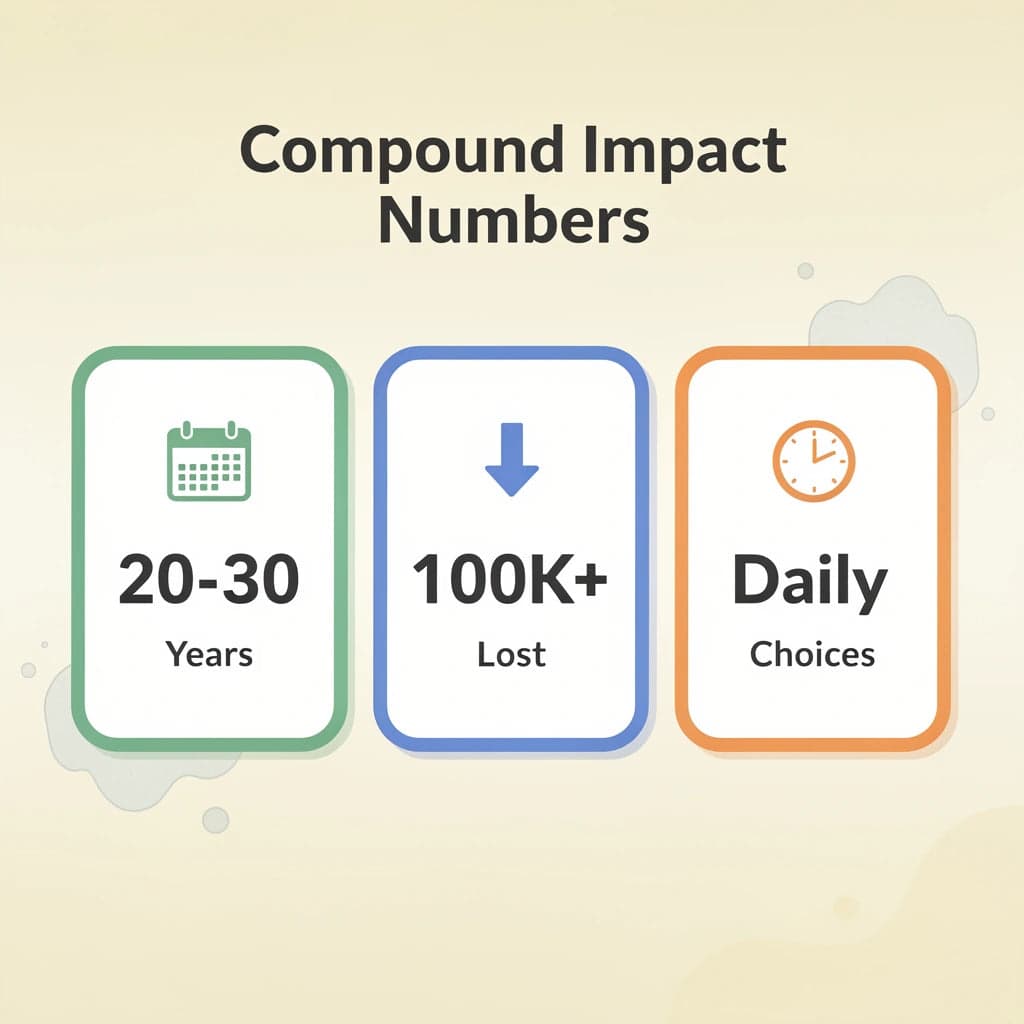
🎯 Key Point: Small financial mistakes compound negatively over time, just like good habits compound positively. The daily choices that seem insignificant today can cost you hundreds of thousands in potential wealth over a 20-30 year period.
⚠️ Warning: Most people don't realize they're making wealth-destroying mistakes until it's too late to easily recover. The earlier you identify and fix these patterns, the more dramatic impact you'll see on your long-term financial security.
What happens when you save money without direction?
Money without a clear plan rarely works well. A dollar saved for retirement in 2045 has completely different needs than a dollar needed for a roof repair next spring. Treating them the same way means at least one goal doesn't receive adequate attention, usually the one furthest away.
Why do single savings accounts undermine long-term goals?
A couple who save $500 per month into a single account face this problem constantly. When the car needs new brakes or property taxes are due, they withdraw from that account. The retirement portion never grows because it is depleted to meet immediate needs. Separate accounts with specific purposes create boundaries that protect long-term goals from short-term pressures.
What makes cash feel deceptively safe?
Cash feels safe because the balance never drops, but this psychological comfort comes with a steep price. According to the National Financial Educators Council, Americans lost close to $1,000 in 2025 due to gaps in financial knowledge, with not understanding how cash holdings lose purchasing power being among the most costly.
How does inflation erode your savings over time?
Someone with $50,000 in a savings account earning 0.25% annual interest sees their balance grow to $50,125 after a year. But if inflation runs at 3.8%, they need $51,900 to maintain the same purchasing power. The account grew in name only but shrank in real terms. For money not needed for a decade or more, this pattern becomes damaging.
What are the immediate costs of early retirement withdrawals?
Retirement accounts offer tax benefits that help you build wealth, but people often waste these benefits by withdrawing money early. Taking $10,000 early to cover an unexpected expense might help you avoid a high-interest loan, but it triggers taxes and penalties, and that money can never compound again.
How much future wealth do early withdrawals actually cost?
A 50-year-old who withdraws $10,000 from a 401(k) for college expenses receives roughly $6,500 after taxes and the 10% penalty. That $10,000 left invested at 7% annual returns would grow to approximately $38,700 by age 70.
The real cost is $38,700 in future purchasing power, not the $10,000 withdrawn. For families over 50 balancing immediate needs with retirement security and multi-generational legacies, these tradeoffs force difficult choices between helping now and securing the future.
Platforms like Smart Financial Lifestyle help families navigate these scenarios through educational resources and personalized consultations that map long-term withdrawal impacts, showing how different choices affect both retirement security and legacy-building capacity.
What happens when you ignore employer matching
An employer retirement match is an immediate return on investment with no market risk. Contribute $100, receive an additional $50 or $100 from the employer, depending on the match formula—a 50% to 100% return before the money gets invested. The Consumer Financial Protection Bureau reports that consumers spend $17 billion annually on overdraft and non-sufficient funds fees, yet many fail to contribute enough to capture their full employer match. They're paying bank fees while leaving free money on the table.
How much wealth do you lose by missing the match?
Someone earning $60,000 with a 50% match on the first 6% of contributions who contributes only 3% leaves $900 of employer money unclaimed each year. Over 20 years, assuming an average 7% return, that missed match represents approximately $36,900 in lost wealth. Failing to contribute enough for the full match is equivalent to accepting a pay cut.
How to Build a Savings Strategy That Works Long Term
A savings strategy works over a long time when it removes the need to make constant decisions. Create a system that directs money toward the right goals automatically and without friction. Over decades, these systems often matter more than any single large contribution or windfall.
🎯 Key Point: The most successful savers build systems that work on autopilot, eliminating decision fatigue and ensuring consistency over time.

⚡ Pro Tip: Set up automatic transfers immediately after payday so you never have the chance to spend money earmarked for savings.
"The best savings strategy is the one you don't have to think about. Automation removes human error and emotional spending decisions from the equation." — Financial Planning Research, 2023
Manual Savings | Automated Savings |
|---|---|
Requires constant decisions | Set once, runs forever |
Vulnerable to mood and spending urges | Protected from emotional decisions |
Inconsistent timing and amounts | Predictable and reliable |
High mental energy required | Zero ongoing effort |
Start with an Emergency Fund
Build a financial buffer before focusing on retirement accounts or investments. Job loss, medical bills, home repairs, and vehicle breakdowns can force people into high-interest debt without liquid savings, derailing long-term progress. A common goal is three to six months of essential living expenses in a high-yield savings account. According to the Federal Reserve's 2024 Economic Well-Being of U.S. Households report, only 63 percent of adults have emergency funds covering three months of expenses, leaving more than a third vulnerable to financial disruption.
Capture the Full Employer Match
If your employer offers a retirement plan match, contribute enough to get the full amount. This is one of the best opportunities available because it effectively increases your savings without requiring extra work or investment performance. Failing to get the full match means leaving part of your compensation on the table. Prioritize this before putting money elsewhere.
Address High-Interest Debt Before Aggressive Investing
If you're carrying high-interest debt, prioritize paying it down before investing aggressively. Earning 5% in a savings account while paying 20% interest on credit card debt undermines your financial progress. Reducing high-interest debt frees up cash flow for future savings goals and improves your long-term financial flexibility.
Separate Goals by Timeline
Divide goals into three categories: short-term (0–3 years) for emergency funds, vacations, and upcoming purchases; medium-term (3–10 years) for home down payments, education expenses, or business funding; and long-term (10+ years) for retirement, financial independence, and legacy planning. Match each category with savings and investment options suited to its timeline and risk level. This separation prevents retirement funds and vacation savings from competing for attention and purpose in the same account.
Automate Contributions and Review Annually
Automation ensures regular savings without monthly decision-making. Set up automatic transfers to savings accounts, retirement contributions, scheduled investment deposits, and recurring contributions to education or healthcare accounts. As your income, expenses, family size, and priorities evolve, review your savings plan annually to adjust contribution levels, reevaluate goals, update investment allocations, and account for major life changes. This keeps your savings strategy aligned with your current circumstances.
The question is whether your system is designed for your specific life stage, family goals, and the legacy you want to leave behind.
How Smart Financial Lifestyle Helps You Build Wealth Beyond Basic Savings
Understanding different types of savings plans matters less than putting them together into a clear financial strategy. Most people get stuck not because they lack intelligence, but because they lack a framework built on real-world experience rather than theory.
🎯 Key Point: The difference between wealth builders and basic savers isn't intelligence—it's having a systematic approach that connects all your financial tools into one cohesive strategy.

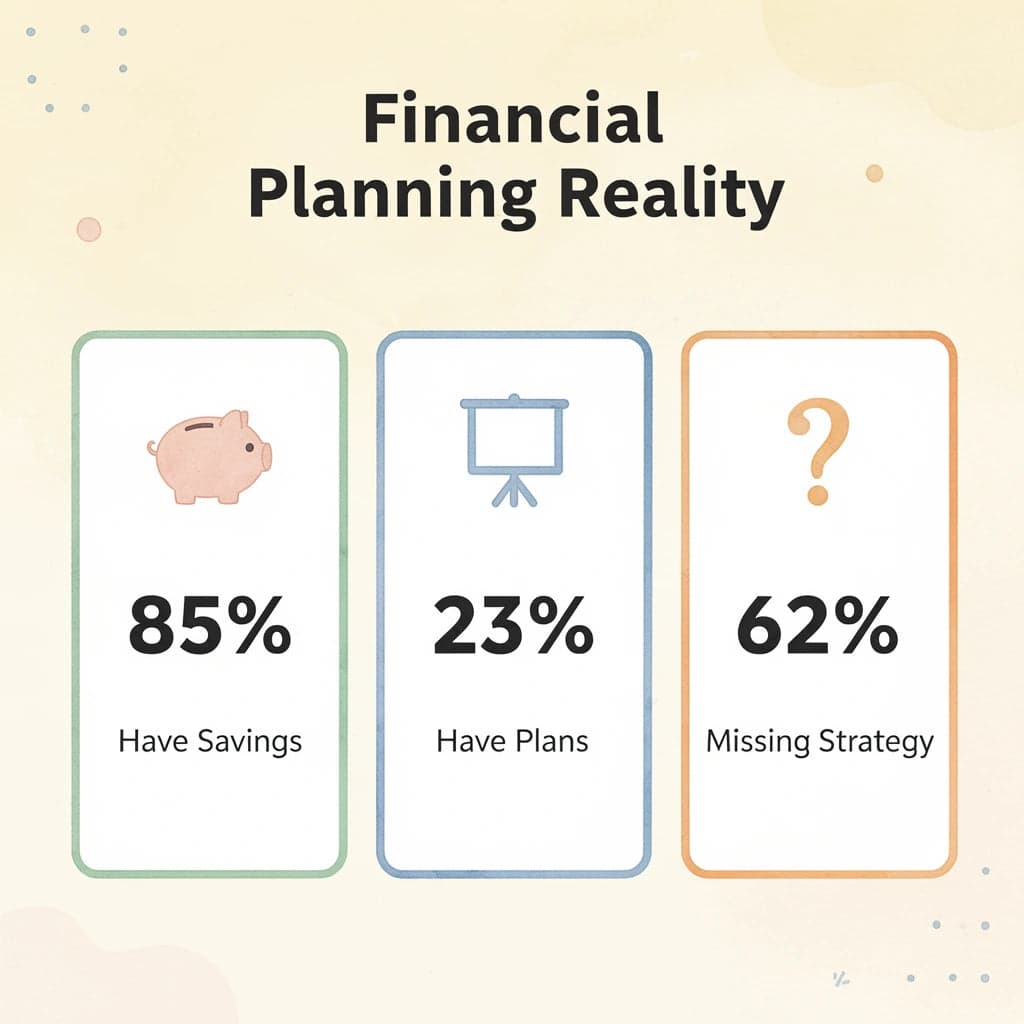
"85% of Americans have some form of savings account, but only 23% have a comprehensive financial plan that integrates multiple wealth-building strategies." — Federal Reserve Survey of Consumer Finances, 2022
⚠️ Warning: Without a unified framework, even the best individual savings products become disconnected tools that limit your wealth-building potential rather than accelerating it.
What makes Smart Financial Lifestyle different from generic advice?
Smart Financial Lifestyle bridges that gap. With guidance shaped by more than 50 years of wealth management experience overseeing over $1 billion in assets, our platform helps families over 50 move beyond generic savings advice toward strategies tailored to retirement security and legacy building. The focus is on principles that hold up across market cycles, life transitions, and changing family goals, not shortcuts or market timing.
Most people approach retirement planning by collecting conflicting advice about Roth conversions, tax-advantaged accounts, and investment allocation. Uncertainty about which path fits their specific situation creates paralysis. Smart Financial Lifestyle simplifies this through educational resources, books, and free consultations designed to clarify what matters most for your stage of life. Our weekly newsletter distills complex financial strategies into actionable frameworks.
How do you match savings vehicles to family objectives?
Financial planning must account for healthcare costs in your 60s, supporting adult children in their 30s, and potentially funding education for grandchildren decades from now. A single savings account or investment approach cannot serve all those purposes. What you need is a system that matches different savings vehicles to different family objectives, then adjusts as circumstances change.
The right savings plan depends on whether you are building retirement security, creating a multi-generational legacy, or both. That clarity comes from understanding how different financial tools work together and having confidence that your decisions align with where you want your family to be in 10, 20, or 30 years. Smart Financial Lifestyle helps you build that confidence through proven principles.
Kickstart Your Retirement Financial Planning Journey | Subscribe to Our YouTube and Newsletter
Ready to build long-term wealth? Explore Paul Mauro's books and free educational content through Smart Financial Lifestyle. Learn how to match savings vehicles to your specific goals and create a personalized wealth-building strategy based on principles developed over a 50-year career managing more than $1 billion in assets.

🎯 Key Point: Paul Mauro's proven methodology combines decades of institutional investment experience with practical wealth-building strategies that anyone can implement, regardless of their current financial situation.
"Success in retirement planning comes from matching the right savings vehicles to your specific goals and time horizon - principles tested across $1 billion in managed assets." — Smart Financial Lifestyle Philosophy

💡 Tip: Start with Paul's free educational content to understand the fundamental principles before diving into advanced wealth-building strategies. This foundational knowledge will help you make smarter decisions about your retirement planning journey.
Related Reading
Retirement Income Strategies
How Much Should I Save Each Month
Retirement Planning Mistakes
Best Investment For Retirement Income
What Happens If You Run Out Of Money In Retirement
Ira Pros And Cons
How To Invest 1000 Dollars
Long-Term Stock Investments
Are Index Funds Good For Retirement
How To Stop Living Paycheck To Paycheck
Low-Risk Investment Options
Early Retirement Strategies
How Much Money Should I Have Saved By 30