
How to Build Wealth From Nothing: A Proven Starting Plan

Building wealth from nothing requires adopting specific wealth-building habits that compound over time, transforming small daily actions into significant financial results. Success doesn't depend on a high salary or perfect timing but on consistent behaviors that create momentum. Whether someone is paying off debt, living paycheck to paycheck, or simply ready to break free from financial uncertainty, the right strategies can establish a foundation for long-term prosperity.
Starting with limited resources means focusing on practical steps that align with current income while building toward future goals. Smart Financial Lifestyle creates personalized roadmaps that make wealth accumulation accessible regardless of starting point, emphasizing clear, actionable strategies over complicated investment schemes. Their approach grows alongside each client's financial journey, providing the foundation needed for effective retirement financial planning.
Table of Contents
How Smart Financial Lifestyle Helps People Build Wealth One Decision at a Time
Kickstart Your Retirement Financial Planning Journey | Subscribe to Our YouTube and Newsletter
Summary
The bottom 50% of Americans hold just 2.5% of all wealth, but this statistic reflects current distribution rather than individual possibility. Most people who eventually build substantial assets do so through consistent saving and investing over decades, not through inheritance or luck. The National Study of Millionaires found that 79% of millionaires received no inheritance at all, while only 3% inherited $1 million or more. The path to wealth is more accessible than widely believed, but it remains invisible because people see only the endpoint, not the decades of incremental decisions that preceded it.
Wealth accumulates in the gap between what you earn and what you spend, not in salary alone. Someone earning $80,000 who spends $60,000 builds approximately $820,000 over twenty years at 7% returns, while someone earning $150,000 who spends $145,000 accumulates only $205,000 in the same period. Income growth creates opportunity, but lifestyle inflation that rises to match every raise eliminates the compounding advantage. The investors who succeed focus on expanding the distance between earnings and expenses rather than simply celebrating higher paychecks.
Time in the market consistently outperforms attempts to time the market. A $10,000 investment in the S&P 500 from 2005 through 2024 grew to approximately $71,750 if held continuously, but missing just the 10 best market days during that period reduced the value to roughly $32,871, according to J.P. Morgan Asset Management. Dollar cost averaging turns investing into a repeatable habit that removes the pressure to predict market movements, protecting against the common mistake of investing large sums right before downturns and panicking during declines.
Compounding produces exponential results only after decades of patience. A $300 monthly contribution earning 10% annually grows to roughly $61,000 after 10 years, $228,000 after 20 years, and exceeds $680,000 after 30 years. Most growth occurs in later years because gains begin generating their own gains, which is why someone who begins investing modest amounts in their 20s often builds more wealth than someone who invests larger amounts starting in their 40s. Every year delayed is a year of potential growth permanently lost.
Nearly half of Americans say their finances worsened in 2025, even as many experienced income growth, revealing that earnings don't automatically translate into wealth accumulation. Net worth (assets minus liabilities) reveals actual financial position rather than salary, which is why a physician earning $400,000 with $600,000 in debt has less financial security than a teacher earning $65,000 with $200,000 in retirement accounts. Measuring success by what you keep and grow, rather than by what passes through your accounts, changes spending decisions and focuses behavior on asset accumulation over time.
One of the three biggest financial regrets Americans report is not starting to invest sooner, according to CNBC. Someone who invests $500 monthly starting at age 25 accumulates approximately $1.4 million by age 65 at 7% returns, while starting at age 35 reduces the ending balance to roughly $610,000. Ten years of hesitation cost over $790,000, demonstrating that consistent participation matters far more than perfect timing or waiting for ideal market conditions that rarely provide obvious entry points.
Retirement financial planning addresses this by helping people over 50 clarify what their accumulated decisions have built and identify adjustments that can amplify results in the remaining years before retirement.
Why Most People Think Wealth Is Reserved for the Privileged
Ask someone how people become wealthy, and the answers cluster around the same assumptions: inheritance, connections, extraordinary income, or luck. These beliefs persist because they simplify a complex reality into something easier to accept.

🎯 Key Point: The wealth mythology creates a mental barrier that prevents people from taking the first step toward financial independence.
"Most people overestimate the role of luck and underestimate the power of consistent financial habits in building wealth." — Financial Psychology Research, 2023
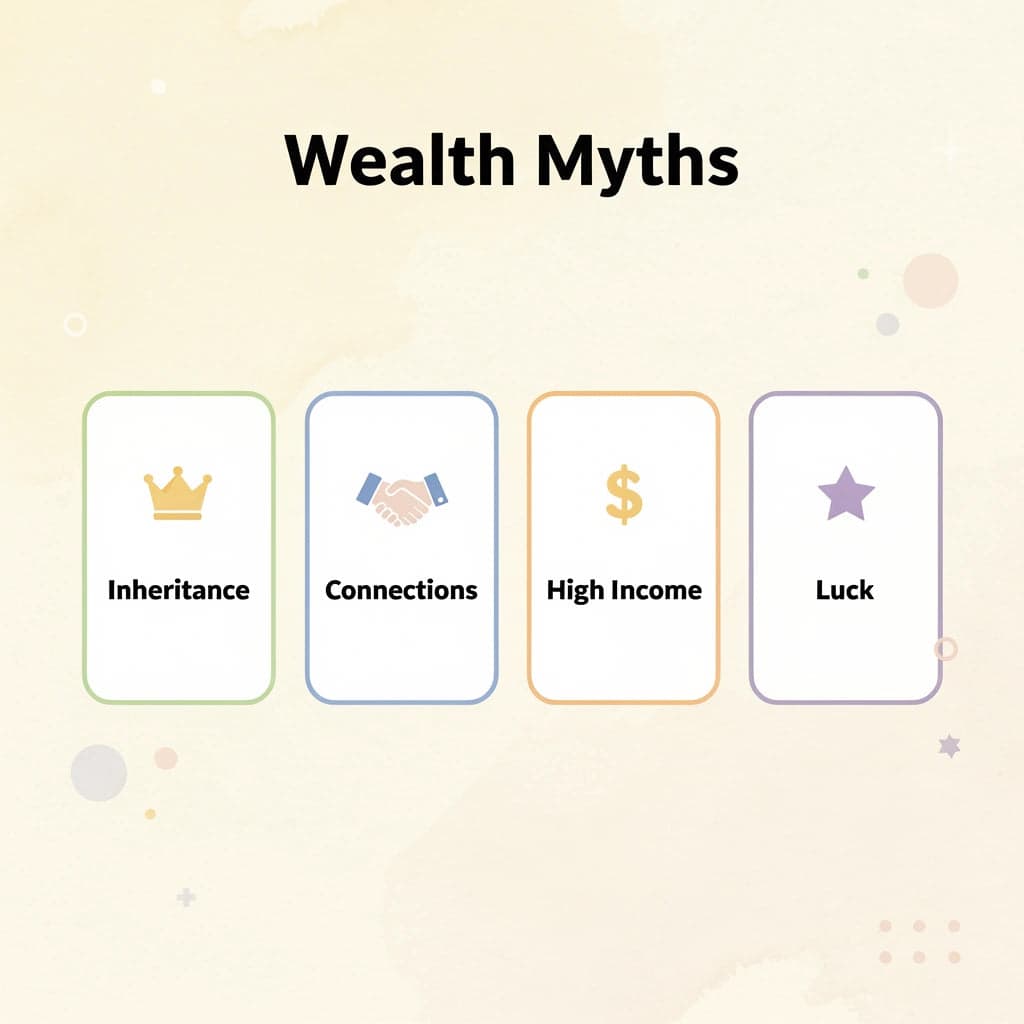
⚠️ Warning: When you believe wealth is only for the privileged, you unconsciously sabotage your own wealth-building efforts before they even begin.
Why do these assumptions feel so convincing?
When wealth feels impossible to reach, it becomes easier to dismiss it as something reserved for others rather than something you could build yourself.
How do these beliefs create a self-fulfilling trap?
This assumption creates a quiet trap. When you believe wealth belongs only to the privileged, you stop developing the habits that historically help people build financial security over time. The belief becomes self-fulfilling not because it's true, but because it discourages the behaviors that accumulate into meaningful results.
Why do we only see wealth at its endpoint?
Most people see wealth only at its endpoint: the retiree with substantial assets, the successful investor, the person who sold a business. What remains invisible are the decades of incremental decisions that preceded those outcomes: consistent saving, patient investing, and the discipline to spend less than earned year after year.
What do wealth statistics actually tell us?
According to Inequality.org, the bottom 50% of Americans hold 2.5% of all wealth. Yet this statistic shows distribution, not possibility—it reveals where wealth currently sits, not how it builds over time within individual households.
How does social media distort our view of wealth building?
Social media amplifies this distortion by showcasing extraordinary outcomes: the entrepreneur who sold a company, the investor who timed a market perfectly, the influencer displaying luxury. These stories are unusual because they're dramatic. The person who contributed steadily to retirement accounts for thirty years rarely appears in anyone's feed, despite being far more common among those who eventually build substantial assets.
What does research reveal about inheritance and wealth building?
The National Study of Millionaires surveyed over 10,000 millionaires and found that 79% received no inheritance, while only 3% inherited $1 million or more. Most built wealth through saving, investing, and consistent financial habits rather than family money.
This doesn't erase the reality that some people start with advantages others don't have. But assuming inheritance is the main way people get rich dismisses the behaviors that produce results for most people who accumulate meaningful assets.
How does age relate to wealth accumulation patterns?
The Federal Reserve's Survey of Consumer Finances shows another pattern: median wealth increases substantially with age. This occurs through decades of compound growth from saving, investing, and asset appreciation. Households in their 30s typically have significantly less wealth than those in their 50s and 60s because time allows small actions to compound into larger results.
The difference between those who build wealth and those who don't often comes down to behavior repeated consistently over years, not dramatic events or exceptional circumstances.
Related Reading
What Building Wealth From Nothing Actually Means
Building wealth from nothing means starting with little or no savings, minimal assets, and perhaps some debt, then systematically converting your income into assets that grow over time. It requires turning ordinary financial decisions into habits that compound across decades.
🎯 Key Point: Wealth building from zero isn't about having a perfect starting position—it's about creating systematic processes that transform your current income into future assets.

"The most powerful force in the universe is compound interest. It's the 8th wonder of the world." — Albert Einstein
💡 Tip: Focus on building consistent habits rather than waiting for the perfect moment to start. Even small amounts invested regularly can grow into substantial wealth over 20-30 years.

The Starting Point Is Financial, Not Permanent
Many people assume their financial situation cannot change and that wealth happens to others. Yet families led by people under 35 typically have far less money than those led by people in their 50s and 60s—not because older families started wealthy, but because they had more years for small choices to compound. A 35-year-old with $40,000 in net worth and a 65-year-old with $400,000 in net worth are often separated by time and behavior, not by luck or special circumstances.
Income Does Not Equal Wealth
One of the most persistent mistakes is confusing high income with financial success. Income measures what flows in; wealth measures what stays and grows.
Someone earning $250,000 annually who spends nearly all of it may have a lower net worth than someone earning $75,000 who consistently saves and invests the difference. Net worth—assets minus liabilities—shows whether you're accumulating more than you owe. A rising net worth signals that income is being converted into something lasting that can appreciate or generate returns over time.
Habits Drive Outcomes More Than Events
People often search for the perfect investment or breakthrough opportunity. These events rarely create wealth by themselves. What builds wealth is consistent behavior over years: spending less than you earn, avoiding unnecessary debt, investing regularly, and staying invested through market downturns.
Research from Harvard Business Review indicates that 70% of wealthy families lose their wealth by the second generation because the habits that created it were not passed down. Wealth without discipline is temporary.
Why does compounding require such patience?
A $300 monthly contribution earning 10% annually grows to roughly $61,000 after 10 years, $228,000 after 20 years, and exceeds $680,000 after 30 years. Most growth occurs in later years as gains generate additional gains.
This is why time is more valuable than timing: the investor who starts early with less money often builds more than one who waits for the perfect moment with more money.
What can you do if you're starting later in life?
Platforms like Smart Financial Lifestyle's retirement financial planning help people over 50 understand what their accumulated decisions have built and how adjustments can improve results in their remaining years.
But knowing what wealth building means is only the beginning. The harder question is what to do first when you have little room for mistakes.
The First Financial Moves That Create Momentum
The first step toward wealth is not investing. It's creating the conditions that make investing sustainable. High-interest debt, unpredictable cash flow, and zero emergency reserves create a fragile system that collapses when disrupted. Building wealth from nothing requires stability first, growth second.

🎯 Key Point: You cannot build lasting wealth on an unstable foundation. Emergency funds and debt elimination create the solid base that allows your investments to compound without interruption.
"The foundation of wealth is not what you earn, but what you keep and how you protect it from life's inevitable disruptions." — Financial Planning Principle

💡 Best Practice: Focus on these three foundational moves before investing a single dollar: eliminate high-interest debt (anything above 6-8%), build an emergency fund covering 3-6 months of expenses, and establish predictable cash flow through budgeting and expense tracking.
Track Where Your Money Actually Goes
You cannot change what you do not measure. Financial awareness starts with understanding three numbers: how much comes in, how much goes out, and where the gap is. Many people are surprised when they track expenses for the first time: the $12 subscription they forgot about, the $200 monthly takeout spending they overlooked, the insurance policy they overpaid for years. These patterns stay hidden until someone writes them down.
Tracking creates visibility. When you know where money goes, you can redirect it purposefully rather than wondering where it disappeared by month's end.
Build a Cash Reserve Before You Invest
Unexpected expenses—car repairs, medical bills, home maintenance, job disruptions—happen to everyone. Without a cash reserve, these events force credit card debt or forced liquidations of investments. According to Empower's 2025 financial review, financial resilience starts with accessible emergency funds, not market exposure.
An emergency fund creates the psychological stability to stay invested during downturns. Investors without cash reserves are far more likely to sell at the worst possible time, undermining their long-term strategy.
Eliminate High-Interest Debt First
Paying off a credit card charging 21% interest gives you a guaranteed return that no investment can reliably match. The S&P 500 has averaged roughly 10% annually over decades. Carrying high-interest debt while building wealth works against you mathematically each month.
Platforms like retirement financial planning help people over 50 determine where debt elimination fits into their broader financial picture, particularly when balancing retirement contributions against loan payoff. The principle is straightforward: eliminate debt that compounds faster than your investments can grow. Once high-interest obligations are gone, cash flow improves immediately, and every dollar saved is redirected toward wealth-building rather than interest payments.
How do you create the gap between earning and spending?
Money accumulates in the gap between earnings and spending. This gap widens by spending less or earning more. Most people focus solely on cutting costs, but earning more often has a greater long-term impact. A 10% raise provides more savings potential than eliminating small discretionary purchases.
Why does intentional spending matter more than deprivation?
The goal is not to go without things, but to be intentional about spending. Every dollar you don't spend becomes available to grow your money over time. Higher savings rates give compound growth more to work with, which is how small amounts become significant wealth over decades.
But none of this matters if the timeline is misunderstood; that's where most people lose patience before seeing results.
How Wealth Is Built Over Decades, Not Months
Wealth builds up over many years of steady habits, growing quietly while most people seek quicker ways to get rich. According to the Empower financial services firm, the average person in their 20s has a net worth of $127,730, while the average American in their 50s has a net worth of $1.4 million. That difference stems from three decades of saving, investing, and compound earnings.
"The average American in their 50s has a net worth of $1.4 million compared to just $127,730 for those in their 20s." — Empower Financial Services
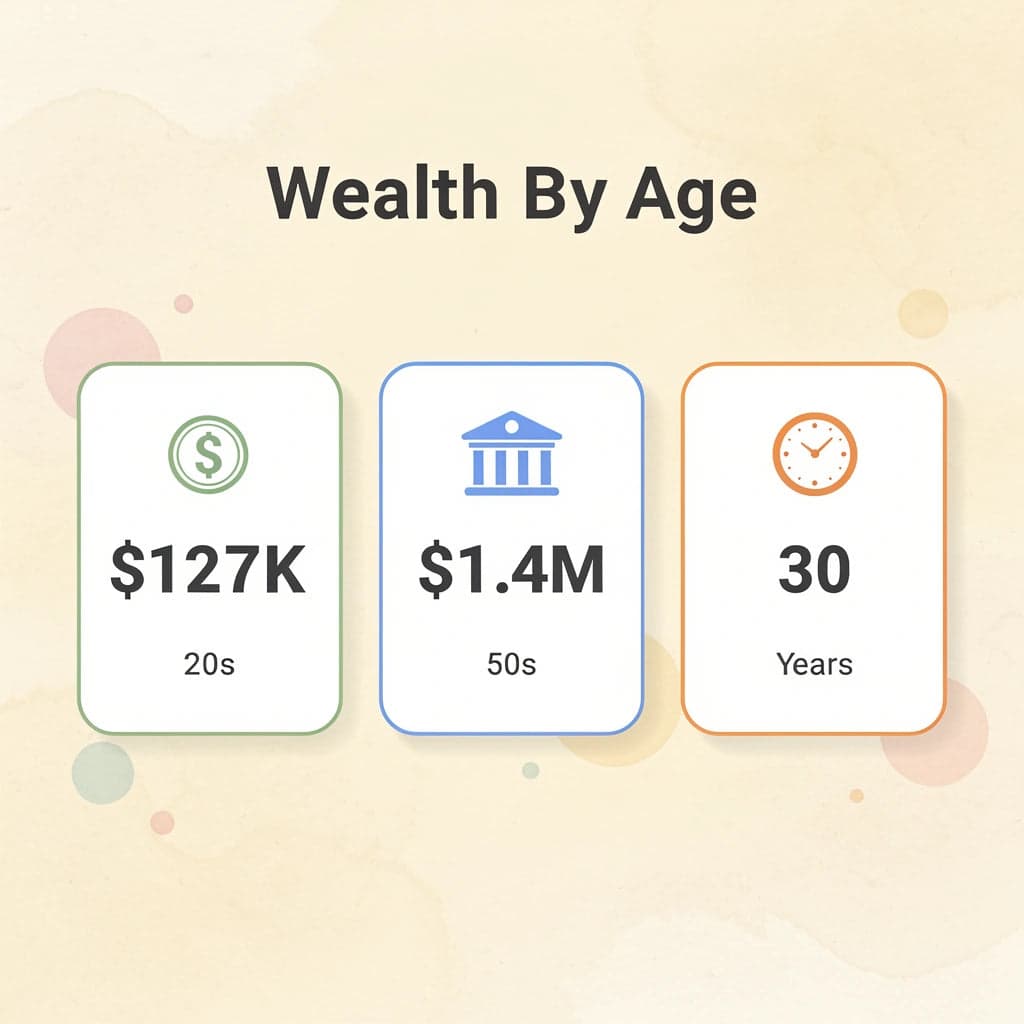
🎯 Key Point: The $1.27 million difference between 20-somethings and 50-somethings represents the true power of compound growth over 30 years of consistent financial habits.
🔑 Takeaway: Real wealth building isn't about finding shortcuts or get-rich-quick schemes — it's about maintaining disciplined saving and smart investing habits that compound over multiple decades.

Why does compound growth seem slow initially?
The early years of investing test your patience because growth appears modest. Investing $300 monthly at 10% annual returns yields $23,000 after five years and around $61,000 after ten years.
The numbers feel small compared to the effort, and many people lose faith during this phase. Watching small balances grow slowly makes it hard to believe the process will ever generate meaningful wealth.
When does compound growth accelerate dramatically?
But the math changes significantly in later years. That same $300 monthly contribution grows to around $228,000 after 20 years, $678,000 after 30 years, and exceeds $1.5 million after 40 years.
Returns start making their own returns: the interest earned in year 25 can exceed all the money you contributed during the first ten years. This is why starting early matters more than starting with a large amount.
Why does staying invested beat perfect timing?
Many people wait to invest, hoping to find the perfect time to start. Research from J.P. Morgan Asset Management found that a $10,000 investment in the S&P 500 from 2005 through 2024 grew to about $71,750 if held the entire time. Missing the 10 best market days during that period reduced the ending value to roughly $32,871. Long-term investing consistently outperforms market timing.
How does dollar-cost averaging remove timing pressure?
Dollar-cost averaging removes the pressure to predict market movements. By investing a fixed amount at regular intervals, you buy more shares when prices are low and fewer when prices are high. This approach turns investing into a repeatable habit and protects against investing large sums before a downturn.
The real advantage is time itself
Someone who starts investing small amounts in their 20s often builds more wealth than someone who invests larger amounts starting in their 40s. The difference isn't about discipline or intelligence: compounding needs decades to create exponential results. Every year delayed is a year of potential growth permanently lost.
The investors who succeed save consistently, stay invested through volatility, and trust that small decisions compound into significant outcomes. Wealth is built through patience, not prediction. Yet even with the right strategy and timeline, most people sabotage their progress without realizing it.
The Biggest Mistakes That Keep People Stuck Financially
Building wealth means avoiding behaviors that damage your financial progress over many years. Most people fail not because they lack knowledge, but because they repeat small mistakes that compound negatively over decades.

🎯 Key Point: The path to financial freedom isn't about making perfect decisions—it's about consistently avoiding the wealth-destroying habits that compound against you over time.
"The biggest financial mistakes aren't the dramatic ones you hear about in the news—they're the quiet, repeated behaviors that slowly erode your wealth-building potential over 20-30 years." — Financial Planning Research, 2023
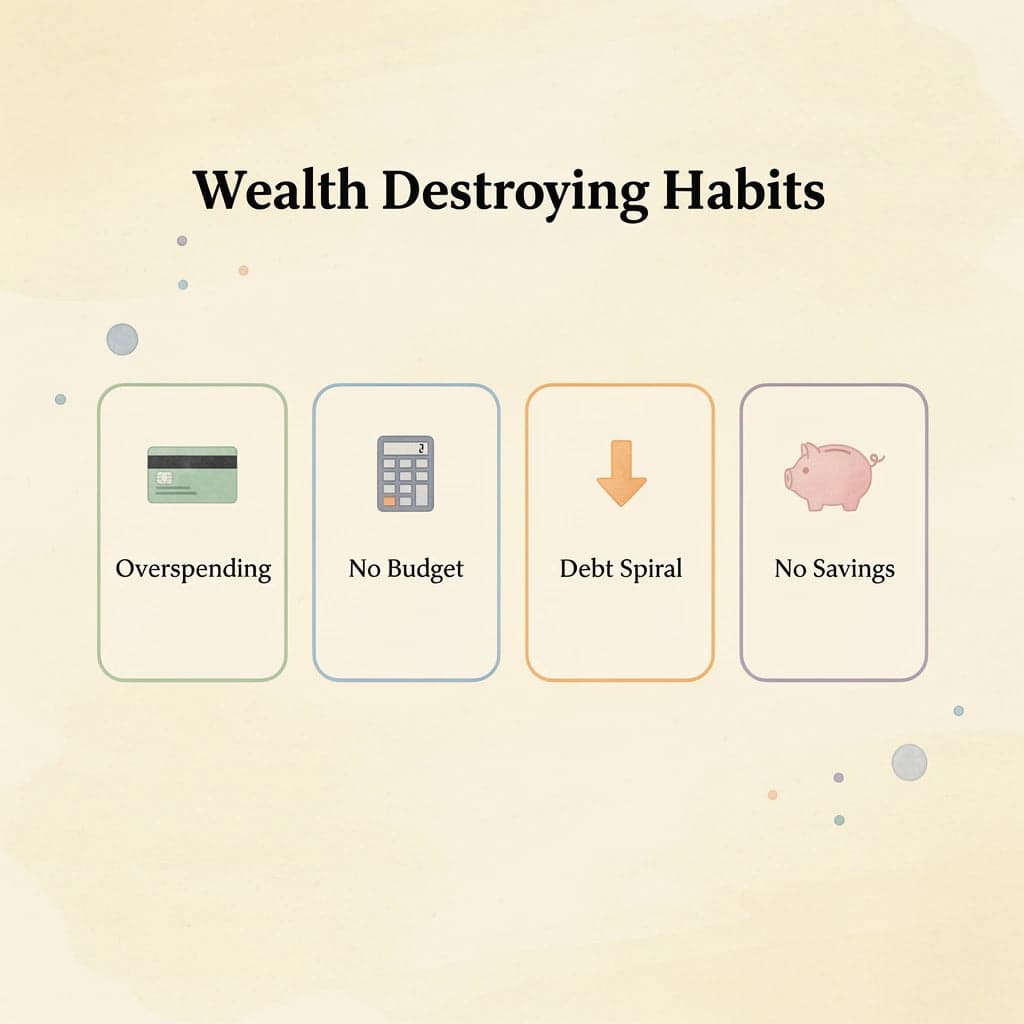
⚠️ Warning: These financial mistakes often feel harmless in the moment, which is exactly why they're so dangerous. By the time you notice the damage, you've already lost years or decades of potential growth.
What is lifestyle inflation, and why does it prevent wealth building?
Making more money creates opportunity, but it doesn't automatically make you wealthy. The difference between what you earn and what you spend determines how fast your money grows. When that gap never widens, wealth building stops, even if your salary increases.
How much difference does spending control actually make?
Someone earning $150,000 who spends $145,000 builds wealth more slowly than someone earning $80,000 who spends $60,000. The second person saves $20,000 annually while the first saves only $5,000. Over twenty years, assuming 7% returns, the lower earner accumulates approximately $820,000 while the higher earner accumulates $205,000.
Why do salary increases often fail to improve net worth?
Many professionals assume raises automatically improve their financial position. Instead, spending rises to match every promotion: the new car replaces the paid-off vehicle, the larger apartment follows the salary bump. Years pass, and despite earning significantly more, net worth barely changes.
Why do people wait for perfect market conditions?
Markets rarely give clear signs for when to start investing. Economic uncertainty, political volatility, and valuation concerns always exist, so waiting for clarity means waiting forever.
What does waiting to invest actually cost you?
According to CNBC, one of the three biggest financial regrets Americans report is not starting to invest sooner. Someone who invests $500 monthly starting at age 25 accumulates approximately $1.4 million by age 65, assuming a 7% annual return.
Starting at age 35 reduces the ending balance to roughly $610,000. Ten years of hesitation cost over $790,000.
Consistent participation matters far more than picking the perfect time to start. Substantial wealth builders aren't those who predicted market bottoms; they're those who kept contributing through uncertainty.
Why do speculative investments feel so appealing?
The appeal of getting rich quickly is powerful, especially when traditional investing feels slow. Cryptocurrency surges, meme stocks, options trading, and other speculative strategies promise extraordinary returns. The problem is that extraordinary returns require extraordinary risk, and most people underestimate how quickly speculative positions can collapse.
What behavioral patterns destroy wealth in speculative markets?
Behavioral patterns repeat across market cycles. Investors chase recent winners after prices have risen significantly, buying near peaks when excitement peaks and selling after declines when fear dominates. This pattern destroys wealth rather than creating it. For every visible success story, dozens of failures remain invisible—survivor bias makes speculation appear more reliable than it is.
Why does income feel like the obvious measure of success?
Salary seems like the obvious way to measure financial progress, and higher income suggests greater success. Yet according to Credit Karma, nearly half of Americans say their finances worsened in 2025 despite income growth. Earnings don't automatically translate to wealth accumulation.
What does net worth reveal about financial position?
Net worth shows your real financial position. A doctor earning $400,000 with $600,000 in student loans, a mortgage, and minimal savings has less financial security than a teacher earning $65,000 with $200,000 in retirement accounts and no debt. Wealth depends on what you keep and grow, not what passes through your accounts.
How does tracking net worth change financial behavior?
Tracking net worth instead of income changes financial behavior. Spending decisions become clearer when measured against asset accumulation. The question shifts from "Can I afford this?" to "Does this move me closer to financial independence?"
Related Reading
How To Grow Your Money
How to Stop Living Paycheck to Paycheck
How Much Money Should I Have Saved by 30
How Smart Financial Lifestyle Helps People Build Wealth One Decision at a Time
Building systems that stop financial mistakes requires frameworks that turn decades of market experience into decisions you can use. Smart Financial Lifestyle closes the gap between understanding how to build wealth and living that way.

🎯 Key Point: The difference between knowing wealth-building principles and implementing them consistently lies in having actionable systems that guide your daily financial choices.
"The gap between financial knowledge and financial success isn't information—it's implementation. Systems bridge that gap by making smart decisions automatic." — Financial Planning Research, 2023

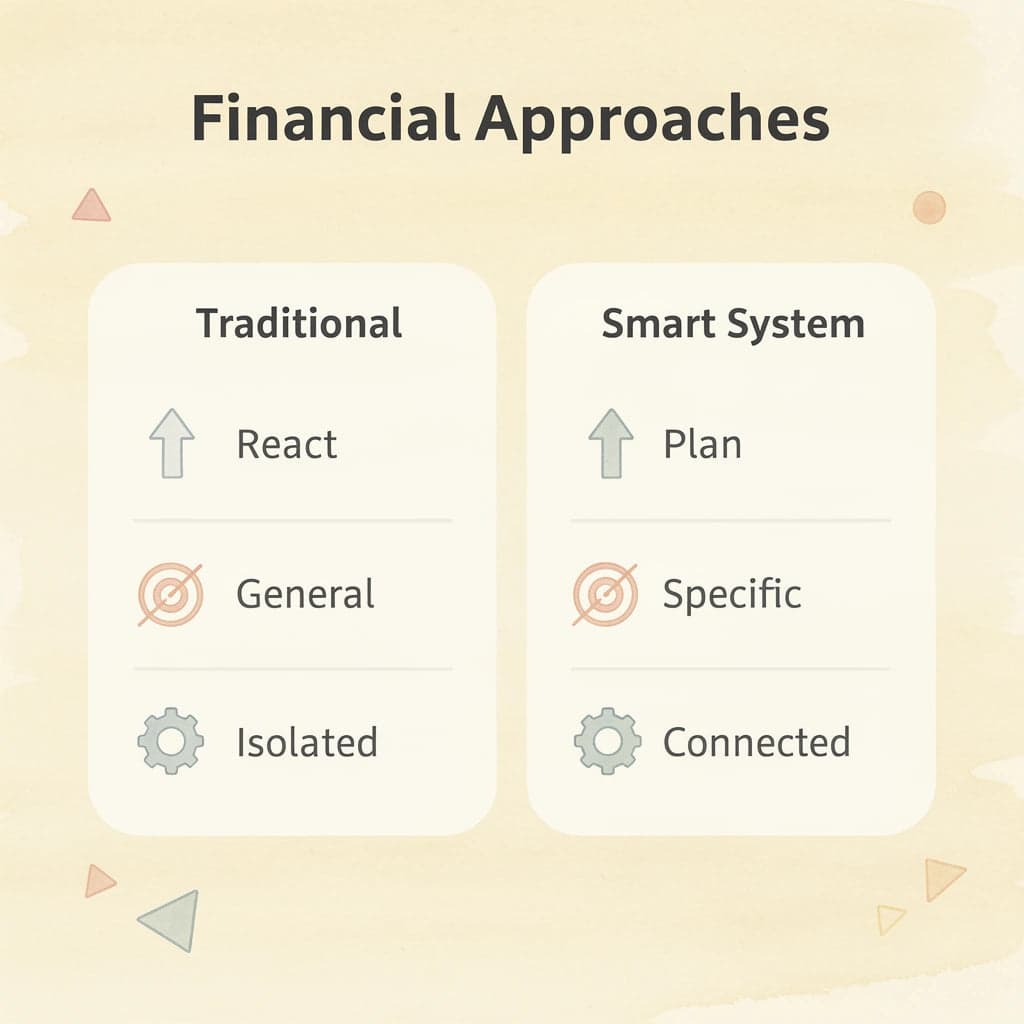
Traditional Approach | Smart Financial Lifestyle |
|---|---|
React to financial situations | Proactively plan decisions |
Learn general principles | Apply specific frameworks |
Make isolated choices | Build systematic habits |
Focus on short-term gains | Prioritize long-term wealth |
💡 Tip: Start with one decision framework at a time—whether it's your spending triggers, investment timing, or debt payoff strategy—and master it before adding complexity to your financial system.
Turning Complex Financial Concepts Into Practical Actions
Financial paralysis often stems from information overload. When articles contradict each other and experts disagree, people freeze. According to Fortune's analysis of financial decision-making, 78% of Americans live paycheck to paycheck, not from insufficient income, but from a lack of a clear system for managing it.
Smart Financial Lifestyle reduces complexity by focusing on basic behaviors that have helped people build wealth across multiple economic cycles, rather than chasing investment trends or reacting to market predictions. The goal is to build habits that work regardless of what happens next year.
Learning From Five Decades of Wealth Management Experience
Paul Mauro's perspective comes from managing real money through real crises: bull markets, bear markets, recessions, inflationary periods, and financial crises. Fifty years in wealth management reveal which principles endure and which trends fade.
The behavioral mistakes investors make today closely resemble those from decades ago. Markets change, but human psychology remains constant. Multiple market cycles demonstrate that successful wealth building depends on following a sound process, not on perfect timing or brilliant predictions, even when others panic or chase the latest opportunity.
Why do smart people make poor financial decisions?
Knowing something is not enough to change how you act. People often know they should save more money, invest regularly, and think long term. However, they struggle to maintain these habits when progress seems slow or when financial news makes taking shortcuts seem attractive. Wharton's research on financial decision-making shows that people who spend 30 minutes thinking before making big financial decisions make noticeably better choices than those who act without thinking.
How can you overcome emotional patterns that sabotage wealth building?
The challenge is not being smart but having discipline. Smart Financial Lifestyle helps investors recognize emotional patterns that undermine long-term plans: abandoning strategies during market downturns, chasing performance after it has already happened, or waiting for perfect conditions that never come. By sharing practical insights from decades in wealth management, these resources help readers focus on small, repeatable actions that gradually add up to meaningful wealth over time.
Understanding these principles is only half the equation. The harder part is staying committed when the path forward is unclear.
Related Reading
Are Index Funds Good For Retirement
Ira Pros And Cons
What Happens If You Run Out Of Money In Retirement
How To Invest 1000 Dollars
Retirement Income Strategies
Early Retirement Strategies
Best Investment For Retirement Income
How Much Money Should I Have Saved By 30
How To Stop Living Paycheck To Paycheck
Long-Term Stock Investments
Low-Risk Investment Options
How Much Should I Save Each Month
Retirement Planning Mistakes
Kickstart Your Retirement Financial Planning Journey | Subscribe to Our YouTube and Newsletter
Subscribe to Smart Financial Lifestyle and learn the wealth-building principles Paul Mauro used throughout his decades in wealth management. Small financial decisions, repeated over time, have a bigger impact on your future wealth than any single investment or market prediction. Access to proven frameworks when decisions matter most often determines whether you retire comfortably or struggle financially.

🎯 Key Point: The compound effect of consistent small financial decisions outweighs any single investment strategy or attempt to time the market.
"Small financial decisions, made over and over again over time, have a bigger impact on your future wealth than any single investment or market prediction." — Paul Mauro's decades of wealth management experience

💡 Tip: Start implementing proven wealth-building frameworks today rather than waiting for the "perfect" investment opportunity - your future financial security depends on the consistency of your daily money decisions.