Long-Term Investing: Why Patience Often Beats Prediction
Most people chase hot stock tips and market predictions, hoping to strike it rich overnight. The real power of wealth-building habits lies in consistent investing over years and decades, not in perfectly timing the market. Patient, disciplined strategies often deliver better results than trying to predict market movements. Smart investors focus on compound growth, asset allocation, and steady contributions that work quietly in the background.
Understanding these principles requires a framework that aligns daily financial decisions with future goals. Successful wealth building means establishing the right mix of stocks, bonds, and diversified holdings while staying focused on long-term horizons rather than short-term market noise. With a solid foundation, investors can ignore market downturns and speculative bubbles, staying committed to strategies that actually build net worth over time through proper retirement financial planning.
Table of Contents
How Smart Financial Lifestyle Helps Investors Think Beyond the Next Market Cycle
Kickstart Your Retirement Financial Planning Journey | Subscribe to Our YouTube and Newsletter
Summary
The average equity investor earned 16.54% in 2024, while the S&P 500 returned 25.02%, an 8.48 percentage point gap caused primarily by poorly timed buying and selling decisions, according to DALBAR's 2025 analysis. Over the past decade, this behavior pattern has cost investors roughly 3.2 percentage points annually compared to simply staying invested. The instinct to sell during declines and buy during rallies may seem rational, but it consistently undermines long-term results.
Missing just the 10 best market days over a 30-year period would have reduced S&P 500 returns from 10.2% to 7.8% annually, a difference that compounds into hundreds of thousands of dollars over a lifetime. Those best days often arrive immediately after the worst days, during periods when fear peaks and selling feels most justified. The math reveals why market timing strategies fail even when investors correctly predict some downturns, because the cost of missing recoveries outweighs the benefit of avoiding declines.
Over 10-year periods, the S&P 500 has delivered positive returns 94% of the time, and over 20-year periods, it has never produced a negative return, according to Schroders' research. Time horizon transforms volatility from threat to noise. Short-term investors experience market corrections as catastrophic events requiring action, while long-term investors recognize them as normal features of equity ownership that resolve given sufficient patience.
A hypothetical $10,000 investment in the S&P 500 from 2005 through 2024 would have grown to approximately $71,750 if fully invested, but dropped to only $32,871 if the investor missed the 10 best days, according to J.P. Morgan Asset Management data. This pattern demonstrates how a small number of strong recovery days, concentrated during frightening periods, determine whether decades of saving build wealth or merely preserve capital. Staying invested matters more than any other single decision.
Frequent portfolio monitoring creates psychological pressure to act on temporary price changes that prove meaningless to long-term outcomes. Checking accounts daily turns normal volatility into urgent signals, triggering unnecessary trades that incur taxes, fees, and behavioral mistakes. The investors who build lasting wealth focus on variables they control (savings rate, costs, discipline) rather than variables they cannot (next month's market direction, interest rate decisions, election outcomes).
Retirement financial planning addresses this by helping families build clear systems around time horizon, risk capacity, and consistent contribution habits rather than reacting to market cycles or chasing optimal timing strategies that rarely work.
Most Investors Are Playing the Wrong Game
Ask someone why they invest, and they'll talk about building wealth, retiring comfortably, or achieving long-term financial security. But watch how they invest, and a different goal emerges. Many investors search for the next winning stock, predict market moves, react to economic news, or time when to buy and sell. These behaviors work directly against their stated objectives.
🎯 Key Point: A massive disconnect exists between what investors say they want (long-term wealth) and what they do (short-term speculation).
"The average investor's behavior often undermines their stated long-term financial goals through short-term thinking and market timing attempts." — Investment Behavior Research
⚠️ Warning: If you constantly check stock prices, chase hot tips, or attempt to time the market, you're playing the speculation game instead of the wealth-building game.

Why does the market reward patience while human nature craves action?
Successful long-term investing feels uneventful. Buying quality investments, staying diversified, and remaining invested for decades doesn't make the news. Predicting recessions, finding hidden opportunities, and making bold market calls do. Financial media reinforces this daily, exposing investors to constant predictions about interest rates, inflation, earnings, elections, and market direction, always suggesting that something important is about to happen and that you need to act.
What happens when investors react to every market development?
Reacting to every market change encourages short-term decision-making that hurts long-term results. According to DALBAR's 2025 Quantitative Analysis of Investor Behavior, the average stock investor earned 16.54% in 2024 while the S&P 500 returned 25.02%: an 8.48 percentage point gap caused by poorly timed buying and selling decisions. Over ten years, the average stock investor earned 9.8% annually, compared to roughly 13% annually for the S&P 500.
Why does market timing feel so rational?
When markets fall, selling feels right. When markets rise, buying feels safe. Those instincts lead investors to do exactly the wrong thing. The challenge isn't intelligence; it's psychology. Investors naturally want to avoid losses and seek certainty, yet markets rarely provide it. Many investors already own investments capable of generating strong long-term returns—the challenge is staying invested long enough to capture them.
What makes frequent trading so costly?
Trading often feels productive but can cost you money. Checking your portfolio daily, making changes, and reacting to news creates an illusion of staying ahead of the market. DALBAR's research has consistently identified two behaviors that harm investor returns: attempting to time the market and failing to stay invested long enough to benefit from long-term compounding.
Historical data showed that the average equity fund investor held investments for about 4.5 years, far shorter than the typical long-term wealth-building timeframe. Compounding requires time. Each time investors abandon a strategy or move in and out of markets, they interrupt the process that creates long-term growth.
How can investors overcome allocation paralysis?
Many investors try to build wealth by finding the perfect split between domestic and international holdings, worrying they'll second-guess every rebalancing decision for decades. This anxiety reveals something important: the real challenge isn't picking the right allocation percentage, but developing a framework simple enough to maintain without constant adjustment.
Tools like retirement financial planning from Smart Financial Lifestyle help families build clear, actionable systems that cut through allocation paralysis by focusing on what matters: time horizon, risk capacity, and consistent contribution habits rather than chasing optimal country weightings that shift with every market cycle.
What separates successful long-term investors?
The investors who reach their goals are often not those making the boldest forecasts. They develop a sound plan, stay committed to it, and allow time and compounding to work. Long-term wealth has been built not by predicting market events, but by participating through them. Success depends less on forecasting what happens next and more on remaining disciplined, staying diversified, and maintaining perspective when fear or greed suggests otherwise.
But if staying invested is so simple, why do so few investors do it?
What Long-Term Investing Actually Means
Long-term investing is a disciplined strategy built around owning assets that compound wealth over decades while resisting the emotional pull to react when markets move. Many investors abandon their strategy during volatility, revealing that their commitment was conditional rather than structural.

🎯 Key Point: True long-term investing requires structural commitment that survives market turbulence, not conditional promises that break at the first sign of volatility.
"The real test of long-term investing isn't what you do when markets are calm—it's whether your strategy survives when volatility strikes and emotions run high."
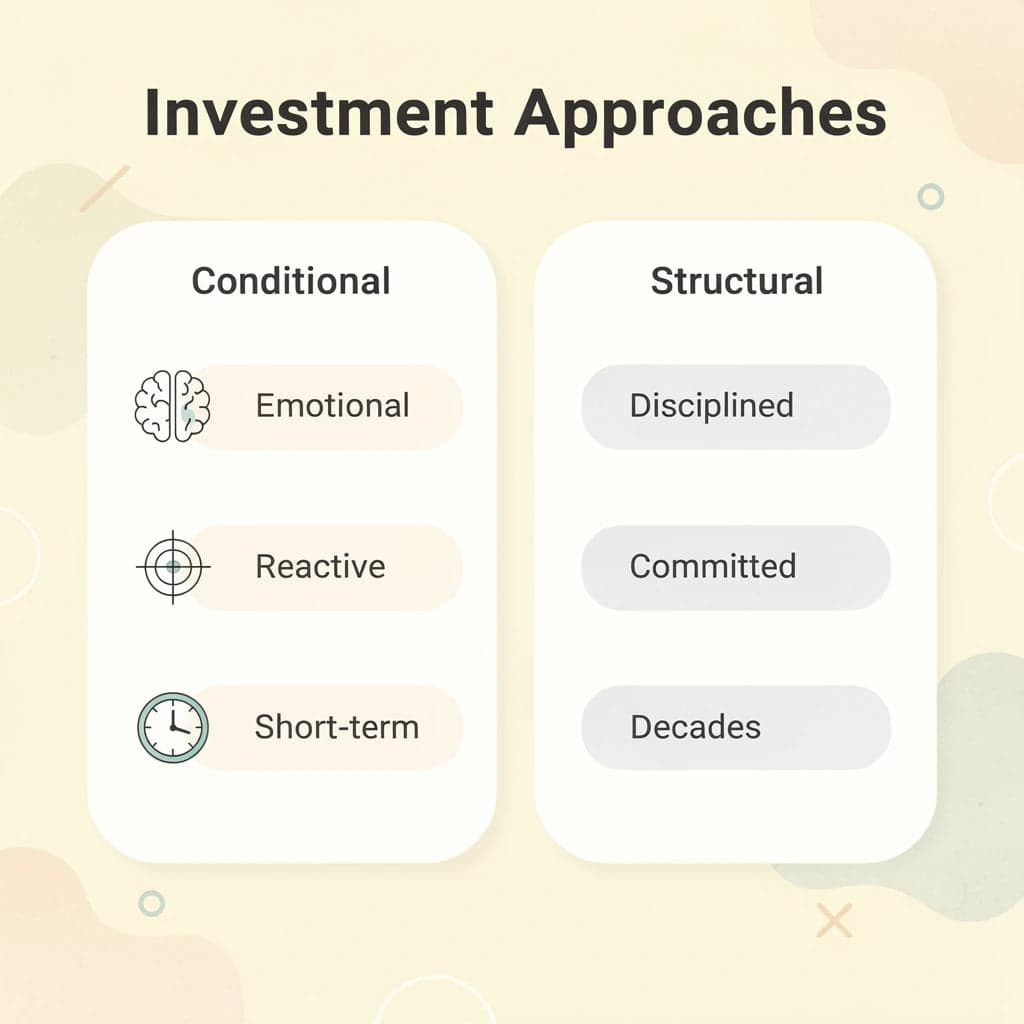
💡 Tip: Build your investment approach around decades-long wealth building, not short-term market reactions. The difference between conditional and structural commitment determines whether you'll actually capture the compounding returns that make long-term investing powerful.
Decades, Not Months
"Long-term" means different things to different people. A trader might consider six months long-term, while an investor building retirement wealth should think in 10, 20, or 30 years. These different timelines shape how we understand risk and opportunity. A 15% market decline feels significant over three weeks but becomes a minor dip over three decades.
Investing Versus Speculation
Speculation predicts short-term price movements over weeks, while long-term investing participates in economic expansion and business success over years. Instead of asking "What will this stock do next month?" ask "What could this business become over the next 20 years?" This shift in mindset changes how you evaluate opportunities and respond to market volatility.
How does compounding turn modest returns into substantial wealth?
Compounding turns modest annual returns into substantial wealth over time. According to Larry Swedroe's analysis, the S&P 500 Index returned 10.2% per year from 1995 through 2024. A $10,000 investment growing at 10% annually becomes $67,300 after 20 years and $174,500 after 30 years. Growth accelerates because returns generate additional returns, building momentum that short-term strategies cannot match.
Why does time matter more than finding perfect investments?
Time matters more than finding the perfect investment. Professional traders must predict what happens tomorrow or next week, while long-term investors benefit from decades of dividend reinvestment, business expansion, and economic growth without forecasting. Many investors struggle with this because it feels too simple: they want complexity and analysis. Yet the most powerful advantage available to individual investors requires no prediction at all, only patience and discipline.
Why Staying Invested Changes Everything
Research shows that missing the 10 best days in the market over a 30-year period would have reduced returns from 10.2% to 7.8% per year. This difference compounds into hundreds of thousands of dollars over a lifetime. The best days often follow the worst days, arriving when fear peaks and selling feels most rational. Long-term investing leverages time to its advantage, maintains discipline amid emotional surges, and allows compounding to create wealth that market timing rarely delivers.
But if the math is this clear, why do so many investors struggle to capture these returns?
Related Reading
The Evidence Behind Long-Term Investing
The case for long-term investing rests on decades of market data and portfolio results showing that staying invested has historically mattered more than attempting to time the market. According to Schroders, the S&P 500 has delivered positive returns 94% of the time over 10-year periods. Time transforms volatility into opportunity for those disciplined enough to remain patient.
"Over a 10-year period, the S&P 500 has delivered positive returns 94% of the time." — Schroders
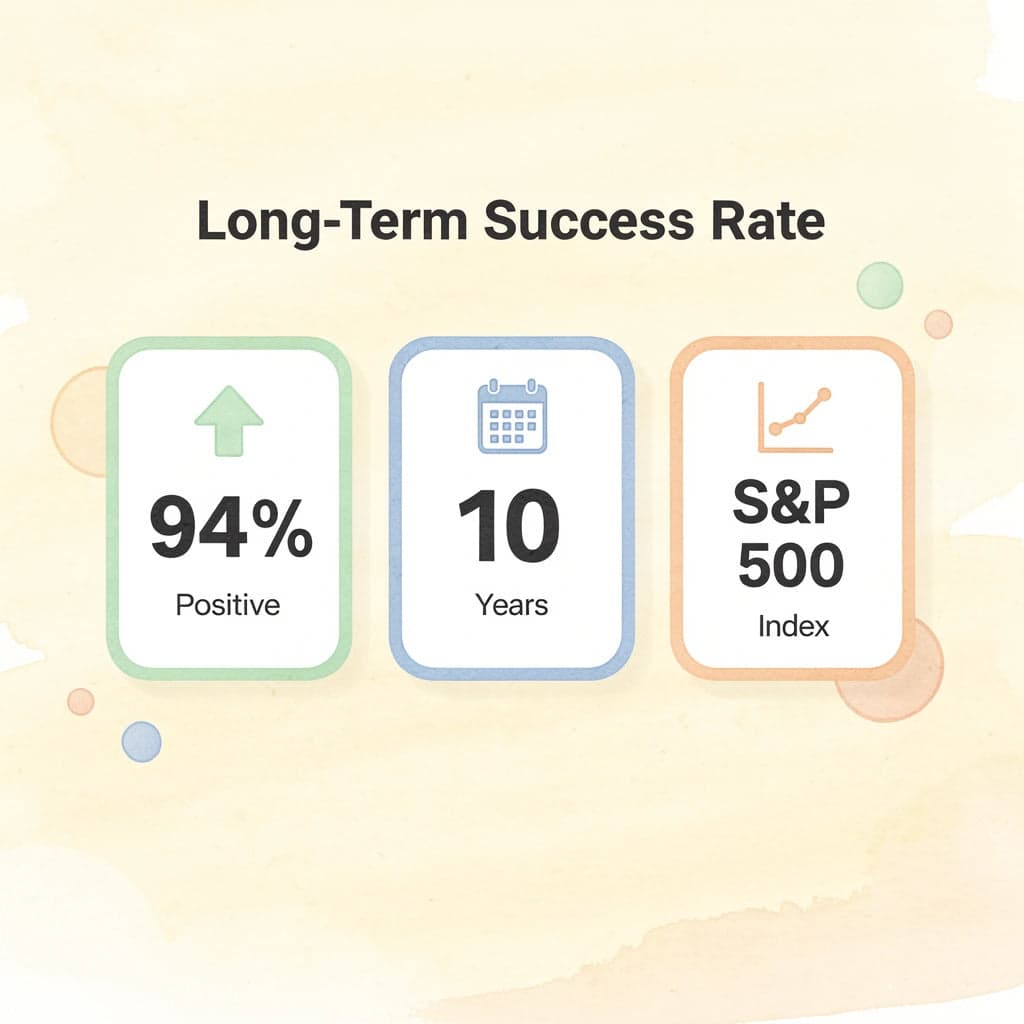
🔑 Key Takeaway: The data overwhelmingly supports patience over timing - with such a high success rate over decade-long periods, the biggest risk isn't market volatility; it's missing out on compound growth by trying to time entries and exits.
💡 Tip: Historical performance shows that staying invested through market cycles has been more profitable than attempting to predict short-term market movements - time in the market beats timing the market.
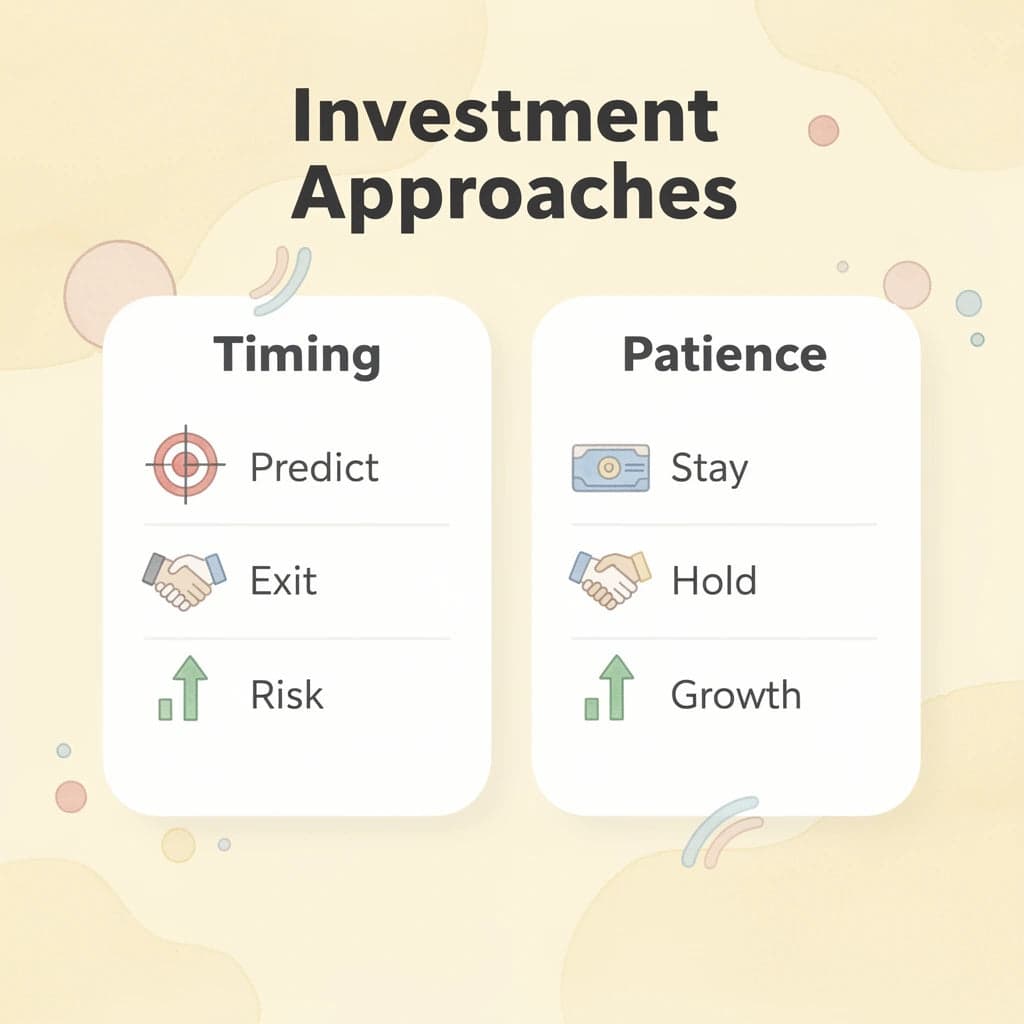
Missing the Best Days Changes Everything
One of the most damaging mistakes investors make is moving to cash during uncertainty, waiting for clarity before reinvesting. According to research from J.P. Morgan Asset Management, a hypothetical $10,000 investment in the S&P 500 from January 1, 2005, through December 31, 2024, would have grown to approximately $71,750 if fully invested. Missing just the 10 best market days reduced the ending value to approximately $32,871. Missing the 20 best days dropped it to approximately $19,030, and missing the 30 best days left only $12,078. A small number of strong recovery days—often occurring during the most frightening periods—can determine whether decades of saving build wealth or preserve capital.
Time Horizon Transforms How Volatility Feels
Short-term investors see volatility as a danger. Long-term investors see it as the price of participation. Since 1950, the S&P 500 has experienced numerous declines of 10% or more, yet the overall trend has been upward. One-year periods show significant return variation, but Schroders reports that over 20-year periods, the S&P 500 has never delivered negative returns. Time doesn't eliminate volatility, but it has historically reduced the likelihood that volatility causes permanent loss.
Markets Have Recovered From Every Major Crisis
Investors during downturns often believe their situation is uniquely catastrophic. History suggests otherwise. The S&P 500 has recovered from the Great Depression, the 1973-74 bear market, the 1987 crash, the dot-com collapse, the Global Financial Crisis, and the COVID-19 market decline. Each event felt unprecedented at the time, yet markets eventually reached new highs. This doesn't mean every individual stock will recover or that timing doesn't matter in specific situations. Broad equity markets have demonstrated resilience over long periods. The challenge is to remain invested long enough to participate in those recoveries, rather than exiting during the most uncomfortable moments.
Diversification Helps You Stay in the Game
Spreading your money across different types of investments, industries, sectors, and geographic regions reduces the likelihood of making emotional decisions when markets become stressful. The benefit isn't earning more—it's creating a portfolio you'll stick with when news reports sound scary. How investors behave consistently determines long-term outcomes more than which investments you pick. A diversified portfolio that feels manageable during downturns beats a concentrated portfolio you abandon halfway through a recovery.
Most investors understand the evidence intellectually but struggle to apply it when markets decline. The gap between knowing what works and doing what works widens when discipline matters most.
Common Long-Term Investing Mistakes That Hurt Returns
Understanding investment principles intellectually provides little protection when fear or greed takes over. The mistakes that damage long-term returns stem from decisions made during moments of emotional intensity, when logic loses its grip, not from a lack of information.
Emotional decision-making represents the greatest threat to long-term wealth building. When markets crash by 20% or more, even experienced investors often abandon their strategic plans and sell at the worst possible moment. Conversely, during bull markets, fear of missing out drives investors to chase overvalued assets before corrections occur.

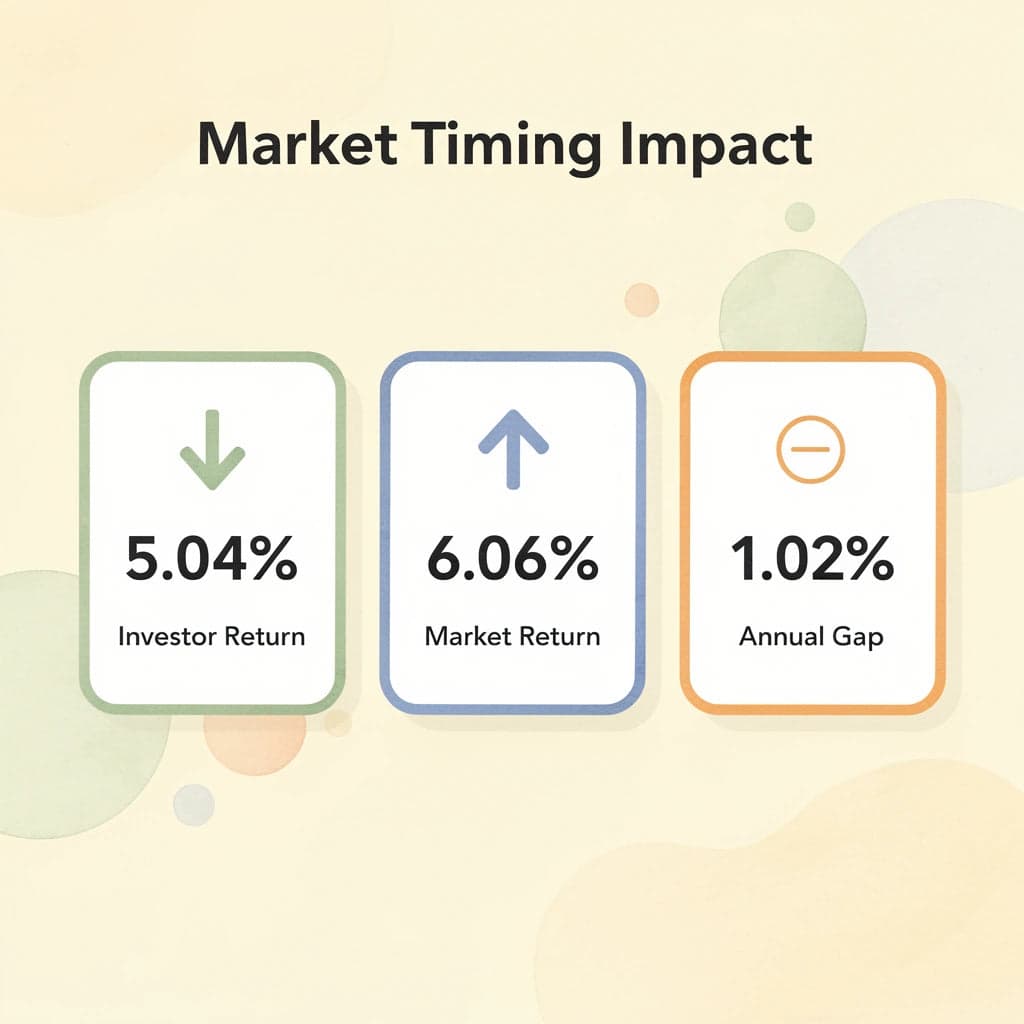
Market timing attempts destroy more portfolio value than almost any other mistake. Research shows that the average investor earns 2-3% less annually than the markets they invest in, primarily due to poor timing decisions. The temptation to exit during downturns and re-enter during recoveries creates a buy-high, sell-low pattern that compounds losses over decades.
"The average equity mutual fund investor earned just 5.04% annually over the 20-year period ending in 2019, while the S&P 500 returned 6.06% annually—a gap largely attributed to poor timing decisions." — Dalbar QAIB Study, 2020
Lack of diversification concentrates risk in ways that can devastate long-term returns. Many investors become emotionally attached to individual stocks or single sectors, creating dangerous concentration risk. When tech stocks crashed in 2000-2002, portfolios heavily weighted in technology lost 60-80% of their value, requiring years to recover.
High fees and excessive trading create a silent drain on compound growth. An expense ratio difference of 1% annually can reduce portfolio value by 20-25% over 30 years. Frequent trading amplifies this damage through transaction costs and tax inefficiency, turning wealth-building activities into wealth-destroying ones.

Reacting to Short-Term Noise
Markets move constantly, and investors who check their portfolios frequently often interpret normal volatility as meaningful signals that require action. Dimensional research demonstrates this pattern, showing how short-term movements trigger unnecessary portfolio changes, especially during periods of heightened volatility.
The mistake is treating temporary price changes as permanent shifts in value. A stock declining 15% in three weeks feels catastrophic when checked daily, but becomes invisible noise over a 20-year holding period. Frequent monitoring creates psychological pressure to act on information that matters little to long-term outcomes.
Overconcentration in Familiar Investments
Investors are drawn to what feels comfortable: technology stocks, their industry, and companies they know best.
This familiarity creates false confidence. Knowing a company's products doesn't mean you understand its valuation, competitive position, or future prospects. Employees who hold too much employer stock face a dangerous situation: portfolio performance becomes directly tied to job security.
When concentrated positions perform well, investors mistake luck for skill and invest more money. When they underperform, emotional attachment prevents selling. Diversification feels boring compared to concentrated bets, but boring often wins over decades.
Ignoring Tax Efficiency
Investment returns get reported before taxes, but what you keep after taxes matters more. Many investors focus entirely on gross returns while ignoring tax consequences.
How do trading decisions impact your tax burden?
Selling investments that have appreciated to buy recent winners triggers capital gains taxes that reduce your actual returns. Frequent trading in taxable accounts creates short-term capital gains taxed at ordinary income rates. Holding tax-inefficient investments in the wrong account types unnecessarily increases your lifetime tax bills.
Why should investors over 50 consider Roth conversions?
For investors over 50, Roth IRA conversions are among the most powerful tax-planning strategies available, yet most people ignore them or execute them poorly. Converting traditional retirement accounts to Roth IRAs at strategic times can dramatically reduce lifetime taxes and create tax-free income streams during retirement.
The complexity of determining optimal conversion amounts, timing, and coordination with other income sources causes many families to avoid the strategy or implement it suboptimally. Personalized Roth conversion consultations help families navigate these decisions with guidance tailored to their complete financial picture.
Failing to Rebalance Systematically
Portfolio allocations drift over time. A portfolio designed with 60% stocks and 40% bonds might become 75% stocks after a strong stock market run, as performing assets grow and underperformers shrink.
Why does portfolio drift increase investment risk?
This drift increases risk beyond intended levels and leaves investors holding more of what recently performed well and less of what underperformed, the opposite of buying low and selling high. Rebalancing enforces the discipline of trimming winners and adding to laggards, maintaining target risk levels, and capturing mean-reversion benefits.
How can you rebalance without emotional interference?
Most investors rebalance based on emotions rather than following a system, making changes after big market moves have already occurred. Setting specific calendar dates or using trigger points removes emotion from the process.
The question is not whether you will make mistakes, but whether you will make the mistakes that matter: ones that build up over decades and permanently reduce what you could have built. That requires knowing exactly which behaviors to change and having a clear system for changing them.
How to Build a Long-Term Investing Strategy
Start by defining your goals first: retiring in 25 years, becoming financially independent by 55, paying for education, or leaving money for others. Each goal affects how you organize your investments, how much the value can fluctuate, and when you will need the money.
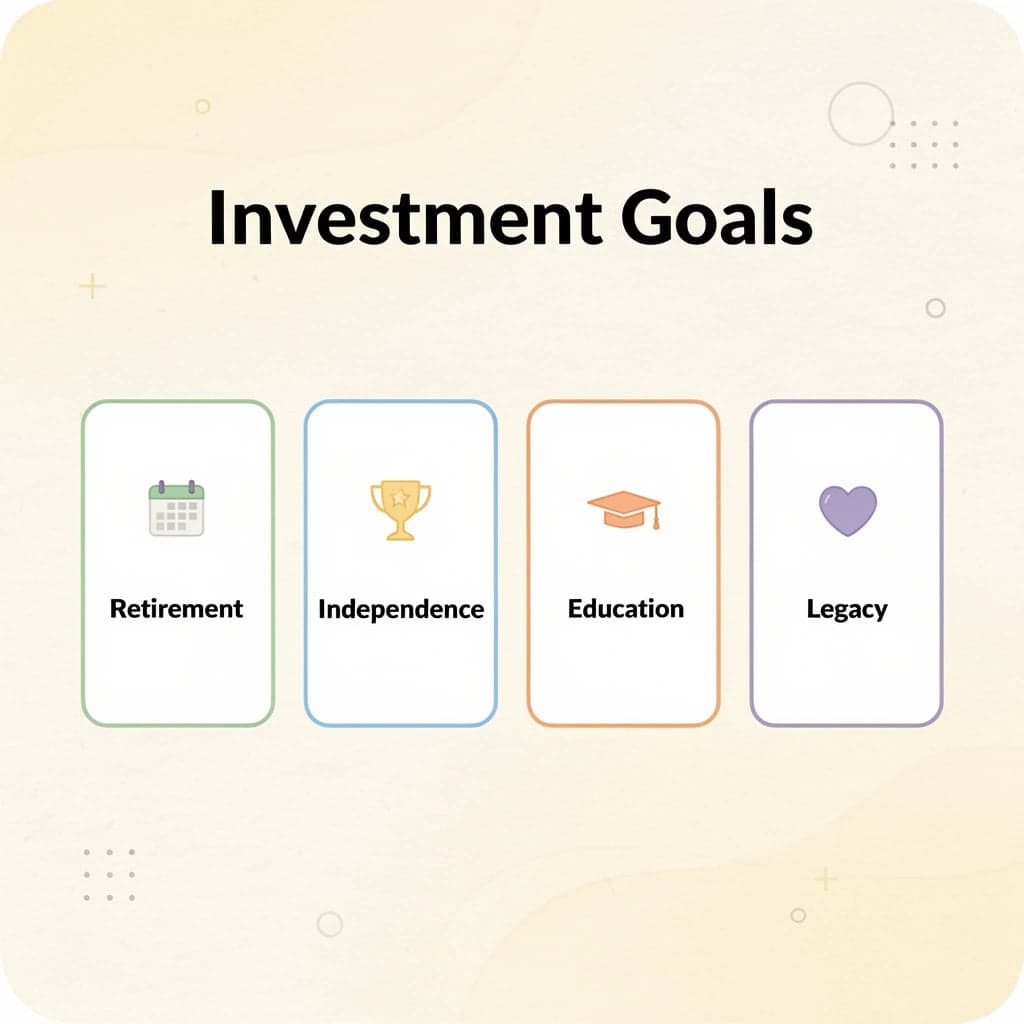
Most investors do this backward: they pick stocks or funds first, then try to fit them into unclear goals. This makes it difficult to know if you're taking the right amount of risk or building something that will help your life.
Why should the timeline come before stock selection?
Someone retiring in three years cannot handle the same short-term volatility as someone with 30 years ahead of them. Time horizon determines risk capacity. A portfolio designed for a 28-year-old should look fundamentally different from one built for someone at 62, even if both want "growth."
How does a longer timeline maximize compounding benefits?
The longer your timeline, the more compounding can work for you. According to iShares research published in March 2026, investors who stayed fully invested in the S&P 500 over the past 20 years saw their money grow by approximately 9.8% annually. That return required staying invested through 2008, 2020, and every other crisis. Shorter timelines cannot withstand that volatility without derailing the plan.
Build allocation around goals, not around headlines
Asset allocation determines far more than most investors realize. How you divide your money between stocks, bonds, and cash matters more than which specific funds you select within those categories. Most investors need a mix tailored to their situation. Our Smart Financial Lifestyle approach helps you determine the right allocation based on your retirement timeline and goals, rather than on temporary market movements.
Portfolio construction should match your circumstances, not the latest market story. When investors build an allocation based on CNBC's morning coverage, they chase performance and react to noise. The portfolio supporting your 2045 retirement should not shift significantly due to an election cycle or a single quarter of inflation data. With Smart Financial Lifestyle, we help you build a plan focused on your long-term retirement objectives.
Why does timing the market hurt long-term returns?
Trying to find the perfect moment to invest means you'll spend years waiting while compound growth slips away. Dollar-cost averaging solves this by investing the same amount at regular intervals regardless of market conditions. You buy more shares when prices drop and fewer when they rise, but you keep investing throughout.
How does automation remove emotional investing mistakes?
Automation makes this easy. Monthly contributions to a 401(k) or IRA happen whether you feel optimistic or terrified. The decision is made once and then executed consistently. Families who automate their investing remove the emotional burden of deciding whether "now" is the right time, a question that causes more damage through inaction than almost any other behavioral mistake.
What can you actually control in investing?
You cannot control interest rates, inflation, election outcomes, or whether the market rises or falls next month. Successful long-term investors focus on what they can control: increasing savings, minimizing investment costs, extending their time horizon, and maintaining discipline when markets test their commitment. These variables determine outcomes far more than predicting the unpredictable.
How do you turn principles into actionable plans?
Platforms like Smart Financial Lifestyle help families turn these principles into action steps, particularly for retirement planning and Roth conversions where timing and tax strategy require more than general advice. The difference between a solid long-term plan and good intentions often comes down to having a clear system tailored to your specific situation.
But knowing what to do and sticking with it through decades of market cycles are two different challenges.
Related Reading
How To Grow Your Money
How to Stop Living Paycheck to Paycheck
How Much Money Should I Have Saved by 30
How Smart Financial Lifestyle Helps Investors Think Beyond the Next Market Cycle
The real test of financial education is whether it prepares you to make sound decisions during the next crisis you haven't seen yet. That requires learning principles that work across decades, not tactics that respond to this quarter's headlines.

Most investors consume endless market commentary and track daily portfolio changes, feeling informed. But information without context creates noise, not clarity. When volatility arrives, that daily attention rarely translates into better decisions because the focus was on what happened, never on why it matters over time.
What perspective do decades of market experience provide?
Paul Mauro's 50 years in wealth management offer a perspective most financial content cannot: he has navigated the 1987 crash, the dot-com bubble, the 2008 financial crisis, and every market correction in between. Managing over $1 billion in assets has shaped Smart Financial Lifestyle's approach to investor education.
How does investor response determine wealth-building success?
The lessons aren't about predicting which crisis comes next, but about recognizing that some version will always arrive—your response determines whether you build wealth or simply survive volatility. According to the CFA Institute's 2026 research on next-generation investors, investors increasingly seek education addressing behavioral challenges rather than investment selection. Across all age groups, discipline matters more than market forecasts.
Shifting Focus From Prediction to Principle
Market timing feels productive because it creates the illusion of control: you're making decisions and taking action. The problem emerges when those actions coalesce into a pattern of buying high on optimism and selling low on fear.
Smart Financial Lifestyle redirects that energy toward factors you control: savings rate, asset allocation, tax strategy, and behavioral discipline. These variables determine whether you retire comfortably or work longer than planned. The education focuses on building systems that work regardless of whether the market rises or falls next month, because over 20 or 30 years, it will do both many times.
How does financial media urgency conflict with investment importance?
Financial media operates around the clock, treating every event as important. However, long-term investors think in terms of decades, where most daily events don't matter. Without a way to distinguish between what's important and what's noise, investors tend to react to everything.
What framework helps investors focus on what matters?
Smart Financial Lifestyle's approach solves this problem through education that explains not just what to do, but why certain ideas have worked across different market situations. The 5-step wealth-building framework provides specific action steps for retirement planning and Roth conversions, bridging learning theory and real strategy.
But even the best framework faces a challenge unrelated to markets or strategy.
Kickstart Your Retirement Financial Planning Journey | Subscribe to Our YouTube and Newsletter
The challenge is momentum. Understanding principles matters, but applying them requires accountability and ongoing reinforcement. Most people never start because they're waiting for the perfect moment or complete certainty. Your financial future improves the day you commit to learning and acting on what works, not when conditions feel ideal.

🎯 Key Point: Starting your financial education journey today is more valuable than waiting for perfect market conditions or complete knowledge.
Subscribe to Smart Financial Lifestyle today and start learning the long-term investing principles Paul Mauro used throughout his decades in wealth management. Discover how small behavioral changes and consistent investing decisions may have a greater impact on your future wealth than trying to predict the market's next move. Our YouTube channel and newsletter provide practical guidance on retirement planning, Roth conversions, and wealth-building strategies tailored to your specific situation, not generic advice.
"The investors who build lasting wealth aren't the ones who waited for perfect knowledge—they're the ones who started learning, made adjustments along the way, and stayed committed to principles that have worked across decades of market cycles."
Every day you delay is a day compounding doesn't work for you. The investors who build lasting wealth aren't the ones who waited for perfect knowledge—they're the ones who started learning, made adjustments along the way, and stayed committed to principles that have worked across decades of market cycles.
💡 Tip: Don't let analysis paralysis prevent you from taking the first step toward financial independence—subscribe today and begin building your wealth management knowledge base.

Related Reading
How To Stop Living Paycheck To Paycheck
Are Index Funds Good For Retirement
Ira Pros And Cons
Low Risk Investment Options
Early Retirement Strategies
How Much Money Should I Have Saved By 30
How To Invest 1000 Dollars
How Much Should I Save Each Month
Long-Term Stock Investments
Best Investment For Retirement Income
What Happens If You Run Out Of Money In Retirement
Retirement Income Strategies
Retirement Planning Mistakes